
Fertilization
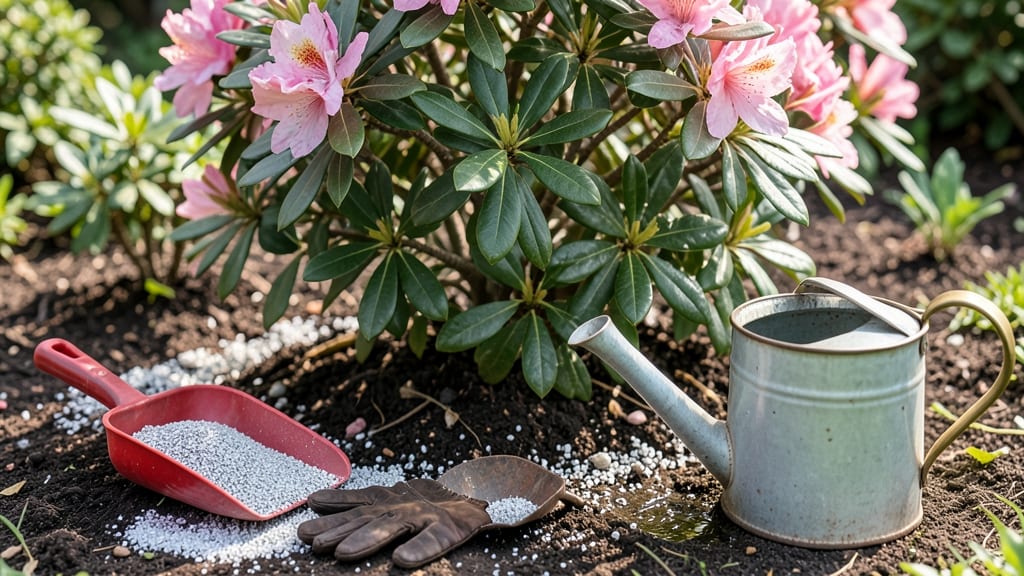
Aluminum sulfate gardening involves using this mineral to acidify soil, creating ideal conditions for acid-loving plants like blueberries, azaleas, and rhododendrons while effectively controlling moss, algae, and fungi in lawns and ponds. Always apply it carefully based on soil test results to prevent over-acidification.
Aluminum sulfate works by releasing aluminum ions that displace calcium and magnesium in the soil, while the sulfuric acid component lowers the pH level. 🌱 This dual action creates an environment where acid-loving plants thrive, but unwanted algae and moss struggle to survive.
Unlike other acidifiers like sulfur or iron sulfate, aluminum sulfate provides a faster pH adjustment, making it ideal for quick corrections in garden beds or water features.
For best results, always conduct a soil test first to determine your exact pH needs.
A general guideline is to apply 1 to 2 pounds per 100 square feet for lawns, but adjust based on your specific soil type and target pH. Spring or early fall application works best, as it allows time for the soil to stabilize before planting season.
Always keep it away from children and pets, as aluminum sulfate can be harmful if ingested.
💡 In This Article
- How Aluminum Sulfate Lowers Soil pH and Kills Algae
- Safe Application Rates and Best Practices for Gardening
How aluminum sulfate lowers soil pH and kills algae
Aluminum sulfate works through a two-pronged chemical process that rapidly alters soil chemistry. When dissolved in water, it dissociates into aluminum ions (Al³⁺) and sulfate ions (SO₄²⁻), with the latter forming sulfuric acid (H₂SO₄) when reacting with soil moisture.
This acidification occurs because the sulfate ions react with calcium carbonate (limestone) in the soil, producing calcium sulfate and carbonic acid—both of which further lower the pH. The aluminum ions then displace calcium and magnesium from soil particles, creating an environment where these essential nutrients become less available to unwanted plants like moss and algae.
The key to its effectiveness lies in the aluminum ions' ability to disrupt cellular processes in algae and moss.
These ions interfere with photosynthesis by blocking chlorophyll production and damaging cell membranes, essentially starving the plants of energy. 🌿 In water features, aluminum sulfate creates a hostile environment where algae struggle to attach and grow, unlike iron sulfate which primarily works by blocking sunlight.
For soil applications, the pH drop happens within days, making it faster than elemental sulfur (which can take weeks to months to fully acidify).
What sets aluminum sulfate apart is its immediate action—unlike sulfur-based amendments that require microbial activity to break down, aluminum sulfate delivers results within 24-48 hours when applied correctly. This makes it ideal for emergency treatments, such as controlling algae blooms in ponds or addressing moss outbreaks in lawns.
However, its speed comes with a trade-off: overapplication can lead to aluminum toxicity in plants, causing yellowing leaves and stunted growth due to nutrient lockout.
For gardeners comparing options, aluminum sulfate is more potent than iron sulfate but less long-lasting than sulfur. Iron sulfate, for example, primarily works as a herbicide by blocking chlorophyll production and doesn't lower pH as effectively.
Meanwhile, sulfur provides gradual acidification but requires larger quantities and longer exposure to moisture. The choice depends on your urgency—aluminum sulfate for quick fixes, sulfur for slow, sustained changes.
In water features, the ideal concentration is typically 1-2 pounds per 100 gallons, while for soil, 10-20 pounds per 100 square feet may be needed, depending on your target pH. Always mix it with water first to prevent clumping, and apply during dry weather to avoid runoff.
The granular form dissolves faster than powder, making it easier to distribute evenly across large areas.
One often-overlooked benefit is its ability to provide sulfur as a secondary nutrient. Sulfur is essential for plant protein synthesis and chlorophyll production, so even as you lower pH, you're also feeding your acid-loving plants.
This dual functionality makes aluminum sulfate a versatile tool for gardeners who need both acidification and nutrient support in one application.