
Pests
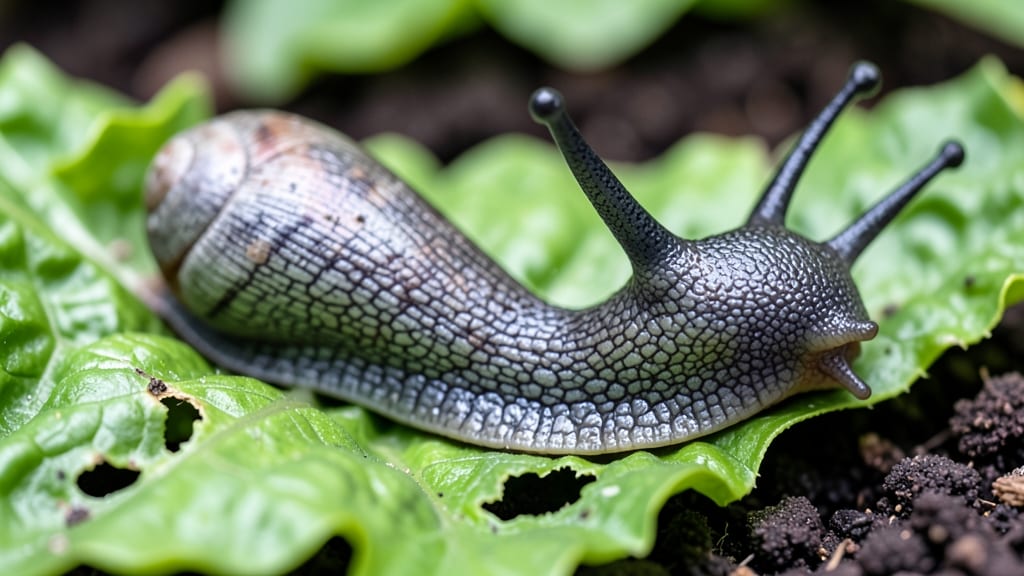
Snails are bad for your garden because they devour leaves, stems, and flowers, leaving slime trails and holes that stunt plant growth. They target young seedlings, herbs, and tender foliage most aggressively, especially in damp conditions.
These nocturnal pests use their sharp, toothed tongues called radulas to scrape plant tissue, creating jagged edges on leaves that often lead to fungal infections. 🌱 They particularly love succulent plants like lettuce, basil, and marigolds, which can be completely skeletonized overnight.
The slimy trails they leave behind aren't just unsightly—they're a telltale sign of their destructive feeding patterns, which become most active during humid evenings or after rainfall.
What makes them especially problematic is their ability to multiply rapidly. A single snail can lay hundreds of eggs in moist soil, creating a self-sustaining cycle of damage that can overwhelm even the hardiest gardens.
The key to protecting your plants lies in understanding their behavior—like their preference for hiding under mulch or boards during the day—so you can implement targeted control measures before they become an uncontrollable infestation.
💡 In This Article
- How Snails Damage Plants and Identify Their Feeding Patterns
- Natural Snail Control Methods for Organic Gardens
How snails damage plants and identify their feeding patterns
Snails attack plants using their specialized feeding organ called a radula, a ribbon-like structure lined with thousands of tiny, tooth-like cusps. These microscopic teeth act like sandpaper, scraping away plant tissue with a precision that creates characteristic irregular holes along leaf edges.
The damage isn't just cosmetic—snails inject digestive enzymes that break down cell walls, causing affected areas to turn brown and crispy within hours. 🔥
Their preferred menu includes hostas (which they can defoliate completely in 24 hours), lettuce (especially the tender inner leaves), and marigolds (whose strong scent actually attracts them).
Studies show snails consume about 0.5-1 gram of plant material per night, which may seem small but adds up quickly in a garden bed.
The key damage indicator is the silver slime trail they leave behind—this mucus contains 50% water and 30% mucus proteins, which helps them glide effortlessly over surfaces while protecting their delicate bodies.
Moisture is the critical factor that transforms snails from occasional visitors to garden destroyers. At 80% humidity or higher, their activity increases 10-fold compared to dry conditions. They become most active during twilight hours (just after sunset and before dawn) when temperatures drop to 60-70°F and dew forms on leaves.
This is why you'll often find them clustered around mulched areas or under garden debris during the day—seeking protection from drying winds and predators.
What most gardeners miss is how snails transmit plant diseases. Their slime carries fungal spores like Botrytis (gray mold) and bacterial infections that enter through their feeding wounds.
A single infestation can create a chain reaction where weakened plants become susceptible to secondary infections, leading to 20-40% yield loss in vegetable gardens. The damage pattern is distinctive: leaves show ragged, notched edges rather than clean bites from insects, and flowers often have notches removed from petals.
To confirm an infestation, check for these signs:
- Shiny slime trails (especially on fences, pots, or low-growing plants)
- Jagged holes with no frass (insect droppings)
- Egg clusters in moist soil (small, jelly-like spheres)
- Nighttime activity (shining a flashlight reveals moving snails)
The most vulnerable plants are those with soft, moisture-retaining leaves, particularly herbs like basil and parsley, young seedlings (which they can completely consume), and ground covers that provide hiding spots. Even roses and hydrangeas suffer when snails target new growth, leading to stunted blooms. The key to early detection is regular morning inspections of lower leaves and soil surfaces where snails hide during daylight hours. 💫