
Pests
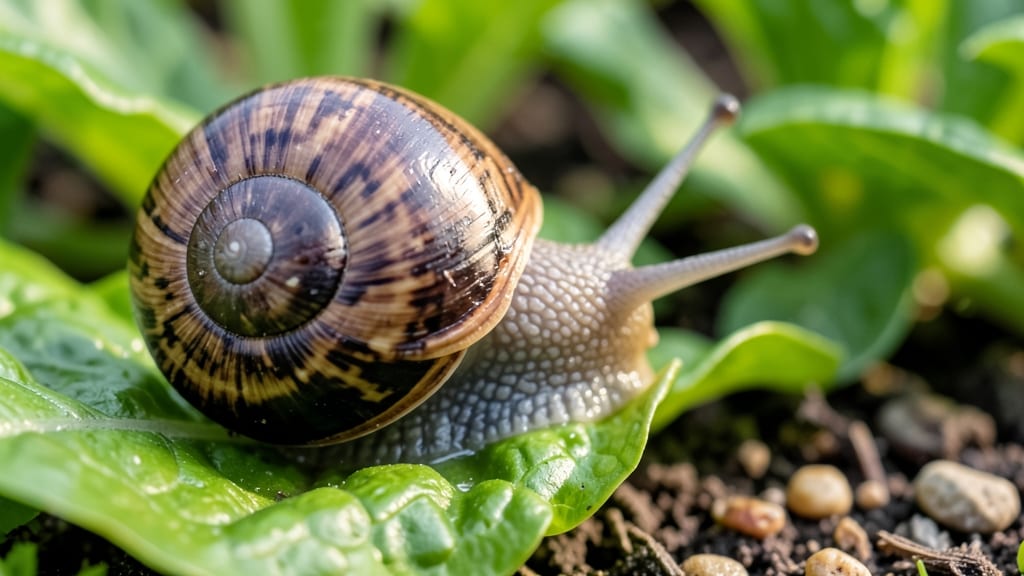
Snails are generally not good for growing a garden—they chew through young plants, flowers, and vegetables, leaving behind telltale slime trails and holes. While they do help break down organic matter, their damage often outweighs these minor benefits.
Garden snails might seem harmless, but their feeding habits can turn your thriving plants into a buffet. 🐌 They particularly target tender seedlings, lettuce, and hosta leaves, often stripping entire plants overnight. The slime they leave behind can even create conditions for fungal diseases to take hold.
That said, their role in soil decomposition is minor compared to worms or beetles—so while they're not outright pests, they're definitely not helpful garden allies either.
If you're dealing with a snail infestation, focus on prevention first. Physical barriers like copper tape or crushed eggshells work well, while companion plants like marigolds or thyme can deter them naturally. For severe cases, beer traps or diatomaceous earth provide effective, chemical-free solutions that won't harm your garden's ecosystem.
💡 In This Article
- How Snails Harm Garden Plants and Soil
- Natural Ways to Control Snails in Your Garden
How snails harm garden plants and soil
Snails are nocturnal raiders that target the most vulnerable parts of your garden—young seedlings, fresh leaves, and tender vegetables like lettuce, basil, and hostas. 🌱 Their feeding leaves behind jagged holes and skeletonized foliage, often stripping entire plants overnight.
A single snail can consume up to 0.02 ounces (0.5 grams) of plant material per night, and larger species like the banded garden snail can reach 0.1 ounces (3 grams) in a single feeding session.
This damage isn't just cosmetic; it weakens plants, stunts growth, and can even kill seedlings before they establish roots.
Their slime trails—composed of mucus with antibacterial properties—may seem harmless, but they create a perfect environment for fungal spores and bacterial infections. The moisture and organic matter in the slime can promote downy mildew or powdery mildew, particularly on susceptible plants like tomatoes or cucumbers.
Additionally, snails often feed on decaying plant matter, which can spread pathogens to healthy plants through their saliva and bodily secretions. 🦠 This makes them indirect vectors for plant diseases, further complicating their presence in a garden.
While snails do contribute to soil decomposition by breaking down organic matter like fallen leaves and rotting plant debris, their role is minimal compared to earthworms or beetles. Earthworms, for instance, aerate soil and enrich it with castings, while snails primarily act as scavengers.
Their feeding habits often create more harm than benefit—especially when they target living plants rather than dead organic material. The slime they produce also lacks the nutrient-rich properties of worm castings, making their contribution to soil health negligible.
Consider the lifecycle of a snail: they lay 50-100 eggs at a time in moist soil, and these eggs hatch in just 2-4 weeks under ideal conditions. This rapid reproduction means a few snails can quickly become a full-blown infestation.
Their ability to thrive in shaded, damp areas—like under mulch or dense foliage—makes them particularly difficult to eradicate once established. 🐌 Unlike beneficial insects that pollinate or control pests, snails offer no ecological balance in a garden; they're purely destructive.
For gardeners, the key takeaway is that snails are opportunistic feeders with a high potential for damage. Their preference for tender, nutrient-rich plants means they can turn a thriving garden into a barren one within weeks if left unchecked.
While they may seem like harmless creatures, their impact on plant health and soil integrity far outweighs any minor benefits they provide.