
Pests
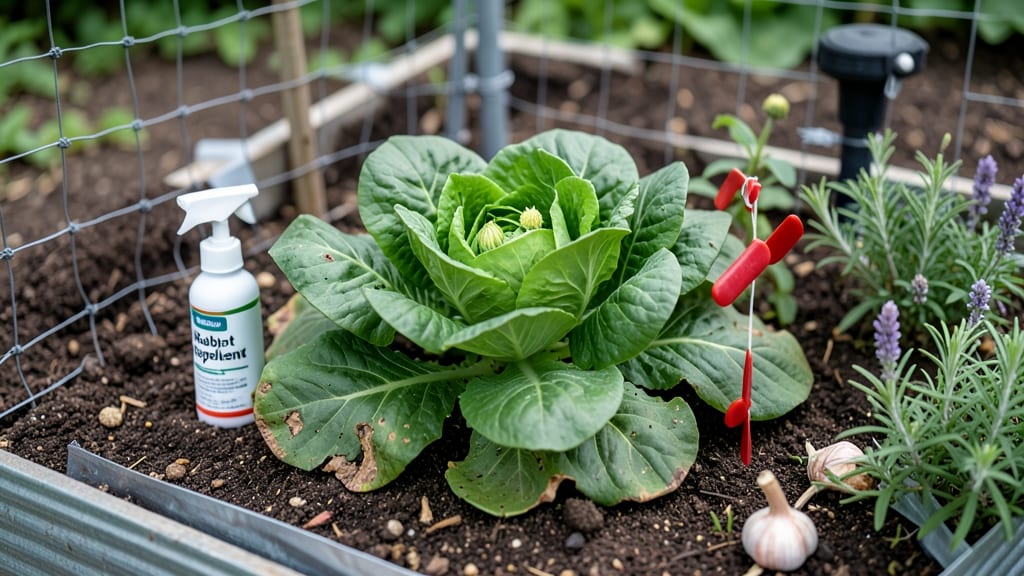
The best way to keep bunnies out of your garden combines sturdy fencing (like 12-inch-deep chicken wire or raised beds with fine mesh) with natural deterrents such as garlic spray, predator urine, or strongly scented plants like marigolds and lavender. This humane approach avoids harmful chemicals while creating a multi-layered defense system.
The key to success lies in understanding how bunnies behave—these curious creatures are persistent diggers and jumpers, capable of scaling fences up to 2 feet. 🌱 That's why burying wire at least 12 inches deep prevents them from tunneling underneath.
For raised beds, 1/4-inch hardware cloth is your best bet, as it blocks their entry while allowing airflow to your plants. Natural repellents work best when rotated, since bunnies can grow accustomed to single scents over time.
What separates effective solutions from temporary fixes is consistency. For instance, predator urine needs reapplication every 2-3 weeks, while garlic spray can be mixed with water and sprayed directly on garden borders.
Planting lavender or rosemary around vulnerable areas adds a dual benefit—both repelling rabbits and enhancing your garden's fragrance. The goal is creating an environment that's unwelcoming without causing harm.
💡 In This Article
- How Physical Barriers Deter Bunnies Effectively
- Top Humane Bunny Repellents and Garden Plant Pairings
How physical barriers deter bunnies effectively
Bunnies are master diggers and jumpers, with a natural instinct to explore and feed. Their powerful hind legs can propel them 3-4 feet vertically in a single leap, while their strong claws can excavate tunnels up to 12 inches deep in soft soil.
This is why standard fences fail—most bunnies can easily hop over 2-foot-tall barriers and burrow under shallow fencing. The secret lies in combining height with depth: fences should be at least 3 feet tall and buried 12 inches underground to block both jumping and tunneling attempts.
Material choice matters just as much as dimensions. Hardware cloth (with 1/4-inch mesh) is the gold standard because its rigid structure prevents bending or chewing, unlike chicken wire which can be gnawed through.
For raised beds, wrap the mesh around the entire structure, including the bottom edges, since bunnies can reach over sides. In sandy or loose soil, consider adding a 6-inch-wide concrete footing at the base to prevent digging around the perimeter.
Studies show that properly installed hardware cloth has a 95% success rate in preventing rabbit intrusion when combined with other deterrents.
The science behind these barriers works through simple behavioral psychology. Bunnies avoid obstacles that create discomfort or perceived danger. When they encounter a solid barrier, their natural response is to seek easier access elsewhere.
This is why multi-layered defenses work best—combine your fencing with ground-level deterrents like gravel or mulch (which bunnies dislike digging through) and above-ground repellents. The key is creating an environment where your garden becomes "too much work" for them to bother with.
For garden types with different challenges, solutions vary. In vegetable gardens with loose soil, plastic tree guards wrapped around young plants provide temporary protection until they establish strong roots. For flower beds, metal edging buried 6 inches deep creates a physical barrier that's both durable and visually appealing.
Remember that bunnies are most active at dawn and dusk, so inspect your barriers during these times to catch any potential weak points before they become entryways.
What often surprises gardeners is how quickly bunnies adapt to weak barriers. If you notice nibbled plants near the fence line, it's a sign they're testing the boundaries. This is your cue to reinforce weak spots immediately—delaying repairs gives them more confidence to push their luck.
The most effective systems combine physical barriers with sensory deterrents, creating a multi-sensory "no entry" zone that's far more convincing than any single defense method.
For those with large properties, consider electric fencing (using low-voltage systems designed for wildlife). The slight shock isn't harmful but creates a strong negative association. When paired with visual deterrents like reflective tape or predator decoys, these systems can cover extensive areas while maintaining humane standards.
The key is making your garden feel like a place they'd rather avoid than explore.