
Advice
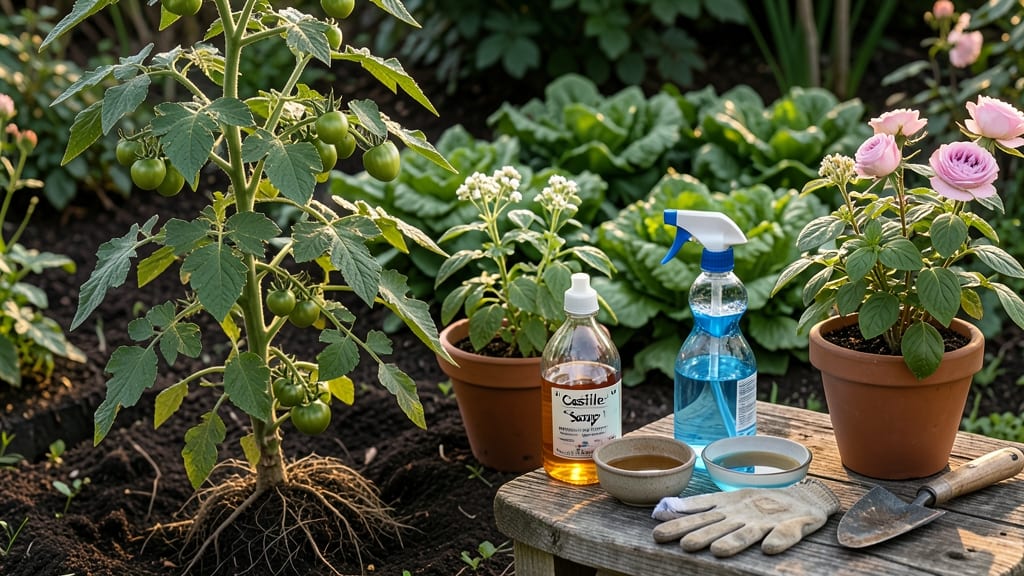
Using castile soap for garden creates an effective, eco-friendly pest control solution that targets insects like aphids and mites while cleaning plant surfaces safely. When diluted properly, it preserves soil health and beneficial organisms without causing harm.
Castile soap works by breaking down the protective wax layer on insects' bodies, causing dehydration and death—without the harsh chemicals found in synthetic pesticides. 🌱 The key is proper dilution (typically 1-2 tablespoons per quart of water) to avoid damaging plant leaves.
I've found it especially effective against soft-bodied pests while being gentle enough for organic gardening systems.
Beyond pest control, this versatile soap doubles as a natural cleaner for garden tools and containers. A simple mix with water and a few drops of essential oils can create a degreaser that cuts through dirt without introducing harmful residues.
Just remember to apply sprays in the early morning or evening to prevent leaf burn from sunlight exposure.
💡 In This Article
- How Castile Soap Kills Garden Pests Safely
- Best DIY Castile Soap Sprays for Garden Use
How Castile soap kills garden pests safely
Castile soap's pest-killing power comes from its unique chemical structure as a saponified oil—specifically olive oil in traditional formulations. When properly diluted, it works by disrupting the waxy cuticle that protects insects like aphids and spider mites.
This wax layer acts like a waterproof shield, preventing dehydration. The soap molecules penetrate this barrier, causing the insect's body to lose moisture rapidly—similar to how dish soap breaks down grease but far gentler on plants.
The key to safety lies in dilution ratios. Pure Castile soap is too concentrated—think of it like using straight soap on your skin versus diluted dish soap. For most garden applications, use 1-2 tablespoons per quart of water (about 0.5-1% concentration).
This weak solution targets only soft-bodied pests while avoiding harm to beneficial insects like ladybugs or bees. For tougher pests like whiteflies, you might increase to 2 tablespoons per quart, but always test on a small leaf first.
What sets Castile soap apart from synthetic pesticides is its selective action. Unlike broad-spectrum chemicals that kill everything indiscriminately, soap-based solutions specifically target insects with no hard exoskeletons. This preserves your garden's natural balance—earthworms, pollinators, and predatory insects remain unharmed.
The soap's plant-safe formulation also means it breaks down quickly in the environment, leaving no toxic residues in the soil or water systems.
Temperature and timing play crucial roles in effectiveness. Apply sprays when temperatures are below 85°F (29°C) to prevent leaf burn—hotter conditions cause the soap solution to evaporate too quickly, reducing its effectiveness.
Early morning applications work best because the cooler temperatures and lower sunlight intensity give the solution time to work before the sun's rays intensify. I've found that adding 1 teaspoon of vegetable oil per quart enhances the spray's ability to cling to leaves and improve coverage.
For visual comparison, imagine the difference between a water-only spray (which simply washes pests away) and a soap solution (which actively dissolves their protective layers). The latter creates microscopic holes in the insect's cuticle, leading to rapid dehydration within 24-48 hours.
This makes Castile soap particularly effective against aphid colonies that can multiply exponentially in just days. The solution's mild alkalinity also helps break down the sticky residue left by sap-sucking insects like scale.
One common misconception is that all Castile soaps work equally well. Unfragranced, liquid Castile soap (typically 100% saponified) is ideal for gardening, while scented or bar varieties may contain additives that could harm plants.
Always choose USDA-certified organic versions to ensure purity. The soap's natural fatty acids create a gentle yet effective barrier that's why it's become a staple in organic gardening practices worldwide.