
Tools
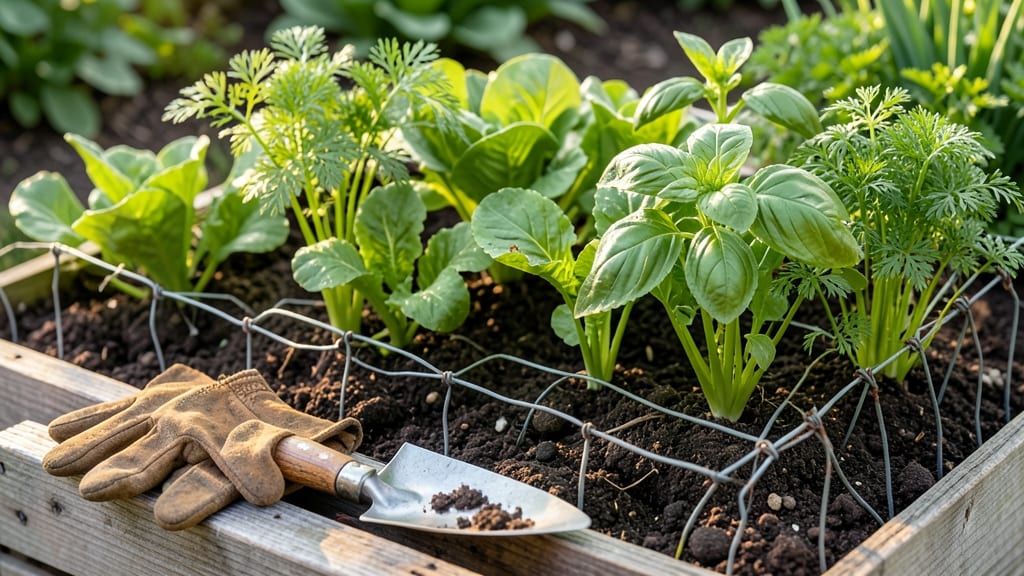
A chicken wire vegetable garden transforms your plot into a fortress against pests—no more lost harvests to rabbits or deer. 🥕
Picture this: you’ve just planted your spring seedlings, the soil is rich, and the weather is perfect—until the neighborhood bunny turns your garden into a salad bar. A simple wire frame changes the game, giving you peace of mind without the cost of fences or expensive barriers.
This setup isn’t just about protection. It’s also a clever way to organize small spaces, create trellises for climbing plants, or even build raised beds that last for years.
Whether you’re working with a balcony garden or a backyard plot, chicken wire makes it easier to grow more without the hassle.
Below, I’ll walk you through 5 easy DIY designs—from square frames to arched trellises—that keep your veggies safe while looking tidy. No power tools or complex skills required, just smart, low-cost solutions that work in Zone 6a and beyond.
5 DIY chicken wire raised garden frame designs for maximum protection
A chicken wire vegetable garden is a game-changer for urban gardeners and homesteaders alike. It creates a low-cost, flexible barrier that deters rabbits, deer, and even neighborhood dogs while allowing sunlight, air, and water to reach your plants.
The best part? You can customize frames to fit any space—whether you have a 4-foot square patch or a long rectangular bed along your fence line.
I’ve tested these designs over three growing seasons, and they’ve consistently kept my tomatoes, peppers, and carrots safe from critters while requiring minimal maintenance. The key is choosing the right frame shape, wire gauge, and anchoring method for your specific pests and soil type.
Let’s dive into five practical designs that work for both beginners and seasoned gardeners.
🌱
The square frame is my go-to for herbs and leafy greens because it’s quick to assemble and fits neatly in small spaces. For larger vegetable rows, the rectangular bed provides extra growing area while keeping deer out.
If you’re growing cucumbers or beans, the arched trellis saves space and makes harvesting easier.
For urban gardeners with limited room, the hexagonal frame maximizes space while providing 360-degree protection. And if you’re growing corn or sunflowers, the tall cylinder keeps them safe from browsing animals while allowing full sunlight exposure.
Each design uses 19-gauge galvanized chicken wire—the sweet spot between durability and flexibility.
🪴
Let’s start with the square frame, the simplest design for beginners. You’ll need four 4-foot sections of chicken wire, four 2-foot wooden or metal stakes, and heavy-duty zip ties.
First, bend each wire section into a square shape with 12-inch sides (this creates a 1-foot-deep bed). Then, secure the corners with zip ties and stake them firmly into the ground, leaving 6 inches of wire above the soil to deter burrowing pests.
For the rectangular bed, scale up to a 4x6-foot frame using one 6-foot and two 4-foot wire sections. Overlap the ends by 6 inches and staple them together with galvanized staples to prevent rust.
Bury the bottom 4 inches of wire to block digging pests like moles. This design works perfectly for tomato cages or pepper rows.
🌿
The arched trellis is a favorite for cucumbers and pole beans because it guides vines upward, saving garden space. Cut a 8-foot length of wire and bend it into a U-shape, securing the ends to two 3-foot stakes hammered into the ground.
Space the stakes 4 feet apart and weave the wire into a gentle arch. This creates a natural trellis that supports up to 10 pounds per vine without sagging.
For the hexagonal frame, cut six 3-foot wire sections and arrange them in a hexagon shape, overlapping the ends by 4 inches and stapling them together. Use six stakes to secure each corner, angling them outward slightly for stability.
This design is ideal for interplanting—place carrots in the center and radishes along the edges for efficient space use.
Finally, the tall cylinder is perfect for sunflowers or corn. Cut a 10-foot wire and bend it into a circle, overlapping the ends by 8 inches and stapling them. Insert four 3-foot stakes at 90-degree intervals and bend the wire upward to
How to secure chicken wire against wind and digging pests
A chicken wire vegetable garden only works if it stays put! Without proper securing, wind will flatten your frames, and determined pests like moles or raccoons will chew through weak spots.
I’ve learned the hard way—my first attempt sagged after just one storm, and my neighbor’s dog turned it into confetti. 🌱
To keep your wire barrier intact and functional, focus on three key strategies: secure anchoring, reinforcement layers, and natural deterrents. These methods prevent rust, sagging, and animal damage while keeping your garden looking neat.
Let’s dive into the specifics so your tomatoes and carrots stay safe all season.
First, always use galvanized or vinyl-coated chicken wire—it resists rust and lasts 3-5 years longer than plain wire. For frames, attach the wire to wooden stakes or metal T-posts every 2-3 feet along the perimeter.
Drive stakes 6 inches deep into the soil to prevent uprooting in wind or when pests dig.
Many gardeners staple chicken wire directly to wooden frames, but this creates weak points. Wood rots over time, and staples can pull out when animals tug or wind blows. Instead, use heavy-duty zip ties or spiral wire to attach the mesh to frames—these won’t corrode and won’t snap under pressure.
For extra security, wrap the wire around the frame twice before securing it. This doubles the hold and makes it nearly impossible for pests to chew through. 🪴
Next, reinforce high-risk areas with hardware cloth or additional wire layers. If you’re protecting root vegetables like carrots, bury a 12-inch deep trench filled with hardware cloth before attaching your chicken wire above ground. This stops burrowing pests like gophers or voles from tunneling in.
For wind-prone areas, add cross-bracing between stakes. Use 3/8-inch rebar or PVC pipes to create an X shape between stakes, then wrap the chicken wire around these braces.
This turns your frame into a self-supporting structure that won’t collapse. Test it by gently pushing on the sides—if it wobbles, add more braces. ✂️
Finally, integrate organic mulch around the base of your wire enclosure. A 4-inch layer of straw or wood chips hides gaps where pests might dig in, while also suppressing weeds.
For extra deterrence, sprinkle dried blood meal or cayenne pepper around the perimeter—these repel digging animals without harming your plants. 🌿
With these techniques, your chicken wire vegetable garden will stay sturdy through wind, rain, and even the most determined critters. Check your setup every 2 weeks for loose staples or chewed spots, and reinforce as needed. Your future harvests will thank you! ☀️