
How To
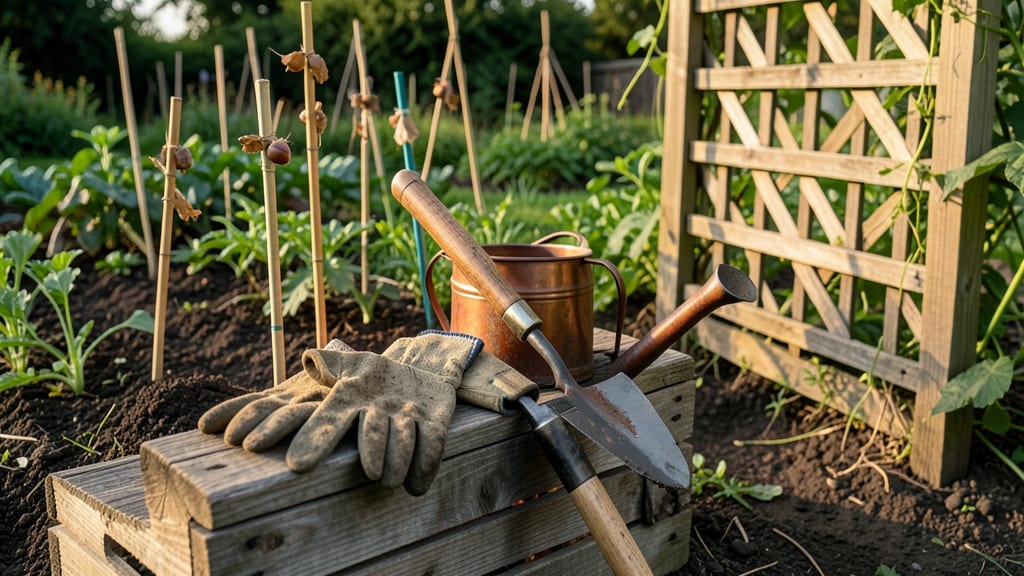
To grow a garden successfully, you'll need a sunny spot with 6-8 hours of light daily, well-prepared soil rich in nutrients, plants suited to your climate, and regular watering and care. Beginners should start with hardy options like lettuce, tomatoes, or herbs.
Starting a garden is easier than you think when you focus on the basics. 🌱 The right location makes all the difference—most vegetables and herbs thrive with full sun, but some leafy greens tolerate partial shade.
I always recommend testing your soil's pH before planting; most garden plants prefer a slightly acidic to neutral range (6.0-7.0). Adding compost improves soil structure and feeds your plants naturally, while proper drainage prevents root rot. For small spaces, container gardening works perfectly with herbs and compact veggies like radishes.
Once your soil is ready, choose plants that match your growing conditions. Herbs like basil and mint grow aggressively, while tomatoes need sturdy supports. 🌿 Spacing is key—crowded plants compete for nutrients and air flow, leading to weaker growth.
I suggest grouping similar plants together (like all your herbs in one spot) for easier maintenance. For beginners, a simple 3x3-foot raised bed works wonders with just 6-8 plants, giving you a harvest without overwhelming you.
💡 In This Article
- Essential Steps to Prepare Soil for a Thriving Garden
- Best Beginner-Friendly Plants and Layout Tips for Your Garden
Essential steps to prepare soil for a thriving garden
Soil isn't just dirt—it's a living ecosystem where microscopic organisms break down nutrients into forms plants can absorb.
The ideal garden soil should be loose, crumbly, and rich in organic matter, resembling a well-aerated sponge that holds moisture while allowing roots to breathe. 🌱 Most store-bought soil mixes contain 20-30% organic matter, but amending your existing soil with compost can boost this to 40-50%, dramatically improving water retention and nutrient availability.
Start by testing your soil's pH using a simple kit (available for under $10). Most vegetables prefer a slightly acidic to neutral range of 6.0-7.0, while blueberries and azaleas thrive in 4.5-5.5. Adjusting pH takes time—adding sulfur lowers it gradually, while lime raises it.
For example, to raise pH by 1 point in 100 square feet of soil, you'll need about 5-10 pounds of agricultural lime, worked in 4-6 inches deep. The goal is to create an environment where roots can efficiently access nutrients like nitrogen, phosphorus, and potassium.
Drainage is equally critical—waterlogged soil starves roots of oxygen, leading to rot. To test drainage, dig a hole 12 inches deep and fill it with water. If it drains completely within 4-6 hours, your soil is fine.
If not, amend with coarse sand or perlite (up to 20% of your soil volume) to improve aeration. For heavy clay soils, mixing in 3-4 inches of compost can help break up compaction over time.
Remember, healthy soil acts like a reservoir, slowly releasing nutrients to plants as they need them.
Organic fertilizers like composted manure or worm castings provide a slow-release nutrient boost, while synthetic fertilizers offer immediate but temporary fixes.
A balanced approach uses 10-10-10 NPK ratio (nitrogen-phosphorus-potassium) for general planting, but adjust based on your plants' needs—leafy greens need more nitrogen (30-40% of NPK), while flowering plants benefit from higher phosphorus (20-30%).
The key is consistency: applying 1-2 inches of compost annually maintains soil fertility without chemical buildup.
Don't overlook soil structure—ideal garden soil should have 25-30% pore space for air and water movement. You can improve this by avoiding heavy tilling, which disrupts soil life, and instead using a broadfork to loosen soil 8-12 inches deep in the fall.
Mulching with straw or wood chips (2-3 inches thick) preserves moisture, regulates temperature, and gradually decomposes to enrich the soil. This layer also suppresses weeds, reducing competition for nutrients.
For container gardens, use a mix designed for potted plants (typically 60% peat or coco coir, 30% perlite, and 10% compost) to prevent compaction. Containers dry out faster, so they need 10-20% more frequent watering than in-ground plots.
The science here is simple: roots in containers can't spread as far, so they rely on the limited soil volume for all their nutrients and water.