
Landscaping
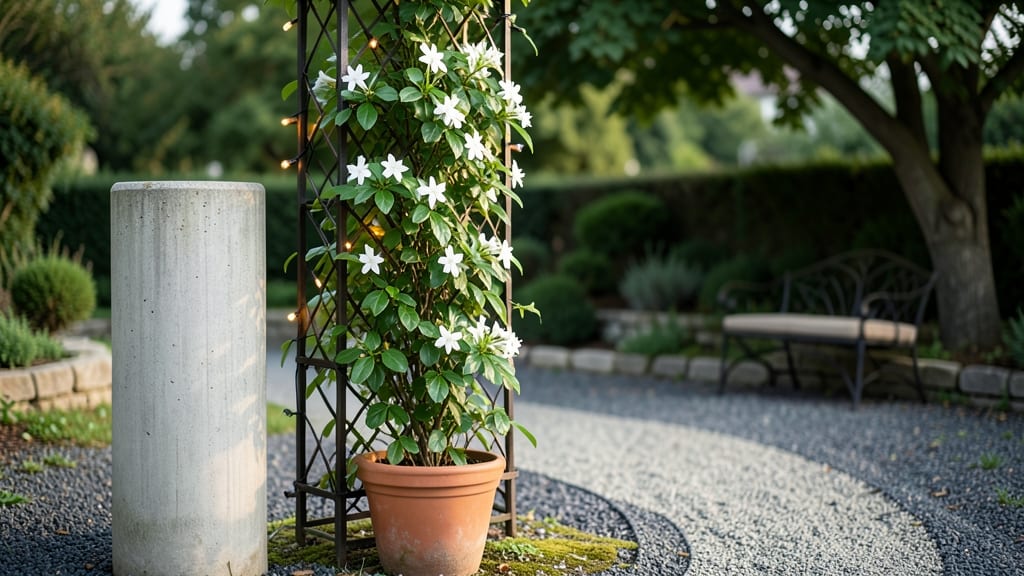
Concrete pillars for garden support structures like trellises and arbors, with weight capacities between 100 to 500+ pounds per pillar based on size, depth, and concrete strength. Bury at least 1/3 of the pillar’s height and reinforce with rebar for heavy loads.
These sturdy garden supports handle everything from lightweight climbing roses to heavy pergolas, thanks to their reinforced concrete construction. 🌿 The key to their strength lies in proper installation—deeper burial and rebar placement create a stable base that resists shifting soil.
For DIY projects, I recommend using 3000+ PSI concrete mix and following local frost-depth guidelines to prevent seasonal movement.
Beyond structural support, concrete pillars add architectural interest to garden layouts.
You can arrange them in geometric patterns for modern designs or cluster them around focal points like fountains. 🌟 Pairing them with stone pathways or metal trellises creates a cohesive look while maximizing vertical space for plants like clematis or wisteria.
💡 In This Article
- How to Calculate Concrete Pillar Weight Limits for Garden Structures
- Creative Garden Layout Ideas Using Concrete Pillars
How to calculate concrete pillar weight limits for garden structures
Concrete pillars derive their strength from three key factors: diameter, depth, and concrete mix strength. A 6-inch diameter pillar buried 2 feet deep can support up to 200 pounds, while an 8-inch diameter pillar buried 3 feet deep handles 400+ pounds.
The concrete mix's PSI (pounds per square inch) rating is critical—3000 PSI concrete is standard for garden projects, but 4000 PSI is better for heavy pergolas or large trellises. 💪 The formula for load capacity is roughly: Load = (Diameter² × Depth × PSI) / 1000.
Soil type dramatically affects stability. Sandy soil shifts easily, requiring deeper footings (up to 1/2 the pillar height buried), while clay holds firm but expands when wet—so add drainage gravel at the base. Rebar reinforcement (typically #4 rebar spaced 12 inches apart vertically) increases load capacity by 30-50%.
For example, a 10-inch pillar with rebar can support 500 pounds versus 350 pounds without it. Always check local frost lines—burying below the frost depth prevents seasonal heaving.
For DIY projects, use load tables as your guide. A 4-inch diameter pillar supports 50 pounds (ideal for lightweight vines), while a 12-inch pillar handles 800 pounds (perfect for heavy lattice structures). The footing should be 3 times wider than the pillar at the base to distribute weight evenly.
For instance, an 8-inch pillar needs a 24-inch wide footing. 🔧 Pro tip: Use a gravel bed (2-3 inches) under the footing to improve drainage and prevent water pooling.
Advanced builders often use fiber-reinforced concrete (with 1% steel fibers) for extra durability, especially in high-wind areas. This mix reduces cracking by 50% compared to standard concrete. For structures like arbors, space pillars 6-8 feet apart to distribute weight evenly.
If your garden has slope or uneven terrain, adjust burial depth—add 6 inches extra for every 10-degree slope to prevent tipping.
Consider this real-world example: A 10-foot tall arbor with 4 pillars (each 8 inches in diameter) supporting 300 pounds of lattice and climbing roses needs 3-foot deep footings. The total load per pillar is 75 pounds, well within the 400-pound capacity of properly reinforced pillars.
Always err on the side of deeper burial and stronger rebar—it’s the difference between a sturdy structure and one that sags under seasonal weight changes. ✨