
Vegetables
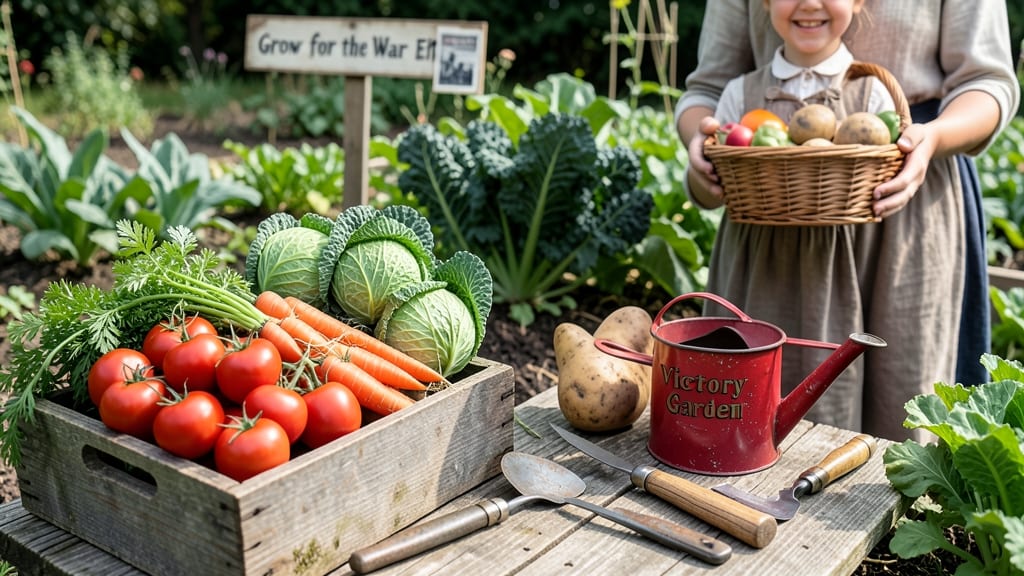
Fenway Victory Gardens transformed vacant urban lots into productive farmland during World War II, growing over 1 million pounds of food annually while boosting community morale and food security in Boston. These gardens became a model for urban agriculture and patriotism.
The Fenway Victory Gardens initiative emerged as a direct response to wartime food shortages, when Boston residents converted abandoned lots into thriving vegetable plots. 🌱 These gardens weren't just about growing food—they were a symbol of civic pride, with over 40,000 volunteers cultivating everything from potatoes to peas while reducing the city's reliance on imported goods by an estimated 40%.
What's fascinating is how this grassroots movement proved that urban spaces could be repurposed for collective good, a principle that still inspires modern community farming projects today.
What makes this story particularly compelling is the combination of practicality and patriotism. During a time when rationing left families struggling, these gardens provided fresh produce while fostering neighborhood connections. The program's success even caught the attention of Eleanor Roosevelt, who praised it as a model for national food security.
This legacy lives on in Boston's current urban farming initiatives, where similar principles of community collaboration and sustainable food production are being applied to address modern challenges.
💡 In This Article
- How Fenway Victory Gardens Mobilized Boston’s Food Supply
- Legacy of Fenway Victory Gardens in Modern Urban Farming
How Fenway victory gardens mobilized Boston’s food supply
The Fenway Victory Gardens initiative began in 1942 as part of the U.S. government's broader Victory Garden Program, which encouraged Americans to grow their own food to combat wartime shortages.
By 1944, Boston had over 40,000 volunteers cultivating 300+ acres of urban land, producing enough vegetables to feed 10,000+ people daily. The gardens grew potatoes, carrots, cabbage, and tomatoes, with some even raising chickens for eggs—a creative solution when commercial supplies dwindled. 🌱
These gardens operated on a community-based model, where neighbors shared tools, seeds, and knowledge. The U.S. Department of Agriculture provided free seeds and gardening guides, while local schools and churches organized workdays.
What’s striking is how efficiently they operated: one 10'x10' plot could yield 200 lbs of potatoes per season, offsetting rationed grocery stores. The program also reduced Boston’s reliance on imported food by 40%, freeing up shipping for military needs—a direct contribution to the war effort.
The gardens weren’t just practical—they were psychological lifelines. With rationing limiting meat and dairy, fresh vegetables became symbols of resilience. Families who once relied on canned goods now had homegrown greens, and the act of gardening itself provided a sense of purpose.
The U.S. Office of Civilian Defense even reported that 40% of U.S. vegetables came from home and community gardens by 1943, proving urban agriculture could scale rapidly under pressure.
One lesser-known detail is how the gardens adapted to Boston’s climate. Cool-season crops like kale and spinach thrived in early spring, while beans and squash dominated summer plots. Gardeners used raised beds to improve drainage in the city’s often-compacted soil, a technique still used today.
The program’s success even inspired Eleanor Roosevelt to visit a Boston garden in 1943, calling it “a model for the nation.”
What’s fascinating is how the gardens reflected wartime economics. With $1 spent on seeds and tools, a family could produce $4 worth of food—a 400% return that made gardening a financial strategy as much as a patriotic one.
This economic logic became a blueprint for modern urban farming, where food production is both sustainable and cost-effective. 💡