
Propagation
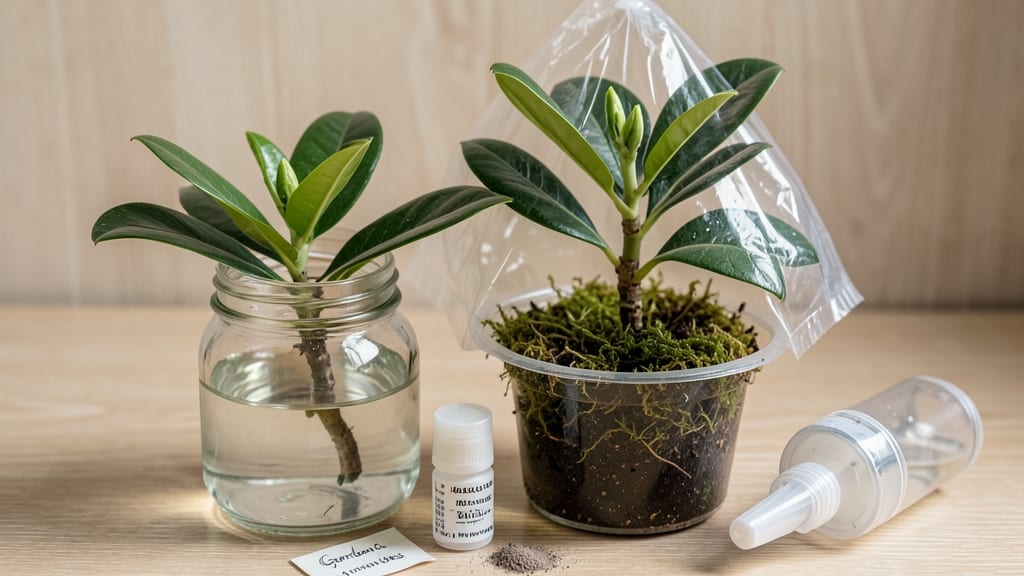
Growing gardenia from cuttings means using semi-hardwood stems, applying rooting hormone, and maintaining high humidity—place them in perlite or water, keep temperatures between 70-75°F, and expect roots to form in 4-8 weeks with a 60-80% success rate under perfect conditions. Always prune parent plants in late spring for optimal results.
Gardenias are famously tricky to propagate, but the secret lies in selecting the right stem type and creating ideal growing conditions. 🌱 Semi-hardwood cuttings—neither too soft nor fully woody—produce the best results because they've begun wood formation while still retaining some green tissue.
The rooting hormone kickstarts cellular division, while consistent moisture prevents desiccation without drowning the delicate stems. I've found that perlite provides excellent drainage while retaining enough humidity, though water propagation works too if you're patient enough to change it every few days.
Timing matters just as much as technique. Late spring is prime because the plant is actively growing but hasn't yet entered its dormant phase. This balance gives your cuttings the energy they need to focus on root development rather than leaf production.
Once roots appear, I recommend gradually introducing them to brighter light over 2-3 weeks to avoid shock—this slow transition mimics natural conditions and helps them establish stronger root systems before facing full sunlight.
💡 In This Article
- Science Behind Gardenia Cuttings Root Development
- Pro Tips for Maximizing Gardenia Cuttings Survival Rate
Science behind gardenia cuttings root development
The magic of gardenia propagation starts with a delicate hormonal dance inside the stem. When you take a semi-hardwood cutting, you're capturing a moment where the plant has begun producing lignin (the woody component) but still retains active cambium cells—these are the growth factories where roots will emerge.
The key hormones at play are auxins (naturally occurring in the stem) and cytokinins (often supplemented via rooting hormone). Auxins trigger cell elongation at the base while suppressing top growth, while cytokinins promote cell division.
This balance is why semi-hardwood cuttings (about 1/4-inch in diameter) work best—they've got enough stored energy but aren't yet too woody for hormone absorption.
Moisture management becomes a science experiment in its own right. Gardenias need their base to stay consistently damp (not soggy) because their root cells require oxygen for respiration.
Perlite provides that perfect balance—its porous structure holds moisture while allowing excess to drain, preventing the fungal rot that can occur in stagnant water. The 70-75°F sweet spot isn't arbitrary either: at this temperature, enzymatic activity in the cells peaks, accelerating root formation.
Below 65°F, metabolic processes slow dramatically, while above 80°F, the cuttings risk dehydration or bacterial infections. Think of it like Goldilocks—too hot, too cold, or too wet, and your cuttings won't thrive.
What most people overlook is how humidity affects the entire plant system. Gardenias are tropical natives that evolved in environments with 70-80% relative humidity. When you create this microclimate (using plastic domes or humidity trays), you're essentially recreating their natural conditions.
The high humidity prevents the cuttings from losing moisture through transpiration faster than roots can form. Without this protection, the leaves will start curling and drying out before roots have a chance to establish—this is why so many gardenia propagation attempts fail.
The first sign of success is tiny white root hairs appearing at the base after about 3-4 weeks, followed by more substantial roots in another 2-4 weeks.
Light plays a surprising role too—while gardenias love bright light, cuttings need indirect light during rooting. Direct sunlight causes the leaves to overheat and lose moisture rapidly, creating a vicious cycle of stress.
The ideal setup uses 50-70% shade cloth or placing the cuttings near an east-facing window where they get morning light but avoid the intense afternoon sun. This gradual light exposure helps the cuttings focus their energy on root development rather than leaf production.
Once roots reach about 1-2 inches long, you can start the slow acclimation process to brighter conditions.
Here's where things get interesting: the rooting process isn't just about water and hormones. Gardenias actually produce a natural antifungal compound called gardeniol when stressed, which helps protect the developing roots from soil-borne pathogens. However, this defense mechanism gets overwhelmed if conditions are too damp or warm.
That's why professional propagators often use a 1:1 mix of perlite and vermiculite—the vermiculite helps retain moisture while the perlite provides aeration, creating the perfect environment for both root growth and natural defense activation.
The timing of when you take your cuttings matters because it directly affects the plant's energy reserves. Late spring cuttings contain more stored carbohydrates from the previous growing season, giving them extra fuel for root development.
Fall cuttings, while possible, often struggle because the plant is redirecting its energy toward dormancy. This is why your success rate jumps from 40-50% in fall to 60-80% in spring—it's not just about the technique, but about working with the plant's natural rhythms.