
Advice
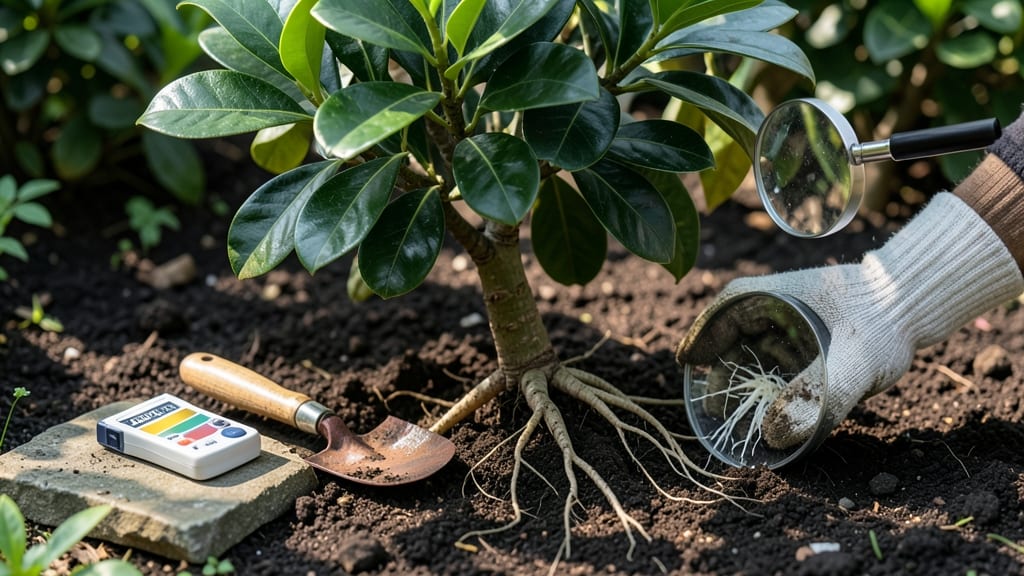
The gardenia root system spreads horizontally with shallow, fibrous roots that create a dense network for efficient moisture and nutrient absorption while anchoring the plant securely. These delicate roots prefer well-draining, slightly acidic soil and struggle with waterlogging or extreme conditions.
Gardenias develop this unique root structure to thrive in their native tropical environments, where shallow soil and seasonal rains demand rapid water uptake. 🌱 The fibrous roots spread outward rather than downward, forming a sprawling mat that maximizes surface area for absorption—ideal for sandy or rocky soils where deeper roots would struggle.
This horizontal growth also makes gardenias particularly sensitive to transplant shock, as disturbing their root network can take weeks to recover.
Unlike woody plants with thick taproots, gardenia roots prioritize speed over depth, allowing the plant to quickly establish itself after new growth. This adaptation explains why they often bloom within a year of planting—once their root system spreads enough to support the energy demands of flowering.
However, this same trait makes them vulnerable to overwatering, as their shallow roots can't escape saturated soil conditions that lead to suffocation and rot.
💡 In This Article
- Anatomy of Gardenia Roots: Structure and Function
- Optimal Soil and Care for Healthy Gardenia Roots
Anatomy of gardenia roots: structure and function
Gardenias develop a fibrous root system that spreads horizontally rather than growing deep, creating a sprawling network within the top 6-12 inches of soil. Unlike woody plants with thick taproots, this structure maximizes surface area for nutrient absorption—similar to how a spider's legs cover a wide space to detect vibrations.
The roots are thin (1-2 millimeters in diameter) but densely packed, allowing them to quickly capture water and minerals from the soil surface.
This shallow growth pattern evolved as an adaptation to tropical climates where rainfall is seasonal and soil nutrients are often concentrated near the surface. The fibrous roots also produce mycorrhizal associations—symbiotic relationships with soil fungi—that enhance nutrient uptake by up to 30%.
These fungal networks extend the root system's reach even further, making gardenias highly efficient at scavenging phosphorus and nitrogen, which are critical for their fragrant blooms.
The primary function of these roots isn't just absorption—they also anchor the plant while remaining flexible enough to handle tropical wind patterns.
Gardenias often grow in areas with loose, sandy soils where deep roots would struggle, making their horizontal spread a survival advantage. 🌿 What's fascinating is how this system prioritizes rapid establishment: new roots can grow at rates of 1-2 inches per week under ideal conditions, allowing the plant to quickly recover from disturbances like pruning or transplanting.
One key difference from woody plants is the lack of secondary thickening—gardenia roots don't develop woody tissue like oaks or maples. This keeps them lightweight and adaptable, but also makes them more vulnerable to physical damage.
The root tips are particularly sensitive, containing root hairs that increase absorption by 100-200 times compared to bare roots, though these hairs only live for about 2 weeks before being replaced.
This root structure explains why gardenias thrive in containers—their shallow spread fits perfectly in 12-18 inch deep pots while still allowing room for the dense network. However, this same trait makes them prone to drying out quickly in hot climates, as their roots can't reach deep moisture sources.
The trade-off is clear: rapid growth and adaptation come with higher maintenance needs for consistent moisture and protection from soil compaction.
Understanding this anatomy helps explain why gardenias often bloom more prolifically in their second year—once their root system has spread enough to support the energy demands of flowering. The roots' ability to quickly establish new connections also means they recover faster from minor disturbances than plants with deep taproots.