
Tools
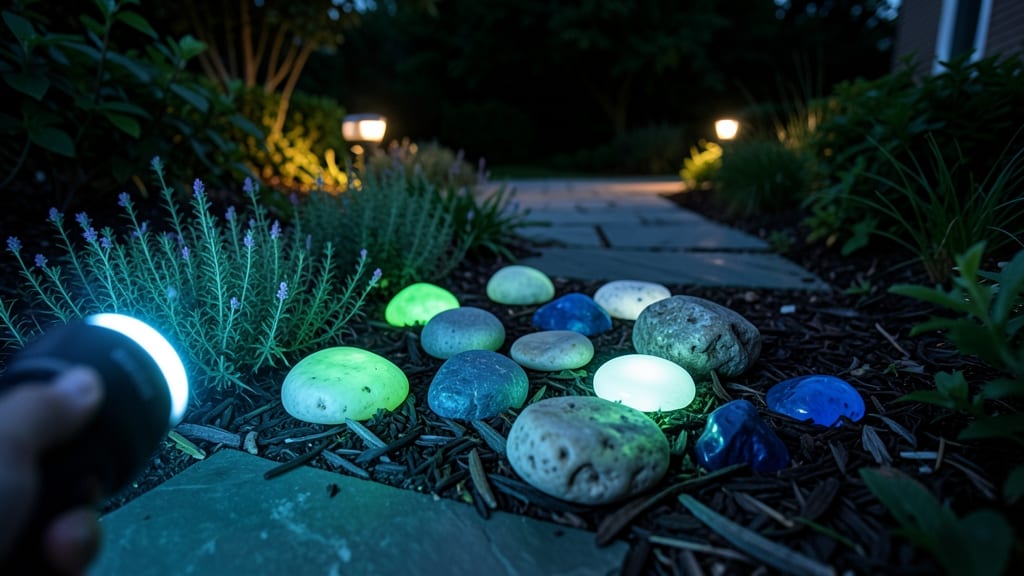
Glow in the dark garden stones light up nighttime paths and garden beds after dark by absorbing sunlight during the day, then emitting a soft glow for up to 12 hours. Opt for UV-reactive stones for maximum brightness and position them near walkways or seating areas to enhance safety and ambiance.
These luminous stones work by capturing ultraviolet rays from sunlight and storing them as energy, which they release as visible light when darkness falls. 💫 The glow duration depends on sunlight exposure—full sun maximizes brightness, while partial shade reduces performance.
For best results, I recommend placing them in areas with at least 6 hours of direct sunlight daily, as this ensures the longest-lasting illumination after nightfall.
Beyond placement, proper care extends their lifespan. Regular cleaning with mild soap and water removes dirt buildup that dims the glow, while avoiding harsh chemicals prevents surface damage. In colder climates, storing them indoors during winter prevents cracking from freeze-thaw cycles.
The key to maximizing their effect lies in balancing sunlight exposure with strategic positioning—think of them as your garden's natural nightlights!
💡 In This Article
- How Photoluminescent Garden Stones Work and Charge
- Strategic Placement and Maintenance for Long-Lasting Glow
How photoluminescent garden stones work and charge
Photoluminescent garden stones capture energy through a chemical process called photoluminescence, where UV light excites electrons in special phosphors embedded in the stone's surface. These excited electrons release energy as visible light when they return to their normal state—typically emitting a soft blue or green glow.
The brightness depends on the phosphor quality and concentration, with premium stones containing strontium aluminate or rare-earth elements that glow brighter and longer.
Sunlight exposure is critical—the stones need at least 6-8 hours of direct UV light daily to fully charge. Artificial UV lamps can supplement charging in shaded areas, but natural sunlight is more efficient because it provides a broader spectrum of UV rays.
For example, stones placed in full sun might glow for 10-12 hours, while those in partial shade could dim after just 4-6 hours. The glow intensity also fades over time with repeated charging cycles, especially if the stones are low-quality or exposed to extreme temperatures.
Here’s what affects their performance:
- Stone quality: Higher-grade stones use strontium aluminate or rare-earth phosphors, which glow brighter and last longer than cheaper alternatives.
- Sunlight intensity: Southern exposures receive more UV rays, maximizing glow duration, while northern exposures may require artificial charging.
- Temperature extremes: Prolonged exposure to below 32°F or above 120°F can degrade phosphors, reducing brightness over time.
The charging process is passive—no electricity or batteries are needed. When sunlight hits the stone, the phosphors absorb UV energy and store it as potential energy. After dark, this energy is released as visible light, creating a safe, ambient glow.
The longer the daylight exposure, the brighter and longer the nighttime illumination. For instance, stones charged for 8 hours might glow 20% brighter than those charged for only 4 hours. 🌞
One common misconception is that all glow-in-the-dark stones perform equally. However, the phosphor composition varies—some stones use zinc sulfide, which fades quickly, while others use strontium aluminate, offering up to 12 hours of glow.
Testing different brands in your garden’s sunlight conditions will reveal which holds its brightness best over time. For maximum longevity, avoid placing stones in areas prone to physical damage, like high-traffic pathways or near sharp garden tools.