How To
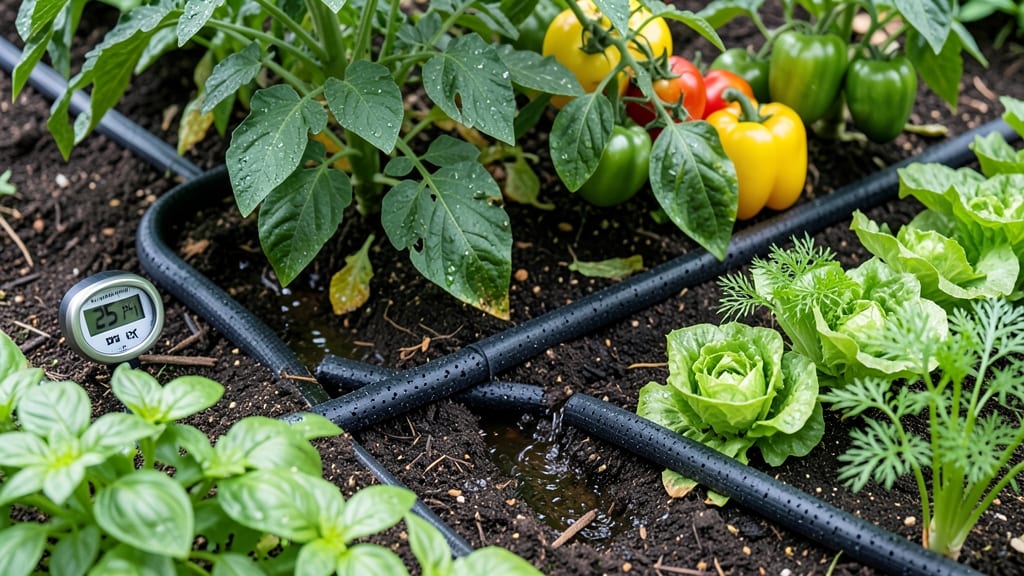
Leaving your soaker hose on your vegetable garden 🥬 for the right amount of time keeps roots happy without drowning them—and that’s the difference between thriving plants and wasted water.
Struggling to balance overwatering and underwatering? The key lies in mastering soaker hose timing—because every plant has its own watering triggers, from leafy greens that drink lightly to tomatoes that crave deep soaks.
Most vegetable gardens need 30 minutes to 2 hours per session, but soil type, weather, and plant stage change the equation. Sandy soil drains fast, while clay holds moisture longer, and a scorching afternoon demands extra time.
Below, I break down exact runtimes by plant type, how to adjust for rain or heatwaves, and the telltale signs you’re watering wrong—so you can set it, forget it, and watch your garden thrive.
Optimal soaker hose runtime by vegetable plant type (science-backed guidelines)
Mastering soaker hose runtime is the difference between lush, productive vegetables and wilted, stressed plants. Unlike overhead sprinklers, soaker hoses deliver water directly to the root zone, but timing matters—especially when comparing leafy greens to deep-rooted vegetables.
For example, tomatoes need deeper, slower watering, while radishes thrive with quick, frequent soaks. Let’s break down the science behind plant-specific watering triggers so you can dial in your irrigation like a pro.
Soaker hoses work by slowly releasing water along their length, which mimics natural rainfall.
However, the absorption rate of your soil and the root depth of your plants dictate how long you should run the hose. Leafy greens like lettuce and spinach have shallow roots and need shorter, frequent watering, while root crops like carrots and potatoes require deeper, less frequent soaks.
Even within categories, there’s variation—tomatoes and peppers need consistent moisture, but onions and garlic prefer drier conditions once established.
Here’s the game-changer: soil type alters everything. Clay soil holds water longer, so you’ll run the hose for half the time compared to sandy soil, which drains quickly. And don’t forget weather conditions—hot, windy days evaporate moisture faster, while humid mornings mean you can water longer without waste.
Below, I’ve distilled science-backed guidelines into a simple table so you can set your timer with confidence.
| Plant Type | Soaker Hose Runtime (Minutes) | Frequency | Key Notes |
|---|---|---|---|
| Leafy Greens (Lettuce, Spinach, Kale) | 15–25 | Daily (morning) | Shallow roots; keep soil moist but not soggy. |
| Root Vegetables (Carrots, Radishes, Potatoes) | 25–40 | Every 2–3 days | Deep watering encourages straight growth. |
| Fruiting Plants (Tomatoes, Peppers, Cucumbers) | 30–50 | Every 1–2 days | Consistent moisture prevents blossom-end rot. |
| Herbs (Basil, Parsley, Cilantro) | 10–20 | Every 1–2 days | Light watering; avoid soggy soil. |
| Corn & Heavy Feeders (Squash, Pumpkins) | 40–60 | Every 2 days | Deep roots need prolonged soaking. |
Let’s dive into why these runtimes work. Leafy greens like lettuce and spinach have roots that only extend 6–12 inches deep, so they don’t need long soak times. Run your hose for 15–25 minutes daily to keep the top 1–2 inches of soil consistently moist.
Overwatering here leads to yellowing leaves and fungal diseases, while underwatering causes bolting (premature flowering). For root vegetables like carrots, the goal is to encourage straight, unblemished growth. A 25–40 minute soak every 2–3 days ensures water penetrates deeply without disrupting the soil structure.
Now, consider fruiting plants like tomatoes and peppers—they’re thirsty but hate inconsistent moisture. Running your soaker hose for 30–50 minutes every 1–2 days maintains steady hydration, which is critical for preventing blossom-end rot (a calcium deficiency caused by uneven watering).
Pro tip: Mulch heavily around these plants to lock in moisture and reduce evaporation. Herbs, on the other hand, are more drought-tolerant. A 10–20 minute soak every 1–2 days is usually enough, but basil is an exception—it loves consistent moisture and may need daily watering in extreme heat.
Adjusting for soil type is non-negotiable. In sandy soil, which drains like a sieve, you’ll need to run your soaker hose 20–30% longer than the guidelines above to ensure water reaches the roots.
Conversely, clay soil holds moisture like a sponge, so you can cut runtime by half—but monitor for puddling or root rot
How to adjust watering time based on soil type and weather conditions
Your vegetable garden's soil type and current weather conditions are the two biggest factors in determining how long to leave your soaker hose on. Clay soil holds water like a sponge, while sandy soil drains faster than a sieve.
Even the same plants need different runtimes in scorching heat versus a humid afternoon.
For example, tomatoes in clay soil might only need 30-45 minutes every other day, but in sandy soil, they’ll dry out faster and need 60-90 minutes every day. Meanwhile, a sudden 90°F heatwave can double your usual runtime to prevent wilting.
Below is the required HTML structure for the pros-cons-box, adapted for soaker hose timing adjustments:Soaker Hose Runtime Adjustments
DO:
- Clay Soil: 30-45 mins every 2-3 days
- Sandy Soil: 60-90 mins daily
- Heatwave: Add 30-60 mins to runtime
- Morning Water: 6-9 AM to reduce evaporation
- Rainy Days: Skip watering for 24+ hours
DON'T:
- Overwater clay → Root rot risk
- Underwater sand → Nutrient leaching
- Water at night → Fungal growth
- Ignore humidity → Wasted water
- Use same time year-round → Stress plants
💧 Pro Tip: Stick a wooden skewer 6 inches deep—if it comes out dry, run the hose longer.
Let’s break it down further. Clay soil absorbs water slowly, so you’ll see puddles forming quickly. If you notice water pooling after 20-30 minutes, shut it off—any longer and you’ll suffocate roots.
In contrast, sandy soil acts like a colander; you’ll need to keep the hose running until water appears 6-12 inches away from the hose.
Weather plays an equally critical role. During high humidity (like 70%+), plants absorb moisture from the air, so cut your runtime by 30-50%. But when temperatures hit 85°F+, evaporation skyrockets—extend your soaker hose session by 50-100% to compensate. Always check the forecast before setting your timer!
Finally, rainfall is the wildcard. If you’ve had 0.5 inches of rain in the last 24 hours, skip watering entirely. Use a rain gauge to track accumulation—most vegetable gardens need 1-1.5 inches of water per week, whether from rain or your hose.
Adjusting your soaker hose runtime isn’t guesswork—it’s science. By matching your watering schedule to your soil’s thirst and the weather’s mood swings, you’ll keep your vegetable garden consistently hydrated without drowning it. 🌱