Light Requirements
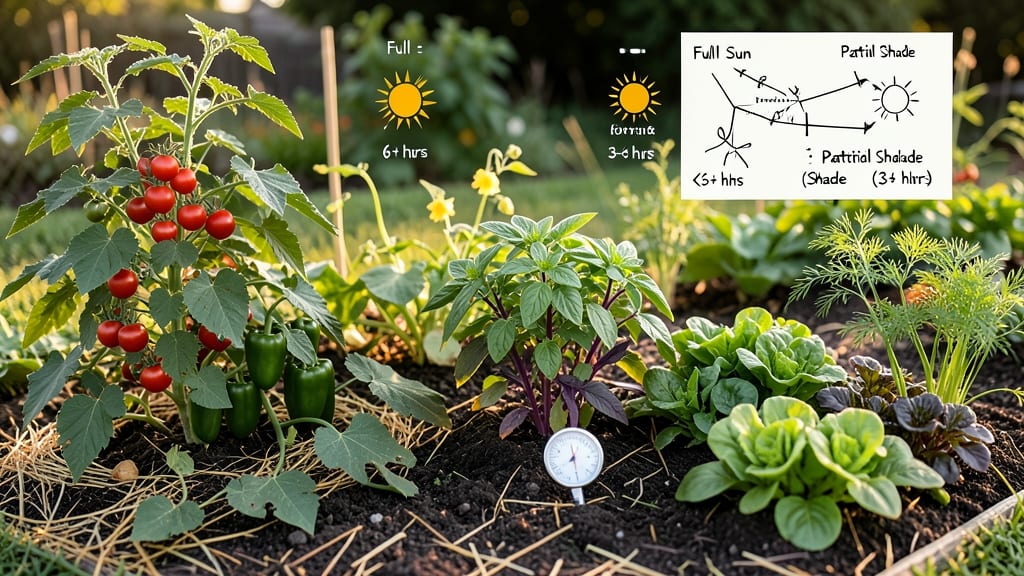
To get the right amount of sun for your vegetable garden, aim for 6 to 8 hours of direct sunlight daily—the magic number that turns struggling seedlings into bumper crops.
Picture this: your tomatoes wilting in the afternoon heat or your lettuce bolting before you even taste it. Sunlight isn’t just light—it’s the difference between a thriving garden and a sad, half-hearted harvest.
Not all vegetables are created equal, though. Leafy greens like spinach and kale can handle partial shade, while heavy hitters like peppers and eggplants demand full sun. I’ll break down the exact hours each crop needs and how to map sunlight in your yard.
You’ll also discover how to work with what you’ve got—whether that’s a shady corner or a south-facing plot—plus seasonal tweaks to keep your garden productive from spring to fall.

Sunlight requirements by vegetable type: full sun vs partial shade breakdown
Understanding your vegetable garden's sunlight requirements is like knowing the secret ingredient in your favorite recipe—it makes all the difference. Most vegetables thrive with 6-8 hours of direct sunlight daily, but some can handle less while others demand more.
The key is matching each plant to its ideal light conditions to avoid stunted growth or bitter flavors.
I’ve planted everything from sun-loving tomatoes to shade-tolerant lettuce, and I’ve learned that even a few hours of shade can drastically change your harvest. Let’s break down the sunlight needs by vegetable type so you can place each plant perfectly in your garden.
| Vegetable Type | Sunlight Needs | Examples | Notes |
|---|---|---|---|
| Full Sun Lovers | 6-8+ hours | Tomatoes, Peppers, Cucumbers, Corn, Eggplant | Needs intense light for fruiting |
| Partial Shade | 3-6 hours | Spinach, Kale, Swiss Chard, Beets, Carrots | Morning sun, afternoon shade ideal |
| Shade-Tolerant | 2-4 hours | Lettuce, Radishes, Green Onions, Bush Beans | Best for north-facing beds |
For full-sun vegetables like tomatoes and peppers, I always place them in the southernmost part of my garden where they get unobstructed sunlight from morning until evening. These plants need intense light for fruiting, and even a few hours of shade can reduce yields or lead to poor flavor.
In my zone 6 garden, I’ve seen tomato plants produce 3x more fruit when given full sun compared to partial shade.
On the other hand, leafy greens like spinach and kale actually bolt (go to seed) faster in hot sun. These partial-shade plants thrive with 3-6 hours of morning sunlight and afternoon shade, especially during summer months.
I’ve had the best luck planting them near taller plants or under a drip irrigation shade cloth during peak heat.
Root crops like carrots and beets also prefer partial shade, especially in hot climates. Too much sun can cause them to become woody or bitter. I once grew carrots in full sun and ended up with hard, fibrous roots—a lesson I won’t repeat!
Instead, I now plant them in areas where they get morning sun and afternoon shade.
If you’re working with a shade garden, focus on fast-growing vegetables like radishes, lettuce, and green onions. These shade-tolerant plants can even thrive under dappled sunlight from trees.
In my urban garden, I’ve successfully grown baby leaf lettuce under a large oak tree with just 2-3 hours of filtered light.
One common mistake I see is assuming all vegetables need full sun. While it’s true that most fruiting plants (like tomatoes and peppers) demand it, herbs like cilantro and parsley actually prefer partial shade in hot climates.
I’ve had cilantro bolt within weeks when planted in full sun, but it thrives with morning sun and afternoon shade.
For container gardening, choose compact varieties of full-sun plants and place pots in south-facing windows or on sunny patios. I’ve grown cherry tomatoes in pots with 6+ hours of sunlight and still gotten a great harvest. Just be sure to rotate containers weekly for even growth.
Seasonal adjustments are key too. In spring and fall, partial-shade plants can often handle more sun, while summer heat may require moving them to shadier spots.
I always monitor my garden’s microclimates—some areas might get more afternoon shade due to nearby buildings or fences, making them perfect for heat-sensitive crops.
Pro tip: Use reflective mulches like white gravel or aluminum foil to bounce extra light onto shade-loving plants. I’ve seen this trick boost growth by 20% for lettuce and spinach in partially shaded beds. Just avoid using it on full-sun plants, as it can overheat the soil.
By matching each vegetable to its ideal sunlight conditions, you’ll maximize yields and minimize stress on your plants. Start by assessing your garden’s sunlight patterns, then group plants by their needs. Your future harvests will thank you! 🌱
How to calculate sunlight hours in your garden (and fix common mistakes)
Measuring sunlight in your garden isn’t just about eyeballing the sunniest spot—it’s about precision. Even a 1-hour difference can mean the difference between thriving tomatoes and sad, underperforming plants. Start by observing your yard from sunrise to sunset for at least 3 days to account for cloudy variations.
Use a sunlight journal or app like Sun Surveyor to log exact hours.
Most gardeners assume all areas get the same sunlight, but microclimates create big differences.
A spot near a fence might get only 3 hours of sun, while just 10 feet away, your veggies bask in 8. Tall structures like trees, sheds, or even neighboring houses cast moving shadows that change with the seasons.
I’ve seen gardens where afternoon shade from a new garage ruined a full-sun crop overnight.
Don’t rely on summer sunlight alone—winter sun patterns are often far weaker. In my zone 6 garden, a south-facing bed gets 7 hours in July but drops to just 4 in December. This is why I always test in winter before committing to sun-loving plants like peppers or squash.
For accurate measurements, use a DIY sun gauge: Place a white board or stakes in your garden and mark shadow lines every hour. Repeat weekly to track seasonal changes.
I also recommend digital sun trackers like the SunCalc app, which shows real-time sun paths for your location. These tools reveal hidden shade patterns you’d never notice otherwise.
Adjusting for afternoon shade? Try planting heat-sensitive crops like leafy greens in the shadiest spots while reserving morning sun for tomatoes and peppers. My garden’s east side gets morning sun but stays cooler—perfect for basil and cucumbers.
Meanwhile, the west side, which gets brutal afternoon heat, now hosts shade-tolerant beans and radishes.
Seasonal tweaks are key too. In spring, when days are shorter, I rotate crops to match sunlight availability. Fast-growing radishes or lettuce thrive in early spring’s limited sun, while squash and corn wait until summer’s longer days.
Use row covers to extend early-season sunlight if needed—just remove them before plants overheat.
Remember: Even 1 extra hour of sun can boost yields by 20-30%. Take the time to map your garden’s sunlight zones, and you’ll avoid costly mistakes. Start today—your next harvest depends on it! 🌱☀️