
Light Requirements
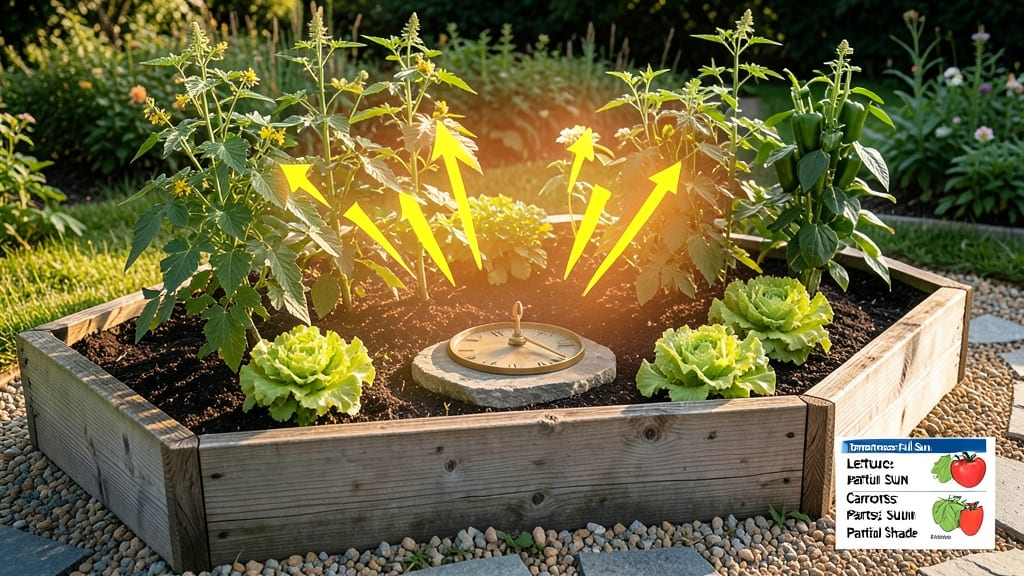
A vegetable garden needs 6 to 8 hours of sunlight daily to grow strong, productive plants 🥬 — but too much or too little can ruin your harvest before it starts.
Struggling to decide where to plant your vegetables? Sunlight is the single most critical factor in determining whether your garden thrives or withers—yet many gardeners get it wrong, leading to disappointing harvests. The right balance of sunlight can mean the difference between lush tomatoes and sad, stunted plants.
Not all vegetables are created equal, though. Leafy greens like spinach and kale can handle partial shade, while sun-lovers like peppers and cucumbers demand full sun. Even the same crop needs adjustments based on your garden’s location—whether it’s a south-facing plot or a shaded balcony.
In this guide, I’ll break down the exact sunlight needs for your favorite crops, how to measure sunlight in your space, and what to do when Mother Nature throws you a curveball with seasonal changes.

Sunlight requirements for vegetables: full sun vs partial shade breakdown
Understanding your garden's sunlight exposure is the first step to growing a thriving vegetable patch. Most vegetables fall into three categories: full sun, partial shade, and low light. Each requires specific daily sunlight hours to produce the best yields.
For example, tomatoes and peppers demand 6-8 hours of direct sun, while leafy greens like spinach thrive with just 3-4 hours. Misjudging sunlight can lead to weak plants, poor fruit set, or even total failure.
Before planting, observe your garden's sunlight patterns for at least a week. Note how shadows shift throughout the day, especially during peak summer and winter months. South-facing plots typically receive the most sun, while north-facing areas often stay shaded.
Urban gardens with tall buildings or trees may need creative solutions like reflective surfaces or vertical growing to maximize light exposure. Even small adjustments—like moving plants a few feet—can dramatically improve their growth potential.
Vegetables labeled as full sun lovers—like tomatoes, peppers, and eggplants—require at least 6 hours of direct sunlight daily. Without this, they’ll produce fewer fruits and may become leggy or weak.
For these plants, position them in the sunniest spot of your garden, ideally where they receive morning sun and afternoon light. If your garden lacks sufficient sunlight, consider using reflective mulch or light-colored containers to bounce extra light onto the plants.
For partial shade vegetables such as leafy greens and root crops, aim for 3-6 hours of sunlight. These plants often thrive in areas with morning sun and afternoon shade, which helps prevent bolting (premature flowering) during hot weather.
For example, spinach and lettuce can actually become bitter or bolt if exposed to too much heat. Use dappled shade cloth (30-50% shade) to filter intense midday rays during summer.
Adjusting plant spacing based on sunlight exposure is crucial for optimal air circulation and light penetration. Crowded plants in full sun can shade each other, leading to weaker stems and increased disease risk. For instance, tomato
How to measure and adjust sunlight for your garden layout
Sunlight is the backbone of any successful vegetable garden, but figuring out exactly how much your space gets can be tricky. Many gardeners assume their yard is "sunny enough" only to watch plants struggle or fail.
The key is understanding how sunlight shifts throughout the day and season, then designing your garden to match your vegetables' specific needs.
Start by observing your garden at different times of day. Use a simple method like placing a white stake in the ground and marking where its shadow falls every hour. This gives you a clear map of sunlight patterns that you can reference when planning your layout.
Don’t forget to account for nearby trees, buildings, or even your own house, which can cast unexpected shadows.
🌞 5 Key Steps to Measure & Adjust Sunlight
- 📏 Measure sunlight hours using a sun calculator or shadow tracking for 3-5 days to account for cloudy days.
- 📍 Map your garden by dividing it into zones based on sunlight exposure (full sun, partial shade, deep shade).
- 🌱 Group plants by sunlight needs—place tomatoes and peppers in full-sun areas, while leafy greens thrive in partial shade.
- ☀️ Adjust for seasonal changes—summer sunlight lasts longer than winter, so plan for 6-8 hours in summer and 4-6 hours in winter.
- 🌿 Use reflective surfaces like white gravel or mirrors to redirect sunlight into shaded corners for urban or balcony gardens.
For urban gardeners or those with limited space, creative solutions like vertical gardening or reflective mulches can maximize sunlight. Place taller plants on the north side of your garden to avoid shading smaller crops, and consider using light-colored containers to reflect extra light onto nearby plants.
Even a small adjustment, like rotating containers weekly, can make a big difference in sun exposure.
Don’t overlook seasonal variations—what’s full sun in summer might be partial shade in winter. Use seasonal sun calculators to adjust your planting schedule, and consider adding seasonal shade cloth to protect heat-sensitive plants during peak summer. This flexibility ensures your garden stays productive year-round, even as sunlight shifts.
If your garden has mixed-light conditions, design your layout to place sun-loving crops near the edges and shade-tolerant plants in the center. For example, bush beans and lettuce can coexist in partial shade, while cucumbers and squash need full sun.
This layered approach makes the most of every inch of your space.
Finally, trust your plants—they’ll tell you if they’re getting too much or too little sun. Yellowing leaves or stretched stems are signs of sunlight stress, while lush green foliage and vigorous growth mean you’ve nailed the balance.
With a little observation and adjustment, you’ll create a garden layout that works perfectly for your sunlight conditions and vegetable goals. 🌱