
Fertilization
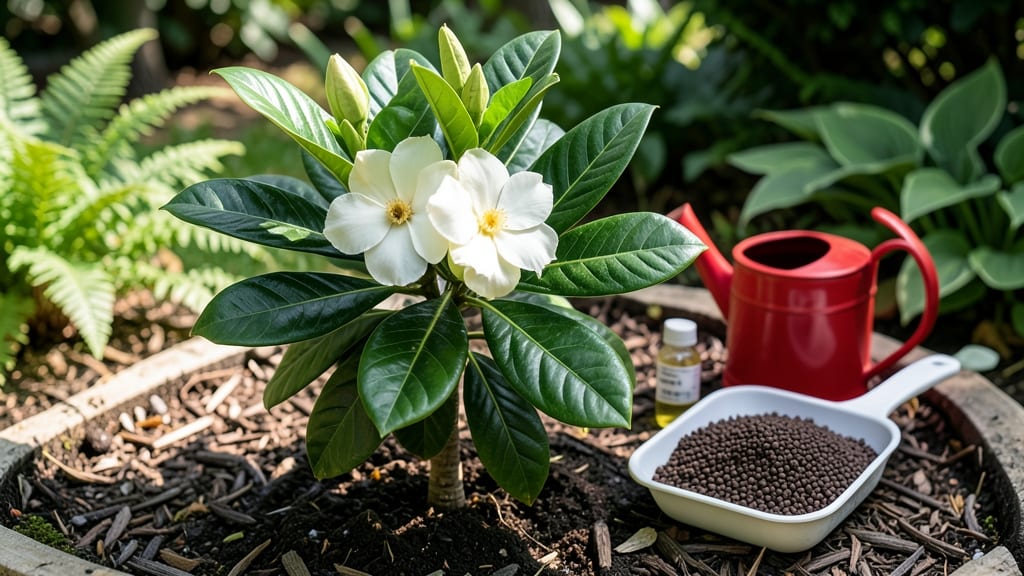
To fertilize gardenias for peak blooms and lush foliage, you’ll need a schedule that changes with the seasons — not a one-size-fits-all approach.
Picture this: You’ve spent months nurturing your 🌸 gardenias, only to watch them produce fewer flowers than last year. The issue? Over- or under-fertilizing at the wrong time. Gardenias thrive when fed just enough, but too much too soon can burn roots or stunt blooms.
The key is timing: light feeds in spring, regular feeding in summer, and a complete break in winter.
This isn’t just about throwing fertilizer on the soil — it’s about understanding your plant’s life cycle. Acid-loving gardenias need a balanced 6-6-6 or 8-3-9 blend, but the real magic happens in how often you apply it.
Miss the window, and you’ll end up with leggy stems and sparse blooms. Get it right, and you’ll reward yourself with fragrant, show-stopping flowers year after year.
Below, I’ll break down the exact schedule for potted and in-ground gardenias, the best organic vs. synthetic options, and how to spot when you’re overdoing (or underdoing) it. Ready to transform your gardenias into the star of the show?

Gardenia fertilization schedule by season: what to use and when
Gardenias reward precise care with their fragrant blooms and glossy foliage, but their fertilization needs shift dramatically with the seasons. Unlike many plants, gardenias thrive on a balanced yet acidic feeding routine that aligns with their natural growth cycles.
I’ve learned the hard way that fertilizing at the wrong time—like mid-winter—can stress your plant instead of nourishing it. Let’s break down the month-by-month schedule that’ll keep your gardenias flourishing year-round.
First, understand that gardenias have two key phases: growth (spring and early summer) and blooming (late summer to fall). Each phase demands a different fertilization approach. For example, a light feed in spring jumpstarts root development, while a heavier feed in summer supports those show-stopping flowers.
And don’t forget—indoor gardenias need adjustments too, since they lack seasonal cues like outdoor plants.
🌱 Pro Tip: Always pair fertilization with a soil pH check (aim for 5.0–6.0). Gardenias hate alkaline soil, and even the best fertilizer won’t work if your soil is too basic. Use a lime-free fertilizer or mix in peat moss to maintain acidity.
| Season | Month | Fertilizer Type | Frequency | Notes |
|---|---|---|---|---|
| Spring | March | Balanced (6-6-6) or slow-release granules | Light feed (½ strength) | Stimulate root growth |
| April | Acid-loving fertilizer (8-3-9) | Full strength | Boost new foliage | |
| May | Organic (fish emulsion or compost tea) | Every 6 weeks | Prepare for blooming | |
| Summer | June | High-phosphorus (e.g., 10-20-10) | Every 4-6 weeks | Support flowering |
| July-August | Slow-release granules | Every 8 weeks | Maintain blooms | |
| September | Balanced (6-6-6) | Light feed | Transition to fall | |
| Fall | October | None (or compost tea) | Reduce feeding | Prep for dormancy |
| November-December | None | — | Winter dormancy |
Let’s start with spring, the season where gardenias wake up from dormancy. In March, give them a light feed with a balanced fertilizer (like 6-6-6) to encourage root growth without overwhelming the plant.
By April, switch to an acid-loving fertilizer (like 8-3-9) to match their natural soil preferences. I’ve seen gardenias double their foliage growth when fertilized correctly in spring—it’s magical!
Summer is all about blooms, so June through August are prime feeding months. Use a high-phosphorus fertilizer (like 10-20-10) to push flowering, but space it out every 4–6 weeks.
For potted gardenias, I cut the dose in half to avoid salt buildup in the soil. 💧 Water deeply after fertilizing to help nutrients absorb.
As summer winds down, shift to a lighter feed in September to signal the plant to prepare for dormancy. By October, you can taper off entirely—unless you’re using compost tea, which is gentler. And in winter, skip fertilization
Signs your gardenias need fertilizer (and when to stop)
Your gardenias are whispering clues about their health—if you know how to listen. Yellowing leaves on older growth, stunted new shoots, or fewer blooms than usual are classic signals they’re hungry for nutrients.
But here’s the catch: these signs can also mean over-fertilization or even poor drainage. The key is learning how to distinguish between genuine nutrient needs and other stressors.
First, check the soil pH. Gardenias thrive in acidic soil (pH 5.0-6.0). If your soil is alkaline, nutrients like iron and manganese become unavailable, mimicking fertilizer deficiency symptoms.
A simple soil test kit (around $10) can reveal the truth in minutes. Slow growth paired with pale green leaves often points to nitrogen deficiency, while brown leaf edges may signal phosphorus or potassium shortages.
🌸
⚠️ Warning: Over-Fertilizing Gardenias
Fertilizing too often or using high-nitrogen blends can burn roots and stunt blooms. Never fertilize during dormant months (November-February)—this is when gardenias rest. Spring feeding should be light (half-strength) to wake roots gently. Summer bloomers need balanced NPK (6-6-6) every 6-8 weeks, but stop by August to encourage next year’s buds.
Don’t overlook environmental factors that mimic fertilizer needs. Compacted soil or poor drainage can starve roots of oxygen and nutrients, even with regular feeding. If your gardenias show wilting despite moist soil or root rot signs (black, mushy roots), drainage is the culprit.
Amend clay soil with perlite or compost to improve aeration and nutrient uptake.
Another red flag: Bud drop before flowers open. This often happens when gardenias get too much nitrogen late in the season or struggle with inconsistent moisture.
To fix it, switch to a low-nitrogen, high-phosphorus fertilizer (like 5-10-10) and water deeply every 2-3 days during blooming season. Mulch with pine bark to maintain soil acidity and retain moisture.
If you’ve ruled out pH, drainage, and pests, it’s time to fertilize—but start slow. Use a balanced, acidic fertilizer (like 6-6-6 with sulfur) and apply it to moist soil in early morning. Water thoroughly after to prevent root burn.
For potted gardenias, fertilize every 4-6 weeks during growing season, but flush the soil with water every 3 months to prevent salt buildup.
Remember: Healthy gardenias should have dark green, glossy leaves and continuous blooms from summer to fall. If you’re still seeing yellowing leaves after fertilizing, test your water—hard water (high in calcium) can lock out essential nutrients. In that case, use rainwater or distilled water for watering and fertilizing.
🌿