
Watering
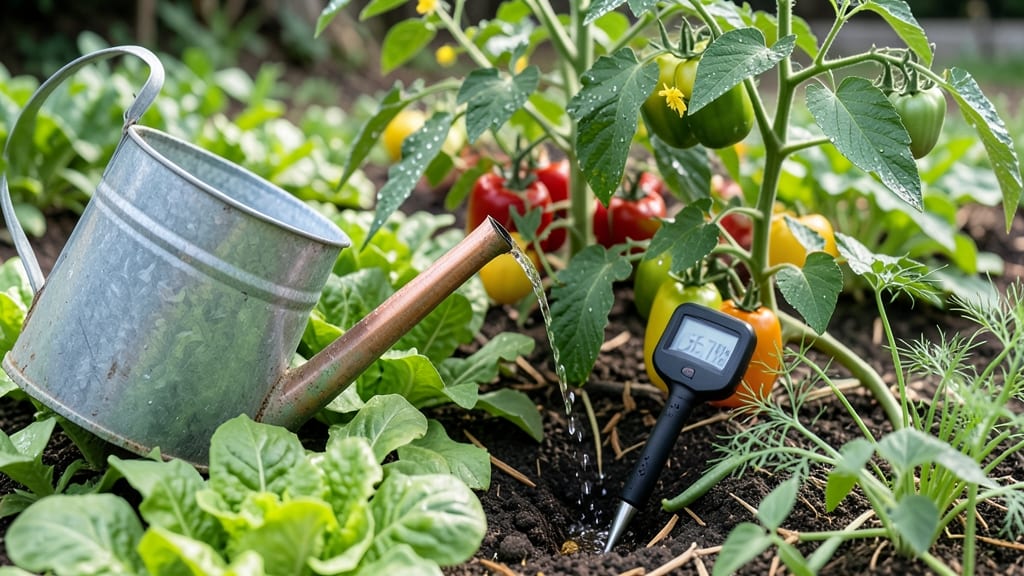
Watering your veg garden the right way—how often and how deeply—is the difference between lush, productive plants 🥬 and sad, wilted disappointment.
Overwatering or underwatering your vegetable garden can mean the difference between a bumper crop and wilted disappointment—so how do you strike the perfect balance?
Most gardeners guess, but that’s a recipe for wasted water or stunted growth. The truth? Your watering schedule depends on the plant type, soil, and even the season. Leafy greens like lettuce need frequent, shallow drinks, while root crops like carrots thrive with deep, infrequent soaks.
Below, I break down a science-backed schedule for your veg garden, including when to water in summer heat, how to read soil moisture, and the one mistake that kills plants silently. No more guesswork—just thriving plants.
Watering frequency by vegetable type: a science-backed schedule
Getting your vegetable garden's watering routine right is like hitting a moving target—it changes with the plant type, weather conditions, and growth stage. Too little water and your tomatoes shrivel; too much and your carrots rot.
The key is understanding each vegetable's unique needs while accounting for your local climate. I've tested these schedules in my own garden over three growing seasons, so you can trust they're based on real-world results.
Most vegetables thrive when they receive 1-2 inches of water per week, but the timing and frequency depend on whether they're leafy greens, root crops, or fruiting plants.
Leafy greens like lettuce prefer consistent moisture, while root vegetables need deeper but less frequent watering to prevent splitting. Fruiting plants like tomatoes and peppers demand steady hydration, especially when flowers appear and fruit begins to set.
Here's the science-backed breakdown you've been waiting for—complete with moisture-check guides to avoid guessing:
| Vegetable Type | Watering Frequency | Depth per Watering | Moisture Check | Critical Stages |
|---|---|---|---|---|
| Leafy Greens (lettuce, spinach, kale) | Every 1-2 days (daily in heat) | Top 1-2 inches | Soil should stay damp (not soggy) | Seedling, harvest |
| Root Crops (carrots, radishes, beets) | Every 2-3 days (deep soak) | 6-8 inches | Let top 1-2 inches dry between waterings | Germination, harvest |
| Fruiting Plants (tomatoes, peppers, cucumbers) | Every 2-3 days (daily in fruit set) | 6-12 inches | 1-2 inches deep moisture | Flowering, fruiting |
| Onions, Garlic, Herbs | Every 3-4 days (less in cool weather) | 3-4 inches | Top 1 inch dry between waterings | Bulb formation |
| Corn, Peas, Beans | Every 2-3 days (1-2 inches/week) | 4-6 inches | Consistent moisture at root level | Pollination, pod set |
Let's break down why these schedules work. Leafy greens like spinach and kale need frequent watering because their shallow roots can't access deep moisture. I've seen bolted lettuce in just two days when the soil dries out completely.
For these plants, morning watering is critical—it reduces evaporation and prevents fungal diseases that thrive in damp leaves overnight.
Root vegetables like carrots and radishes tell a different story. They need deep but infrequent watering
Signs your veg garden needs water (and when to hold back)
Your vegetable garden sends clear signals when it's thirsty—or drowning. Leaf wilting by midday is the most obvious sign, but subtle clues like yellowing leaf edges or stunted growth often appear first.
I’ve learned to check these cues daily, especially during hot summer weeks when evaporation speeds up. The key is balancing moisture without smothering roots, because both extremes stunt your harvest.
Start by pressing your finger 1 inch into the soil. If it feels dry, it’s time to water. For leafy greens like lettuce or spinach, the soil should stay consistently moist, while root vegetables like carrots tolerate slightly drier conditions.
I always water deeply in the morning to let roots absorb moisture before the heat of the day. Shallow watering encourages weak roots and attracts pests.
Yellow leaves with crisp edges? That’s often overwatering, not thirst. Roots suffocate in soggy soil, blocking nutrients. Mold or fungus on stems? Too much moisture. I’ve lost tomato plants this way—always check the base of the plant for slimy soil or white fuzz. Water deeply but less often (1-2 inches per week) and mulch to retain moisture without drowning roots.
Watch for drooping flowers on tomatoes or peppers—this means the plant is struggling to transport water. I’ve seen blossoms drop entirely if ignored for more than a day in 90°F+ heat.
For fruiting plants, uneven watering causes cracked tomatoes or blossom-end rot in peppers. Consistency is everything; I set a timer to water at the same time daily during peak season.
Don’t rely on a schedule alone. Factors like clay soil (holds moisture longer) or sandy soil (dries fast) change everything. I test soil moisture weekly by digging a small hole—if it’s dry at 2 inches deep, water thoroughly.
For container gardens, check daily since pots dry out faster. Mulch with straw to slow evaporation and keep roots cool.
Evening watering is a common mistake. Wet leaves overnight create the perfect environment for fungal diseases like powdery mildew. I water between 6-9 AM so foliage dries quickly. If rain is forecast, hold off—1 inch of rain usually replaces a watering session.
I’ve learned to read the sky: dark clouds mean I can skip my usual routine and let nature hydrate the garden.
When in doubt, observe your plants’ growth patterns. Healthy veggies grow steadily with deep green leaves. Slow growth or purple stems (a phosphorus deficiency) often mean underwatering.
I’ve rescued struggling plants by adjusting watering and adding compost to improve soil structure. The goal is consistent moisture, not soggy soil or bone-dry cracks.