
Tools
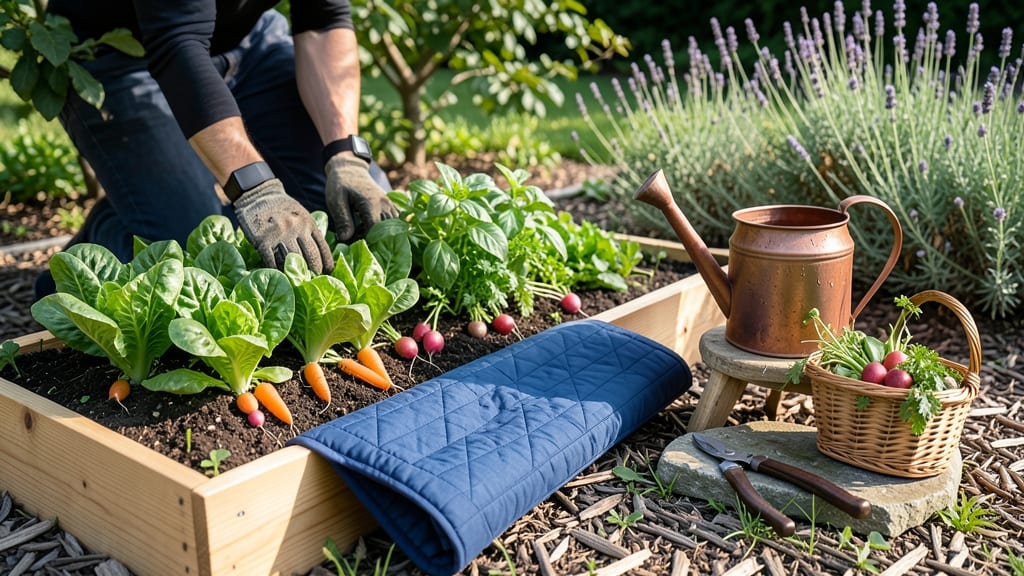
Gardening is considered exercise because it engages multiple muscle groups, elevates heart rate, and burns calories—moderate gardening can expend 200-400 calories per hour, depending on intensity and body weight. It improves strength, flexibility, and cardiovascular health while reducing stress.
Gardening absolutely counts as physical activity, especially when you're digging, lifting, or bending for extended periods. 🌱 The repetitive motions—like raking or weeding—work your legs, core, and arms while raising your heart rate, similar to light jogging.
Studies even show that gardening can improve balance and coordination, making it a functional workout for all ages. What's more, the fresh air and sunlight boost mood and energy, turning it into a full-body experience that's both productive and healthy.
Unlike structured workouts, gardening lets you control the intensity—whether you're doing light pruning or heavy mulching, you're still moving and engaging muscles. The key is consistency: dedicating just 30 minutes a few times a week can match the benefits of a brisk walk or yoga session.
Plus, the mental health perks—like reduced stress and improved focus—make it a win-win for both body and mind.
💡 In This Article
- How Gardening Compares to Traditional Exercise
- Maximizing Health Benefits Through Gardening Techniques
How gardening compares to traditional exercise
Gardening engages your body in ways that closely mirror traditional exercise routines, but with unique advantages. When you're digging, you're working your glutes, hamstrings, and calves—similar to squats—while your core stabilizes your torso against the resistance of the soil.
Studies from the University of Utah found that 30 minutes of moderate gardening can burn 150-200 calories, comparable to a brisk walk. The repetitive motions of raking or weeding elevate your heart rate to 50-70% of your maximum, falling into the moderate-intensity range recommended for cardiovascular health.
The beauty of gardening lies in its low-impact nature. Unlike running or weightlifting, which can stress joints, gardening's movements are often weight-bearing but gentle.
A 2018 study in the Journal of Physical Activity and Health highlighted how gardening improves balance and coordination—critical for preventing falls, especially in older adults. For example, kneeling to plant seeds engages your quadriceps and hip flexors while maintaining stability, much like yoga poses.
The varied postures—bending, reaching, twisting—ensure you're working multiple muscle groups simultaneously, akin to a full-body circuit training session.
What sets gardening apart is its adaptability. You can tailor the intensity to your fitness level: Light tasks (like pruning) burn 120-160 calories/hour, while heavy tasks (like moving mulch) can reach 300-400 calories/hour.
This flexibility makes it ideal for beginners or those recovering from injuries, as you can gradually increase effort. For instance, using a wheelbarrow to transport soil mimics the resistance training of carrying weights, but with less joint strain.
The American Heart Association even recognizes gardening as a viable form of moderate physical activity for meeting weekly exercise guidelines.
One often-overlooked benefit is the mental-physical synergy. Gardening's mindful focus—like watching plants grow—can reduce cortisol (the stress hormone) by up to 30%, according to research from the University of Florida.
This dual benefit of physical exertion + mental relaxation makes gardening a holistic workout, unlike many gym routines that separate cardio and strength training. For example, the act of deadheading flowers requires precision and patience, engaging both your fine motor skills and deep breathing, similar to tai chi.
To put it in perspective, compare gardening to other activities:
- Calorie burn: Gardening (200-400 cal/hr) vs. walking (160-300 cal/hr) or yoga (150-300 cal/hr)
- Muscle groups: Gardening works legs, core, arms, and back—like a circuit workout
- Joint impact: Gardening is low-impact vs. running (high-impact)
For those tracking fitness metrics, gardening can be a silent cardio session. The continuous motion of weeding or planting keeps your heart rate elevated for extended periods, much like cycling.
Meanwhile, the intermittent bursts of effort—like lifting a heavy pot—add a HIIT-like component. This hybrid approach makes gardening a functional, real-world workout that translates to daily life activities.