
Landscaping
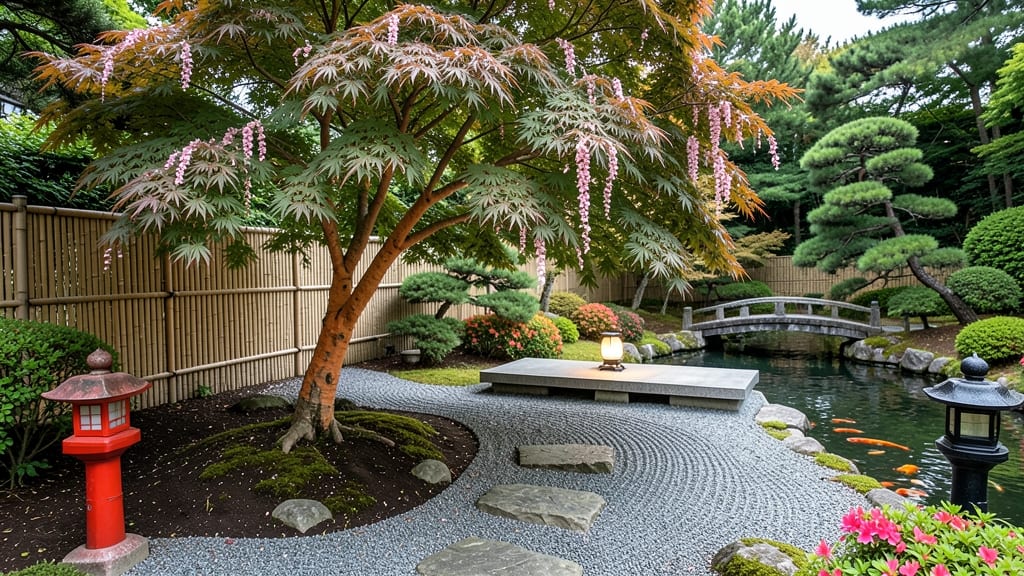
A Japanese garden in LA offers serene Zen-inspired escapes through carefully designed urban spaces, including the iconic Japanese Garden at the Huntington Library and lesser-known botanical areas along the Los Angeles River. These tranquil havens prioritize flowing water features, carefully placed stones, and native plant pairings to create peaceful retreats amid city life.
What makes LA’s Japanese gardens so special is their ability to merge traditional design with modern urban living. 🌿 These spaces often incorporate subtle water elements like cascading streams or reflective pools, which symbolize purity and renewal in Japanese culture.
The carefully selected plantings—such as vibrant maples, delicate azaleas, and graceful bamboo—thrive in LA’s climate while maintaining authentic aesthetic principles. Even small urban yards can borrow these elements with minimal space, using containers or vertical plantings to achieve the same meditative effect.
Beyond their visual appeal, these gardens serve as cultural bridges, offering visitors a moment of calm in bustling city environments. The Huntington’s garden, for example, hosts seasonal events like cherry blossom festivals, while river-adjacent gardens provide unexpected green corridors for walking and reflection.
Whether you’re seeking inspiration for your own outdoor space or simply a peaceful afternoon, LA’s Japanese gardens deliver both beauty and tranquility in unexpected urban pockets.
💡 In This Article
- Key Elements of LA’s Japanese Garden Designs
- Best LA Japanese Gardens for Visitors and Inspiration
Key elements of LA’s Japanese garden designs
LA’s Japanese gardens masterfully adapt traditional Zen principles to urban environments through carefully curated elements. At their core, these spaces rely on water symbolism—whether through tranquil ponds, cascading streams, or even simple rock-lined channels—to represent life’s flow and impermanence.
The Huntington’s garden, for instance, features a 1.5-acre pond surrounded by meticulously placed stones, while smaller urban gardens often use narrow bamboo-lined waterways to create the same meditative effect in limited space. 🌊 The sound of flowing water isn’t just decorative; it’s scientifically proven to lower stress by synchronizing brainwaves to a relaxed alpha state.
Rock formations (karesansui, or "dry landscapes") are another signature element, where carefully arranged stones symbolize mountains, islands, or even entire landscapes without plants. In LA’s arid climate, these become practical solutions—requiring minimal water while creating visual interest.
The Huntington’s garden uses granite boulders up to 10 feet tall to mimic natural formations, while smaller urban gardens often use stacked river rocks in containers. The key is asymmetry: unlike Western gardens, Japanese designs embrace irregular shapes to reflect nature’s unpredictability.
Plant selection in LA’s gardens balances tradition with climate adaptation. Native species like coast live oak and toyons are paired with imported classics such as Japanese maples (with fiery autumn foliage) and camellias (which thrive in LA’s mild winters).
Bamboo, often misunderstood as invasive, is carefully chosen for clumping varieties like Fargesia murielae, which stays contained while adding vertical texture. The color palette follows the shakkei ("borrowed scenery") principle, using plants that harmonize with surrounding urban elements—think deep greens contrasting with city concrete.
What makes these gardens work in LA is their adaptive flexibility. Traditional elements like lanterns and bridges are scaled down for urban spaces—imagine a miniature stone bridge spanning a 3-foot-wide stream in a courtyard.
Even the raked gravel (used for meditation paths) is replaced with permeable pavers in high-traffic areas. The result? A seamless blend of culture and modern living where every detail serves both aesthetic and functional purposes. 🌿
One often-overlooked technique is the use of negative space. Japanese gardens intentionally leave areas empty to create visual breathing room—something especially valuable in dense urban settings.
At the Japanese Garden at the Huntington, you’ll notice how open pathways guide visitors through carefully framed views of trees or mountains in the distance.
This principle can be applied to any outdoor space, even a balcony: by leaving a bare wall or using minimalist planters, you create a sense of tranquility that’s harder to achieve with cluttered arrangements.
The final touch is seasonal layering. While LA’s mild climate means fewer extreme seasons, gardens here still showcase seasonal highlights: cherry blossoms in spring, deep red maple leaves in autumn, and evergreen pines year-round.
The Japanese Garden at the Huntington, for example, transforms during late February to early March when its 120 cherry trees bloom, creating a temporary pink canopy that draws thousands of visitors. This adaptability proves that Japanese garden principles aren’t bound by geography—they’re about creating harmony with whatever environment you have.