
Trees
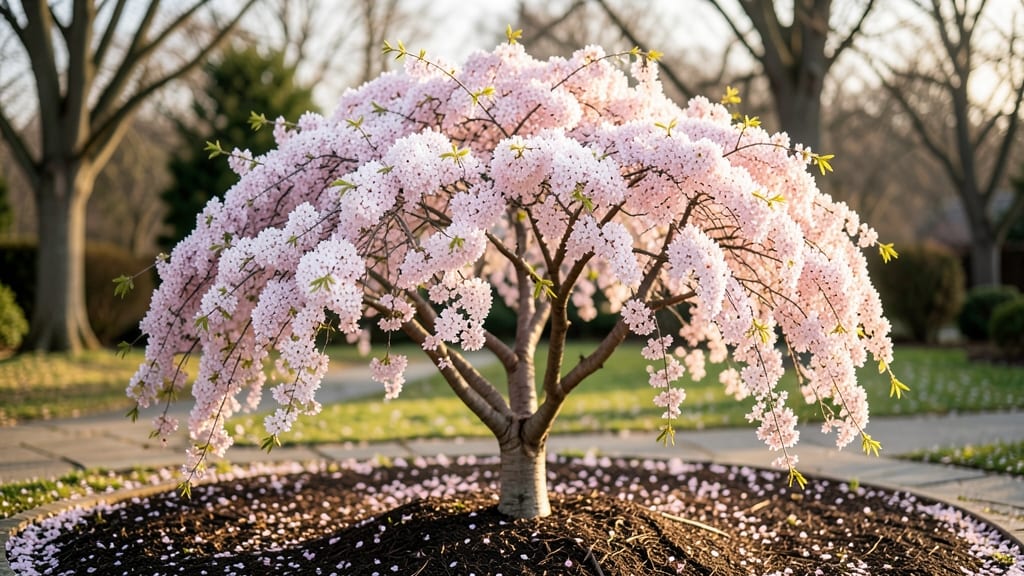
A cherry blossom tree for your garden thrives with cold-hardy varieties like Prunus serrulata or Prunus avium, planted in full sun with well-drained soil and ample spacing for mature growth. Dwarf options work for small yards, while standard varieties create stunning focal points.
Cherry blossom trees aren't just beautiful—they're practical choices for gardeners who want both visual impact and seasonal interest. 🌸 The right variety can transform your outdoor space into a springtime paradise, with blooms lasting up to two weeks.
I always recommend testing your soil's drainage first, as soggy roots lead to root rot, especially in heavier clay soils. For urban gardens, dwarf cultivars like 'Royal Celebration' offer all the charm without the space requirements of standard trees.
What sets these trees apart is their adaptability. While most prefer zones 5-8, some varieties like 'Autumn Royal' tolerate heat better, making them perfect for southern climates.
The key to long-term success lies in proper planting timing—fall is ideal for establishing roots before winter, while spring planting gives trees a head start for their first bloom season. Regular pruning during late winter helps maintain shape and encourages abundant flowering.
💡 In This Article
- Best Cherry Blossom Tree Varieties for Different Climates
- Step-by-Step Guide to Planting and Caring for Cherry Blossoms
Best cherry blossom tree varieties for different climates
Cherry blossom trees belong to two main species: Prunus serrulata (Japanese cherry) and Prunus avium (European/ornamental cherry). The key difference lies in their cold hardiness and bloom characteristics. Prunus serrulata varieties like 'Yoshino' thrive in zones 5-8 and produce delicate, fragrant white flowers that cover the tree like clouds.
These trees develop a stunning bark texture as they age, adding year-round interest. Meanwhile, Prunus avium types like 'Kwanzan' handle heat better, making them ideal for zones 6-9, and feature vibrant pink blooms that last longer.
The right variety depends on your climate and bloom preferences. For northern gardens, 'Stella Compact' offers 15-20 feet of height with abundant pink flowers, while 'Autumn Royal' tolerates 90°F+ temperatures and produces deep pink blooms that appear slightly later in spring.
Fragrance intensity varies too - 'Yoshino' has a sweet, intoxicating scent that can be detected 30 feet away, while 'Kwanzan' has a milder aroma. The trade-off? 'Yoshino' blooms are more delicate and shorter-lived (about 7-10 days) compared to 'Kwanzan's 10-14 days of color.
Soil preferences also differ by variety. Japanese cherries prefer slightly acidic soil (pH 5.5-6.5) with good drainage, while European types tolerate more alkaline conditions. The root systems develop differently too - Prunus serrulata has fibrous roots that spread widely, while Prunus avium has a deeper taproot.
This means Japanese varieties need more space between trees (20-30 feet) to prevent root competition, whereas European types can be planted 15-20 feet apart. 🌸
Consider bloom timing if you want sequential color. Early bloomers like 'Shirotae' open in late April, while late varieties like 'Fugenzo' bloom in early May. This staggered approach creates a 3-4 week display when planted together.
For urban areas, disease-resistant selections like 'Royal Celebration' (dwarf variety) are excellent choices, as they handle pollution and compacted soils better than standard types. The trade-off is slightly smaller flowers (1-1.5 inches diameter vs. 2 inches for standard varieties).
Color retention matters too. 'Kwanzan' maintains its pink hue even when wet, while 'Yoshino' flowers may darken slightly after rain. This makes 'Kwanzan' the better choice for areas with frequent spring showers.
Another consideration is leaf color - some varieties like 'Okame' develop brilliant red fall foliage, adding seasonal interest beyond the spring blooms. The bark also varies: 'Yoshino' develops smooth, exfoliating bark, while 'Kwanzan' has more rugged, textured bark as it matures.
For gardeners in transition zones (like zone 7b), hybrid varieties often perform best. These crosses combine the cold hardiness of Japanese cherries with the heat tolerance of European types.
Look for selections labeled as "hybrid" or "cross" - they typically handle temperature swings better and produce more reliable blooms year after year. The investment pays off with 20-30% more flowers than pure species varieties in marginal climates.