Watering
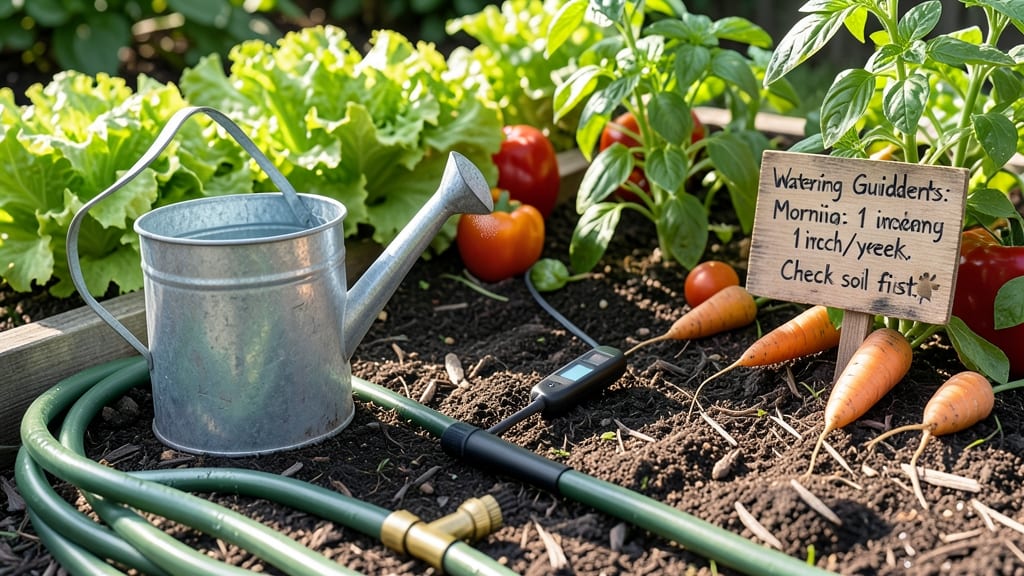
Watering your vegetable garden every day isn’t always the best move—it depends on the plants, the soil, and even the weather.
Overwatering your vegetable garden can drown roots just as much as underwatering can stunt growth—so how do you strike the perfect balance? The truth is, most vegetables thrive with 1-2 inches of water per week, but that doesn’t mean you should grab the hose daily.
Instead, focus on deep, infrequent watering that encourages strong root systems and prevents waste.
In Zone 6a, where spring planting kicks off after the last frost, your watering schedule should shift with the seasons. Hot summer days may demand daily checks, but cool mornings often need less.
The key is checking the soil moisture—stick your finger an inch deep. If it’s dry, water; if it’s damp, wait.
Below, I’ll break down the ideal watering frequency for different crops, how to spot over- or underwatering, and the simplest techniques to keep your 🥬 vegetable garden thriving without guesswork.
How often should you water vegetable gardens for optimal growth?
Watering your vegetable garden isn't a one-size-fits-all task. While some plants like lettuce thrive with daily moisture, others such as tomatoes prefer deep, infrequent watering.
The key is understanding your soil type, climate zone, and plant varieties to create a personalized watering schedule that promotes healthy growth without waste.
In most USDA Zone 6a climates, vegetables generally need 1-2 inches of water per week, but this varies dramatically based on temperature, humidity, and soil drainage. For example, sandy soils dry out faster than clay, requiring more frequent but lighter watering sessions.
Meanwhile, mulched beds retain moisture longer, reducing daily needs by up to 30%.
| Plant Type | Water Frequency | Best Time | Notes |
|---|---|---|---|
| Leafy Greens (Lettuce, Spinach) | Daily (light watering) | Morning | Keep soil consistently moist; avoid soggy roots |
| Root Crops (Carrots, Beets) | Every 2-3 days | Evening | Deep watering prevents forking; let topsoil dry slightly |
| Fruiting Plants (Tomatoes, Peppers) | Every 3-4 days (deep soak) | Morning | Encourages strong root systems; avoid wetting foliage |
| Herbs (Basil, Cilantro) | Every 2 days (light watering) | Morning | Drought-sensitive; mulch heavily to retain moisture |
| Drought-Tolerant (Okra, Sweet Potatoes) | Every 5-7 days (deep watering) | Early morning | Establish deep roots early; reduce frequency as plants mature |
During summer months in hot climates, most vegetables will need watering every other day, especially if you notice wilting by midday. A simple test is to check the soil 1 inch below the surface—if it's dry, it's time to water.
In cooler spring or fall seasons, you can stretch watering to every 3-5 days, especially for mature plants.
Your watering schedule should also adapt to rainfall patterns. If you receive 1 inch of rain in a week, skip scheduled watering for that period. Use a rain gauge to track precipitation and adjust accordingly.
In USDA Zone 6a, where frost-free days average 165 days, early spring and late fall require minimal watering compared to peak summer heat.
One common mistake is watering shallowly every day instead of deeply every few days. Shallow watering encourages weak root systems that struggle to reach nutrients. Aim to water until moisture penetrates 6-12 inches deep, depending on the plant's root depth.
For example, tomatoes need deep watering to develop strong roots, while radishes only require moisture in the top 4 inches.
Mulching plays a crucial role in regulating soil moisture. A 2-3 inch layer of organic mulch (straw, wood chips, or grass clippings) can reduce water evaporation by up to 40% and keep soil temperatures stable.
This means you'll need to water less frequently while maintaining optimal growing conditions. Just be sure to keep mulch 2 inches away from plant stems to prevent rot.
For container-grown vegetables, the rules change entirely. Potted plants dry out 2-3 times faster than in-ground gardens, so you'll likely need to water daily during hot weather.
Check soil moisture by sticking your finger 1 inch into the pot—if it's dry, water thoroughly until it drains from the bottom. Smaller containers require more frequent watering than larger ones, so group plants
Signs you're overwatering or underwatering your vegetable plants
Your vegetable plants silently scream for help when their watering needs aren't met. Yellowing leaves or mushy stems often signal overwatering, while crispy edges or drooping foliage scream "I'm thirsty!" The key is learning to read these visual cues before damage becomes irreversible.
Start by checking the soil moisture just below the surface. Stick your finger about 1 inch deep—if it feels damp, hold off on watering. For root vegetables like carrots or potatoes, soggy soil can cause rot, while dry soil leads to stunted growth.
Even experienced gardeners sometimes misjudge, so let the soil guide you, not guesswork.
Overwatering vs. Underwatering: Quick Fixes
Overwatering Signs
- Yellow leaves (especially lower ones)
- Mushy stems or wilting despite wet soil
- Fungal growth (mold, mildew)
- Root rot (black, smelly roots)
Underwatering Signs
- Crispy leaf edges or brown tips
- Drooping foliage (even in morning)
- Dry, cracked soil at surface
- Stunted growth or small leaves
Don't ignore leaf texture—overwatered plants often develop a slimy feel, while underwatered ones become brittle. For leafy greens like lettuce or spinach, check the leaf color: vibrant green means happy, while dull or pale leaves mean adjust your routine. Even a quick soil check can save your harvest.
Morning is the best time to inspect your plants. Dew-covered leaves at dawn indicate excess moisture overnight, while wilted plants that perk up after watering reveal thirst. Pay attention to root crops too—overwatering causes them to split, while underwatering makes them tough and woody.
Adjust your watering based on the weather forecast. If rain is coming, skip scheduled watering. For container gardens, check soil daily since pots dry out faster. Mulch helps retain moisture but don't overdo it—too much can suffocate roots and trap excess water.
Remember, consistency is key. Vegetable plants thrive on routine, whether that's every other day in summer or once a week in cooler months. Trust your observations over rigid schedules—your plants will thank you with bigger yields and healthier growth.