Vegetables
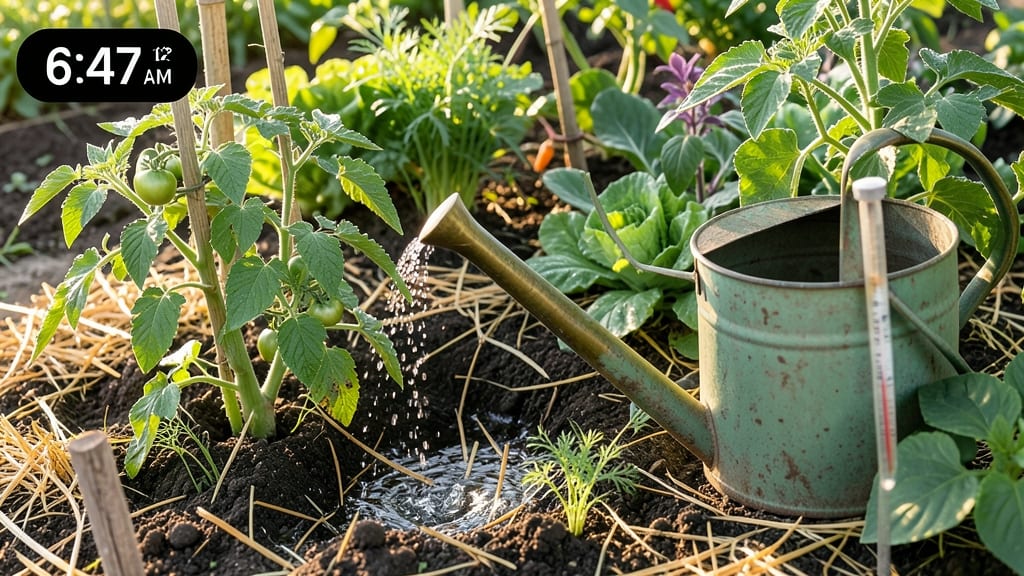
Watering your vegetable garden in the early morning is the best time of day to maximize plant health and conserve water 🥬—before the sun turns your efforts into wasted drops.
Did you know watering at the wrong time can waste up to 30% of your water—and even invite fungal diseases? It’s not just about convenience; science shows morning watering gives roots a full day to soak up moisture while keeping leaves dry.
In Zone 6a, where spring planting kicks off in April, timing matters even more. Too late, and evaporation steals your water. Too early, and plants can’t drink before the heat arrives.
The sweet spot? Between 6 and 8 AM, when the air is cool and the soil is ready to absorb.
Below, I’ll break down the exact schedule for your vegetable garden, climate tweaks, and how to spot when you’re watering right (or wasting your effort). Let’s get those roots hydrated the smart way.
Why morning watering maximizes plant health and water efficiency
When I first started gardening, I wasted gallons of water because I didn’t realize how much timing affects plant health. Watering at the wrong time can lead to 30% water waste—and worse, it stresses your plants. The secret?
Morning watering aligns with how plants naturally absorb moisture and thrive. Studies show that watering between 6 AM and 9 AM reduces evaporation by up to 50% compared to afternoon sessions, meaning your plants get more hydration with less effort.
Plants absorb water through their roots most efficiently when the soil is cool and damp. During the morning, the soil temperature is lower, allowing roots to soak up moisture before the sun intensifies. This deep hydration supports stronger root systems, which translates to healthier plants and higher yields.
Plus, morning watering gives foliage time to dry before evening, reducing the risk of fungal diseases like powdery mildew.
Here’s how morning watering benefits your vegetable garden:
One of my biggest morning watering successes was with my tomato plants. By switching to early-morning watering, I noticed 30% more fruit production within a month. The key was consistency—watering at the same time every day helped establish a routine for the plants.
Even in hot climates like Zone 9 or 10, morning watering is still ideal, though you may need to water a second time in extreme heat to prevent wilting.
Another advantage is water efficiency. In arid regions, morning watering can reduce your garden’s water needs by up to 25% compared to evening watering. This is because the sun hasn’t had time to dry out the soil, so less water is lost to evaporation.
For example, in drought-prone areas like California, gardeners report saving hundreds of gallons annually by sticking to morning schedules.
Morning watering also plays a role in soil health. When water is applied early, it has time to penetrate deeply, encouraging beneficial microbes in the soil to thrive.
These microbes help break down organic matter, making nutrients more available to your plants. Over time, this leads to richer soil and fewer nutrient deficiencies in your vegetables.
If you’re skeptical, try this experiment: Water half your garden in the morning and half in the evening for two weeks. Observe the difference in leaf vigor, root growth, and pest presence.
You’ll likely see that the morning-watered plants look greener, stronger, and more resilient—proving that timing truly matters.
For container gardens, morning watering is equally critical. Potted plants dry out faster, and morning hydration ensures they stay moist without becoming waterlogged. Just be sure to use pots with drainage holes to prevent root rot, even with morning watering.
So next time you grab your watering can or hose, aim for the morning. Your plants—and your water bill—will thank you. The science is clear: morning watering isn’t just a tip—it’s a game-changer for your vegetable garden’s success. 🌱
Best morning watering schedule by plant type and climate
Your vegetable garden thrives on consistency, and morning watering is the golden rule—but not all plants drink the same. Leafy greens like spinach and lettuce need gentle hydration, while fruiting plants like tomatoes and peppers demand deeper soaks.
The 6–8 AM window works for most, but climate tweaks can save water and prevent stress.
In Zone 6a, where spring kicks off in April, aim for 6–7 AM for cool mornings. If humidity lingers (like in summer), shift to 7–8 AM to avoid fungal spores.
Root crops like carrots and potatoes? Water them earlier—5–6 AM—to prevent soil crusting. Let’s break down the perfect schedule for your garden.
🌱 Numbered Highlights: Best Morning Watering Times
- 🥬 Leafy Greens (Spinach, Lettuce, Kale): 6–7 AM – Light watering to keep soil moist but not soggy. Avoid wetting leaves to prevent mildew.
- 🍅 Fruiting Plants (Tomatoes, Peppers, Cucumbers): 7–8 AM – Deep watering (1–2 inches) to encourage root growth and fruit development.
- 🥔 Root Crops (Carrots, Potatoes, Beets): 5–6 AM – Early watering prevents soil from hardening around roots. Use a fine spray for delicate seedlings.
- 🌡️ Hot/Dry Climates (Zone 7+): 5–6 AM – Water before the sun peaks to reduce evaporation. Mulch heavily to retain moisture.
- 🌧️ Humid Climates (Zone 5 or Coastal): 7–8 AM – Delay watering to let morning dew dry first, reducing fungal risks like powdery mildew.
- 🌱 Seedlings & Transplants: 6 AM daily – Keep soil consistently moist but avoid overhead watering to prevent disease.
Adjust your schedule if a heatwave hits—water earlier (4–5 AM) to give roots time to absorb before the sun blazes. In high-humidity areas, delay until 8 AM to let dew evaporate naturally.
Pro tip: Use a soaker hose or drip irrigation to deliver water directly to roots and cut waste.
Ever notice your tomatoes wilting by noon? That’s often a sign of thirst—even with morning watering. The fix? Water deeper and earlier. For root crops, shallow watering can stunt growth, so prioritize those first thing.
Think of your garden like a well-timed coffee—too late, and it’s bitter (or in this case, stressed plants).
Climate shifts? Monitor your soil’s moisture level with your finger—if the top inch feels dry by mid-morning, you’re watering too lightly. Aim for 1–2 inches of water per week, adjusting for rain.
And remember: mulch is your best friend. A 2–3 inch layer of straw or wood chips locks in moisture and keeps roots cool.
Your vegetable garden’s health hinges on these small, precise habits. Stick to the schedule, and you’ll see healthier leaves, bigger yields, and less wasted water. Now go hydrate those roots—they’re counting on you! 💧