
Tools
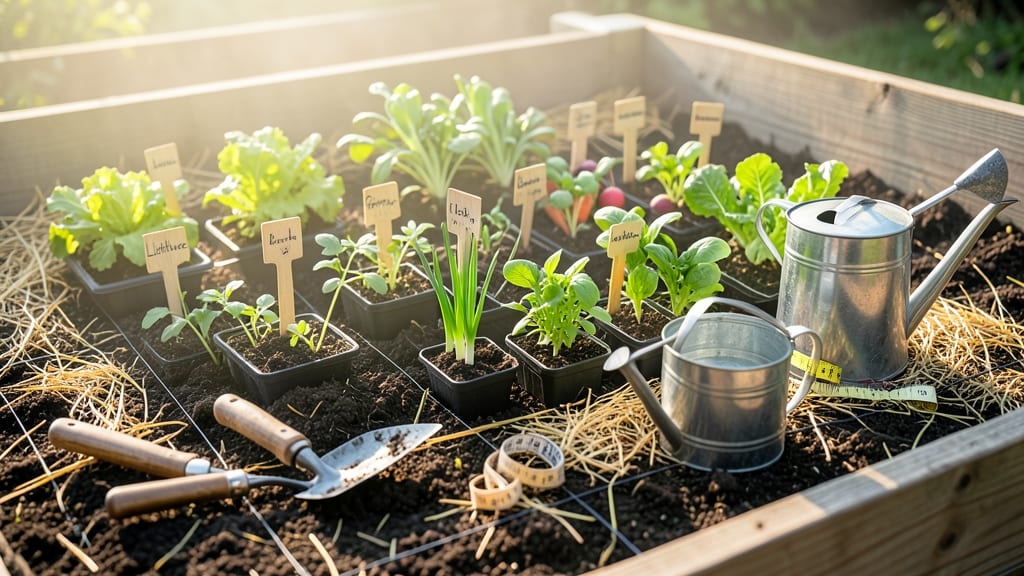
Square foot gardening plans maximize small spaces by dividing beds into 1-foot squares, each planted with specific crops based on yield and spacing needs, such as 16 carrots, 9 onions, or 4 tomato plants per square for optimal harvests.
This method isn't just about saving space—it's about maximizing every inch of your garden's potential. 🌱 By focusing on plant density and compatibility, you can grow more food in less area while reducing competition for nutrients.
For example, leafy greens like lettuce thrive in the same square as radishes, since radishes mature quickly and leave room for the slower-growing greens. The key is balancing fast and slow growers, plus pairing plants that support each other's growth, like marigolds with tomatoes to deter pests naturally.
What makes square foot gardening especially powerful is its adaptability. You can adjust layouts based on your specific space, sunlight conditions, and even seasonal planting cycles.
For instance, in cooler months, you might dedicate more squares to cold-hardy crops like kale or spinach, while summer squares focus on heat-loving tomatoes and peppers. The system also makes crop rotation effortless, helping prevent soil-borne diseases that plague traditional gardens.
💡 In This Article
- How to Design High-Yield Square Foot Garden Layouts
- Best Square Foot Plant Pairings for Productivity
How to design high-yield square foot garden layouts
Square foot gardening transforms small spaces into high-output growing zones by leveraging precise plant spacing calculations. The system starts with a simple grid: divide your raised bed into 1-foot squares, then determine how many plants of each variety can thrive in that space based on their mature size.
For instance, a single tomato plant needs 4 square feet for its sprawling roots and branches, while bush beans can fit 9 plants per square foot.
This math ensures no plant competes for sunlight or nutrients, which is why a 4-square-foot tomato plant yields as much as a traditional 10-foot row in a conventional garden.
The real magic happens when you group plants by their botanical families and growth habits. Brassicas (like cabbage and broccoli) should never share space with other brassicas to prevent disease spread, while nightshades (tomatoes, peppers, eggplants) thrive together.
Sun exposure becomes your next critical factor—place your most sun-hungry crops (like tomatoes needing 6-8 hours of direct sunlight) in the southernmost squares of your bed, while partial-shade lovers (such as lettuce with 4-6 hours) go on the north side. 🌞 A well-designed layout also accounts for vertical growth: trellises in tomato squares can double your yield by freeing up ground space for radishes or lettuce beneath.
Seasonal rotation is where square foot gardening truly shines. After harvesting summer tomatoes, you can replant the same square with cold-hardy greens like spinach or kale in fall, then cover it with mulch for winter.
This rotation prevents soil depletion and breaks pest cycles—unlike traditional row gardening where the same crops often occupy the same spots year after year.
The system also makes succession planting effortless: sow fast-maturing radishes in early spring, then replace them with slower-growing carrots as soon as the radishes are harvested, ensuring your squares stay productive all season.
Soil depth plays a surprising role too. While most square foot gardens use 6-12 inches of high-quality compost mix, deeper-rooted plants like carrots or asparagus need 12+ inches to prevent stunted growth. This is why many gardeners dedicate entire squares to root crops with extra-deep soil amendments.
The beauty of the system is its flexibility—whether you're working with a 4x4-foot bed or a 8x8-foot plot, you can adjust the number of squares to fit your space while maintaining optimal yields per square foot.
Let's talk about the tools that make this system work. A simple wooden grid or even string lines can help you visualize your squares before planting.
For precise spacing, many gardeners use a square foot planting chart that lists exact plant counts per square—think 16 carrots in one square versus 1 onion in another. This chart becomes your blueprint, ensuring every inch of your garden works harder. The result?
A garden where every square inch contributes to your harvest, not just fills space.
What most beginners overlook is the importance of "thinning" seedlings to match your planned layout. If you sow too many seeds in a square (like 32 lettuce seeds instead of the recommended 16), you'll end up with overcrowded, stunted plants.
The solution? Start with fewer seeds and thin aggressively—this might seem wasteful, but it guarantees stronger, healthier plants that match your high-yield design. 💫