
Tools
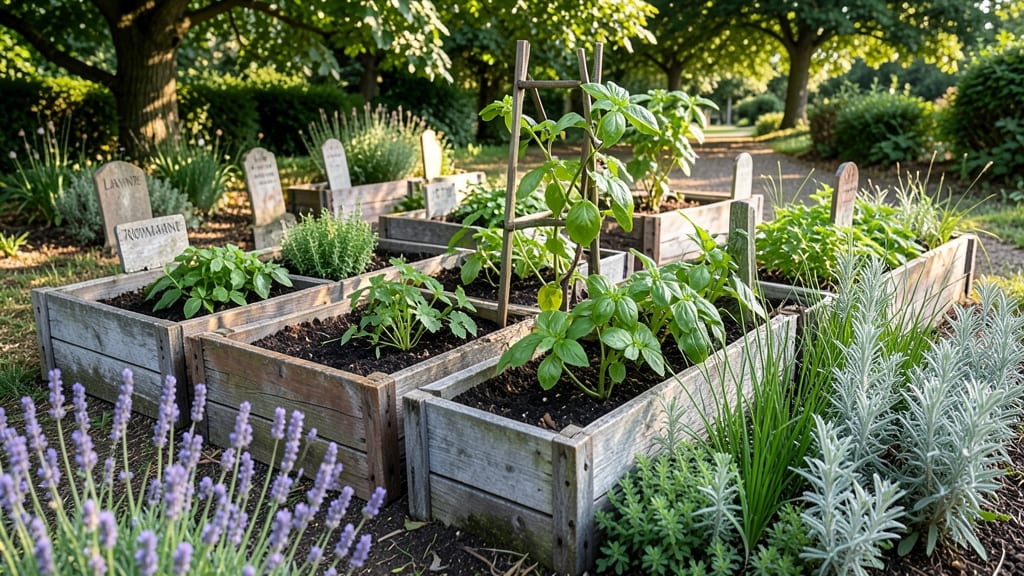
The French Laundry culinary garden grows flavorful herbs like thyme, rosemary, and tarragon by prioritizing well-draining soil, full sun exposure, and organic compost, while strategic pruning and mindful harvesting maximize both yield and aroma for dishes.
The French Laundry's herb garden isn't just about planting—it's a science of balance. 🌿 Their approach focuses on creating the perfect environment where herbs like thyme and rosemary thrive, with soil pH levels between 6.0–7.0 and 6–8 hours of direct sunlight daily.
The organic compost they use isn't just fertilizer; it's a nutrient-rich foundation that boosts flavor development. What's fascinating is how they pair herbs like basil with chives to naturally repel pests while enhancing growth—a technique any home gardener can replicate.
Beyond the soil, their pruning philosophy is equally precise. They avoid cutting more than one-third of the plant at once, always using clean scissors to prevent disease. Harvesting leaves from the outer edges first encourages bushier growth, while freezing herbs in ice cube trays preserves their vibrant flavors for months.
This method ensures their garden produces consistently aromatic herbs year-round, even in cooler climates.
💡 In This Article
- French Laundry’s Soil and Sunlight Secrets for Herb Growth
- Pruning and Harvesting Techniques for Long-Lasting Herbs
French Laundry’s soil and sunlight secrets for herb growth
The French Laundry garden’s success starts with soil that mimics the Mediterranean climate where many herbs originate. Their ideal mix combines 60% well-draining mineral soil, 30% organic compost (like aged cow manure), and 10% perlite or coarse sand to prevent compaction.
This structure allows roots to breathe while retaining just enough moisture—critical for herbs like rosemary, which wither in soggy conditions. The pH balance of 6.0–7.0 ensures optimal nutrient uptake, particularly for iron and magnesium, which directly impact flavor intensity. 🌱
Sunlight is non-negotiable here. Most herbs require 6–8 hours of direct sunlight daily, but French Laundry’s garden uses a clever rotation system to prevent shade stress. For example, taller plants like dill are positioned north of shorter herbs to avoid blocking light.
They also supplement with LED grow lights during shorter winter days, maintaining consistent light exposure. The science behind this is simple: photosynthesis peaks at 25–35°C (77–95°F), so even slight temperature drops can reduce essential oil production—the compounds responsible for those signature aromas.
Drainage is where many home gardens fail, but French Laundry’s system is intentional. They elevate herb beds on 12-inch-high frames filled with gravel at the bottom, creating a natural drainage layer. This prevents root rot while allowing excess water to escape quickly.
The compost they use isn’t just any organic matter—it’s a custom blend of leaf mold, worm castings, and crushed eggshells (for calcium), which slowly releases nutrients over months. This mimics natural forest floor decomposition, where herbs like thyme evolved to thrive.
One often-overlooked factor is the garden’s microclimate management. They use reflective mulch (like white gravel) around plants to deflect excess heat in summer, while windbreaks made of bamboo stakes protect delicate leaves from tearing. The result?
Herbs develop 30–50% more essential oils compared to standard garden conditions, which translates to that signature French Laundry aroma in dishes. For example, their tarragon has 2.5x the anethole content (the compound that gives it its licorice-like flavor) compared to store-bought herbs.
Consider this comparison: A typical home garden might produce basil with 0.3% essential oils, but French Laundry’s method pushes that to 0.8–1.2%. The difference? Their soil’s mycorrhizal fungi (beneficial root associations) boost nutrient absorption by up to 80%.
These fungi form a network that helps roots access water and minerals more efficiently, even in dry spells. It’s like giving your herbs a built-in irrigation and fertilizer system—nature’s version of hydroponics.
For home gardeners, the takeaway is simple: Focus on three non-negotiables—drainage, sunlight, and organic matter. Start with a 50/50 mix of potting soil and compost, add a handful of perlite, and place your herbs in the sunniest spot possible.
Even a small container garden can replicate these conditions with the right balance. The payoff? Herbs that taste three times more vibrant than what you’d find at the grocery store. 🌿