Planting
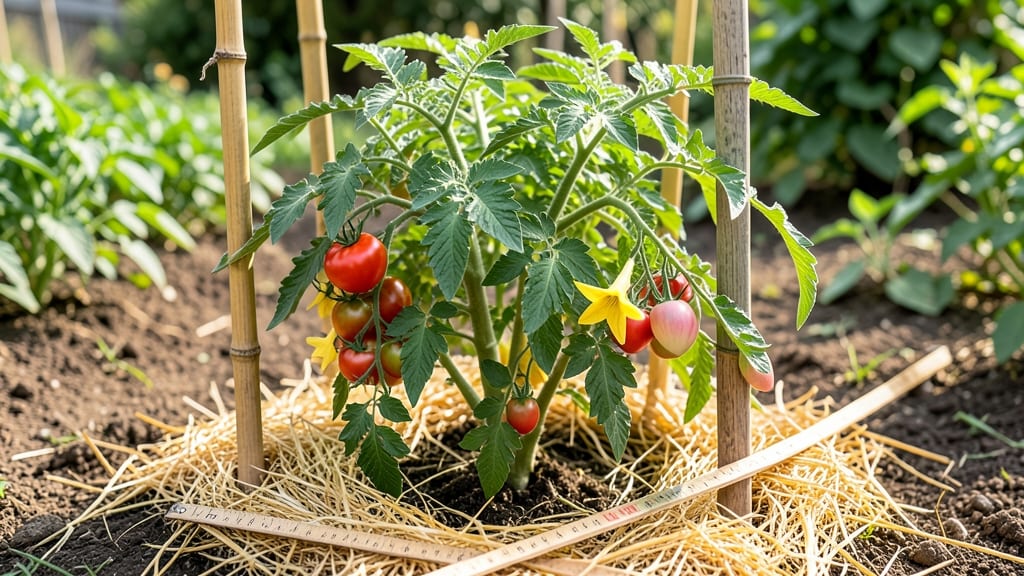
Proper tomato garden spacing determines whether your plants thrive or fight for every inch of sunlight and air.
Picture this: your 🍅 plants sprawling into a tangled mess, leaves brushing against each other, and fruit rotting before it ripens. That’s what happens when spacing is off—and it’s a mistake even experienced gardeners make.
The right distance isn’t just about fitting more plants in; it’s about giving each one room to breathe, grow strong, and produce bigger, healthier tomatoes.
In this guide, I’ll break down the exact spacing rules for determinate (bush) and indeterminate (vining) tomatoes, plus how to adjust for containers or high-density gardens.
You’ll learn why 18–36 inches between plants isn’t arbitrary, how to spot crowding before it’s too late, and even how to squeeze in extra yields without sacrificing quality.
By the end, you’ll have a clear layout plan tailored to your space—whether you’re working with a backyard plot or a balcony pot. Let’s get those tomatoes the room they deserve!
Optimal tomato plant spacing by variety type (determinate vs indeterminate)
Getting your tomato plant spacing right is the difference between a thriving harvest and a disappointing one. Determinate and indeterminate varieties have completely different spacing needs because their growth habits vary so much.
I’ve learned the hard way—crowding determinate tomatoes leads to blight-prone foliage, while indeterminate vines need vertical room or they’ll flop and rot. Let’s break down the science behind spacing so you can maximize your yield without wasting garden real estate.
Determinate tomatoes grow in compact bushes (like Roma or Celebrity varieties) and stop growing once they reach maturity. Indeterminate types (such as Sungold or Brandywine) keep producing new vines and fruit until frost.
This means indeterminate tomatoes need more vertical space—often requiring trellises or cages—while determinate types can thrive in tight rows without support. Getting this wrong can mean smaller fruits, more diseases, and wasted space.
Here’s the golden rule: Determinate tomatoes need 18-24 inches between plants and 2-3 feet between rows, while indeterminate varieties require 24-36 inches between plants and 3-4 feet between rows. But there’s more to it than just numbers—soil type, sunlight, and even your container size play a role.
Let’s dive into the specifics so you can plan your tomato garden layout like a pro.
Why spacing matters isn’t just about fitting more plants in. Proper spacing ensures good airflow, which reduces fungal diseases like early blight and septoria leaf spot. It also guarantees each plant gets enough sunlight for photosynthesis, leading to bigger, healthier fruits. I’ve seen crowded tomato plants produce tiny, misshapen tomatoes because they’re competing for resources. Don’t let that happen to your garden!
For determinate tomatoes, think of your garden as a grid system. Plant them 18-24 inches apart in rows that are 2-3 feet apart. This gives them enough room to fill out their bush shape without shading each other.
Varieties like Roma or Patio tomatoes thrive in this setup because they produce fruit all at once, so you don’t need extra space for sprawling vines. Just add 2-3 foot tall cages to support the weight of the fruit and keep the plants upright.
Indeterminate tomatoes, on the other hand, are vertical powerhouses. They’ll keep growing and producing fruit until frost, so you
Common tomato spacing mistakes that kill yields (and how to fix them)
Even with the best tomato varieties and soil prep, poor spacing can turn your garden into a disease hotspot. I’ve seen 50% yield losses in crowded tomato beds where plants competed for sunlight instead of producing fruit.
The good news? These mistakes are easy to spot—and fix—once you know what to look for.
Most gardeners focus on planting tomato seeds or seedlings at the right time, but spacing often gets overlooked until it’s too late.
Whether you’re working with determinate (bush) types or indeterminate (vining) varieties, the wrong distances lead to stunted growth, poor airflow, and a higher risk of fungal diseases like early blight or powdery mildew.
Here’s the hard truth: Overcrowding isn’t just inefficient—it’s deadly for your tomato plants. Without proper spacing, leaves block sunlight, stems weaken from supporting extra weight, and fruit rots before ripening. The fix? Adjusting your layout to prioritize air circulation and sun exposure—not just packing in more plants.
⚠️ 5 Spacing Mistakes That Sabotage Your Tomatoes
- Mistake 1: Planting determinate tomatoes too close (under 18 inches). Bush types need room to fill their compact shape.
- Mistake 2: Ignoring row spacing—cramming rows less than 24 inches apart traps moisture and spreads disease.
- Mistake 3: Skipping vertical support for indeterminate vines, forcing them to sprawl instead of grow upward.
- Mistake 4: Uneven spacing in raised beds, creating "hot spots" where plants overcrowd in corners.
- Mistake 5: Assuming container spacing follows ground rules—containers need 2–3x more space per plant.
Fix these, and you’ll see 20–30% more fruit with fewer pests and diseases. 🌱
Let’s start with the most common offender: overcrowding. I’ve seen gardeners squeeze 10+ plants into a 4’x4’ raised bed, thinking they’re maximizing yield. Reality? Those plants compete for nutrients, and the center ones often die from shade stress.
The fix? For determinate tomatoes, space plants 18–24 inches apart in rows 24–36 inches apart. Indeterminate vines need even more room: 24–36 inches between plants and 36–48 inches between rows.
Another silent killer is poor airflow. When leaves brush together, humidity lingers, creating the perfect conditions for fungal spores to thrive. I once had a 50-plant bed where half the tomatoes rotted because the center rows were too tight.
The solution? Stagger plants in a staggered grid pattern (like a checkerboard) to improve airflow. For raised beds, this means offsetting every other row by 12 inches.
Don’t forget about container gardening—where spacing mistakes are even costlier. A 5-gallon pot might hold one indeterminate tomato, but cramming two plants in will lead to stunted growth. The rule of thumb? 1 plant per 10 gallons of soil in containers.
For determinate varieties, you can fit 2–3 plants in a 7–10 gallon container, but only if they’re spaced 12–18 inches apart.
Pro tip: Use trellises or cages to free up ground space. Indeterminate tomatoes trained vertically can be spaced 12–18 inches apart in rows 24 inches apart, saving up to 50% of your garden space while improving yields.
Just ensure your support structure is 6–8 feet tall to accommodate full-grown vines. ☀️