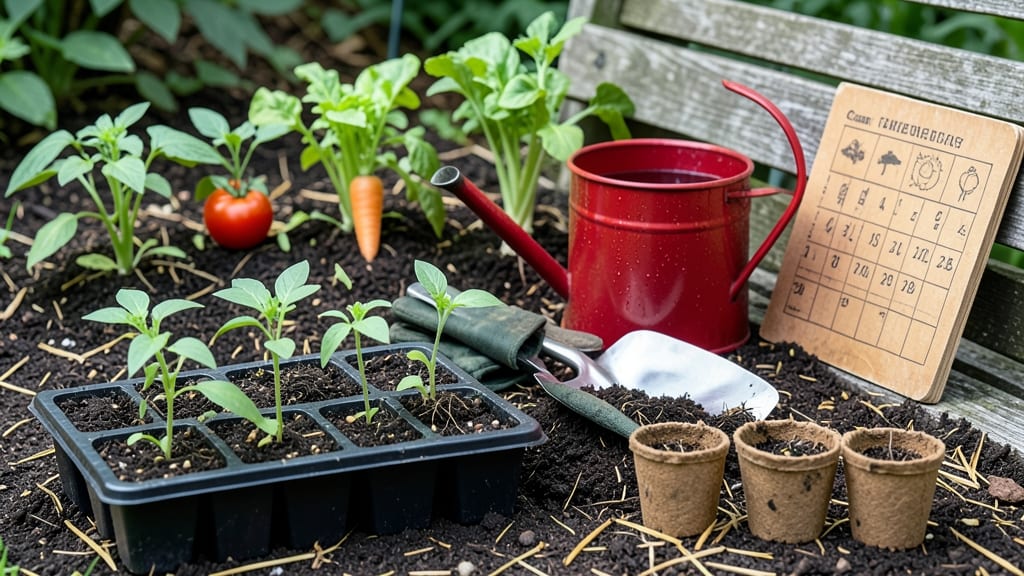
A vegetable garden planting schedule is your roadmap to a bountiful harvest—whether you’re a beginner or a seasoned gardener, timing makes all the difference.
Struggling to keep your 🌱 thriving year-round? The secret lies in planting at the right time—miss these deadlines, and you could lose your entire harvest to frost or heat stress.
In Zone 6, where spring arrives in March and frost lingers until mid-April, knowing when to sow seeds or transplant seedlings determines whether your garden flourishes or fizzles.
Below, I break down the exact planting windows for cool-season crops like lettuce and warm-season favorites like tomatoes, plus how to adjust for early or late seasons to maximize your yield.
🌸
🍂
🍁
🍂
🍁
zz

☀️
🍂
❄️
Spring
Summer
Fall
Winter
🌱
Plant: March - May (spring) and July - August (fall)
🌱
Harvest: Varies by crop (e.g., April - October)
USDA planting Zones explained: when to plant vegetables based on your climate
Understanding your USDA Planting Zone is the first step to a successful vegetable garden. These zones, numbered from 3 to 10, map average minimum winter temperatures and help determine when to plant cool-season and warm-season crops.
In Zone 5, for example, the last spring frost typically arrives around April 15, while Zone 9 gardeners might see frost as late as December 15. Knowing these dates ensures your plants thrive, not just survive.
Cool-season vegetables like lettuce and peas love the chill, while warm-season crops such as tomatoes and peppers need heat to flourish. Planting at the wrong time can lead to stunted growth or even crop failure.
For instance, sowing warm-season seeds before the soil reaches 60°F often results in poor germination. Let’s break down the key planting windows by zone so you can maximize your harvest.
Last spring frost and first fall frost are your garden’s bookends. The last frost signals when it’s safe to plant warm-season crops, while the first frost tells you to harvest or protect cool-season plants. In Zone 6, these dates might be April 30 and October 15, respectively. Use these timelines to plan your succession planting and avoid wasted space in your garden.
Zone 3-5 gardeners have shorter growing seasons, often just 90-120 frost-free days. Focus on fast-maturing varieties like bush beans or radishes and extend your season with row covers. Meanwhile, Zones 7-10 enjoy longer seasons, allowing for year-round planting in some cases. For example, in Zone 8, you can plant spinach in fall for a winter harvest.
Cool-season crops (e.g., kale, carrots) thrive in 50-65°F soil and can handle light frosts. Plant them 4-6 weeks before your last frost for an early harvest. Warm-season crops (e.g., cucumbers, squash) need 70-85°F soil and should go in 2 weeks after your last frost. In Zone 4, this might mean waiting until May 15, while Zone 9 gardeners can plant as early as March 1.
| USDA Zone |
Last Spring Frost |
First Fall Frost |
Cool-Season Planting Window |
Warm-Season Planting Window |
| Zone 3 |
May 15 |
September 15 |
March 15 - April 15 |
June 1 - July 15 |
| Zone 4 |
April 30 |
October 1 |
March 1 - April 15 |
May 15 - July 1 |
| Zone 5 |
April 15 |
October 15 |
February 15 - April 1 |
May 1 - June 30 |
| Zone 6 |
April 1 |
November 1 |
January 15 - March 15 |
April 15 - July 15 |
| Zone 7 |
March 15 |
November 15 |
December 1 - February 15 |
March 30 - August 1 |
| Zone 8 |
February 15 |
December 1 |
November 1 - January 31 |
March 1 - September 15 |
| Zone 9 |
January 15 |
December 15 |
October 1 - February 15 |
February 1 - October 31 |
| Zone 10 |
None (tropical) |
None (tropical) |
Year-round (
Month-by-month planting calendar for common vegetables (Zone 5-8 example)
A well-timed vegetable garden keeps you harvesting fresh produce all season long. In USDA Zones 5-8, the key is understanding when to plant cool-season crops (like lettuce and peas) versus warm-season favorites (tomatoes and peppers). This calendar ensures you maximize space and avoid overlapping harvests.
For Zone 5-8, spring planting starts in early March for hardy crops, while fall planting begins in July. Succession planting—sowing small batches every 2-3 weeks—keeps your kitchen stocked. Let’s break it down month by month for a productive garden.
1
March: Start cool-season crops indoors (lettuce, spinach) or sow directly (peas, radishes). Transplant onion sets and potatoes.
2
April: Plant broccoli, cabbage, and carrots outdoors. Begin hardening off tomato and pepper seedlings for May transplanting.
3
May: Transplant tomatoes, peppers, and eggplants after last frost. Sow beans and cucumbers directly into warm soil.
4
June: Succession plant lettuce, radishes, and bush beans every 2 weeks. Harvest spring crops (peas, spinach) before bolting.
5
July: Start fall crops (kale, Swiss chard) and direct-sow beets and turnips. Watch for pests in warm weather.
6
August: Plant cool-season crops (spinach, arugula) for fall harvest. Thin carrots and beets to avoid crowding.
7
September-October: Extend season with row covers for broccoli and cabbage. Harvest warm-season crops (tomatoes, peppers) before frost.
Succession planting is the secret to a continuous harvest. For example, sow radishes every 2 weeks from April to August—they mature in just 30 days! Similarly, replace bolting lettuce with new seeds in late summer for a fall crop.
Adjust timelines based on your last frost date (typically late April in Zone 5, early March in Zone 8). Use season extenders like cold frames to push harvests later into fall or start earlier in spring.
With this schedule, you’ll avoid the common mistake of planting everything at once. Instead, enjoy a mix of fresh peas in spring, juicy tomatoes in summer, and hardy kale in fall—all from the same garden space!
★★★★★4.6(13 reviews)
|