
Vegetables
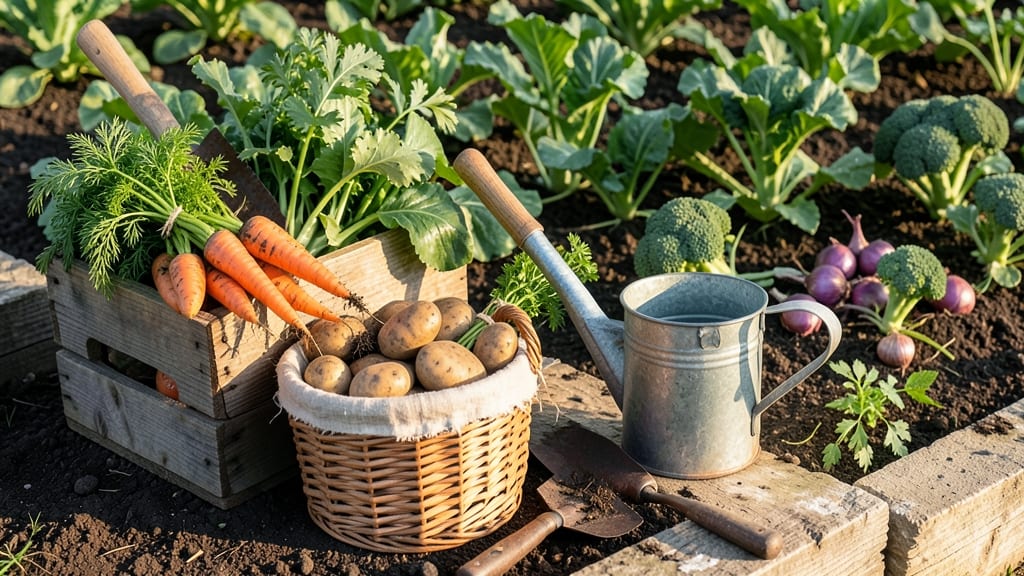
War gardens from WW1 transformed communities into self-sufficient food producers by growing vegetables, herbs, and fruits that directly countered rationing and blockades, playing a crucial role in wartime survival and later inspiring today's community gardening movement.
These wartime gardens weren't just survival tactics—they were strategic moves. 🌱 With men overseas, women and children took the lead, planting high-yield crops like potatoes and cabbage in every available space, even using trench planting to maximize small areas.
The British alone grew over 1.5 million acres of food by 1918, producing 10% of the nation's vegetables. Many techniques from this era, like composting kitchen scraps and saving seeds, still form the backbone of modern urban gardening today.
What's fascinating is how these gardens evolved from necessity into cultural movements. After the war, many families kept their plots, creating the allotment gardening tradition we see today. The Victory Garden concept proved that ordinary citizens could make extraordinary contributions during crises—and that knowledge still grows with us.
💡 In This Article
- How WW1 War Gardens Revolutionized Food Production
- Starting a WW1-Inspired Victory Garden Today
How WW1 war gardens revolutionized food production
The war gardens of WW1 weren't just about growing food—they were about survival through innovation. With German blockades cutting off imports, Britain alone saw vegetable imports drop by 60% in 1916.
The British government responded by launching the "Dig for Victory" campaign in 1917, encouraging civilians to cultivate every possible space. This wasn't just gardening; it was a national effort where even urban dwellers turned balconies and windowsills into productive plots.
One of the most ingenious techniques was trench planting, inspired by military trenches. Gardeners would plant rows of vegetables like carrots or parsnips in shallow furrows, covering them with soil to create a warm, protected growing environment.
This method saved space while increasing yield—critical when arable land was being used for crops like wheat.
Potatoes became a staple because they could be grown in small spaces and stored for months, providing a reliable food source during harsh winters. 🌱 The average British war garden produced about 1,000 pounds of food per year, enough to feed a family of four for months.
What made these gardens truly revolutionary was their democratization of food production. For the first time, women and children—who had been excluded from agricultural work—became essential contributors. The government provided free seeds, gardening tools, and even pamphlets with planting instructions. Schools organized gardening clubs, and communities shared resources.
This mobilization wasn't just about food; it was about building resilience and independence in a time of crisis. The success of these gardens proved that ordinary people could make extraordinary impacts when organized and motivated.
Crop selection was another key factor. Gardeners focused on high-yield, nutrient-dense vegetables that were easy to grow and preserve. Cabbage, carrots, and onions were popular because they could be stored for long periods, while herbs like parsley and thyme were grown for their medicinal properties.
The French, facing similar shortages, emphasized root vegetables and legumes, which required less land and water. These choices weren't just practical—they were strategic, ensuring that families had access to food even when supplies were scarce.
The psychological impact of war gardens was just as significant as the physical output. For many, tending a garden provided a sense of purpose and normalcy during a time of chaos. The act of growing food also fostered a sense of community, as neighbors shared tips, seeds, and harvests.
This sense of shared effort extended beyond the war, laying the foundation for modern community gardening movements. The lessons learned—about sustainability, cooperation, and self-sufficiency—continue to resonate today, especially as we face new challenges like climate change and food insecurity.
Even the tools used in these gardens reflect their resourcefulness. Many gardeners repurposed household items, like old buckets for watering or tin cans as plant markers. Composting was another common practice, using kitchen scraps and manure to enrich the soil.
These methods weren't just about growing food; they were about making the most of limited resources in a way that modern gardeners can still learn from. The legacy of WW1 war gardens is a testament to how innovation and community can turn necessity into something enduring.