
Vegetables
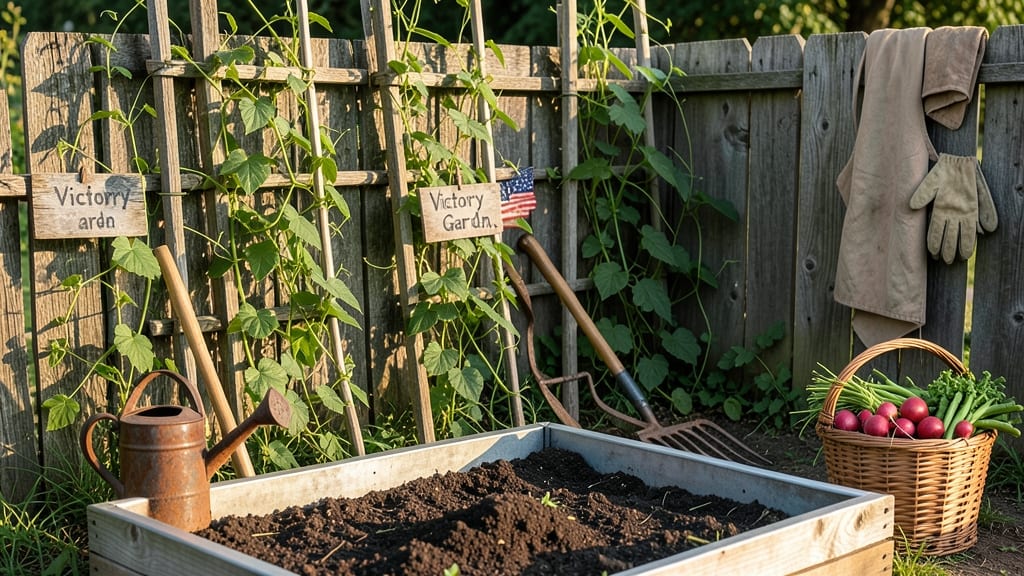
World War One victory gardens were small-scale vegetable plots that supplied families with fresh produce during wartime food shortages, helping nations like Britain and France conserve resources for soldiers. Today, you can grow similar crops like potatoes, cabbage, and carrots to support self-sufficiency and sustainability.
These wartime gardens weren't just about growing food—they were a strategic response to food rationing and shipping disruptions. 🌱 The British government alone encouraged over 1 million gardens, producing 1.3 million tons of vegetables annually by 1918.
What's fascinating is how these gardens adapted to limited space, using raised beds and intensive planting to maximize yield. Today's urban gardeners can replicate this approach with container gardening and vertical growing systems.
Modern victory gardens focus on nutrient-dense, easy-to-grow crops that store well, like kale, beans, and turnips. These plants thrive in small spaces and provide long-term storage, much like their WWI counterparts.
The key difference? Today's gardeners have access to heirloom seeds and organic fertilizers that weren't available during the war, making it easier than ever to grow a resilient food supply.
💡 In This Article
- How WWI Victory Gardens Boosted Food Security
- Top WWI-Inspired Crops for Modern Victory Gardens
How WWI victory gardens boosted food security
During World War One, victory gardens became a critical lifeline for nations facing severe food shortages. The British government launched its "Dig for Victory" campaign in 1915, encouraging families to cultivate vegetables in even the smallest available spaces.
This wasn't just about growing food—it was a calculated strategy to reduce pressure on domestic food supplies and conserve shipping resources for military needs. By 1918, these gardens produced an estimated 1.3 million tons of vegetables annually, equivalent to nearly 40% of Britain's fresh vegetable consumption.
The crops selected for victory gardens were chosen based on three key criteria: high caloric yield, ease of cultivation, and storage potential. Potatoes, for example, provided 300-400 calories per pound and could be stored for months in cool, dark conditions.
Cabbage and carrots were favored for their ability to withstand harsh winter conditions and provide essential vitamins to combat malnutrition.
The government even distributed seed packets and published planting guides to ensure maximum participation. 🌱 What's remarkable is how these gardens adapted to urban environments, using window boxes, rooftops, and even backyards to grow food in cities where space was limited.
The psychological impact was just as significant as the physical output. Victory gardens gave families a sense of purpose and control during uncertain times. The act of growing food became a patriotic duty, with children often playing key roles in planting and harvesting.
This collective effort reduced food waste and improved nutrition—critical factors when considering that wartime rationing limited access to fresh produce. The success of these gardens demonstrated how community-driven agriculture could supplement national food supplies when commercial channels were disrupted.
One lesser-known aspect of victory gardens was their role in reducing soil depletion. Gardeners practiced crop rotation and companion planting, techniques that prevented nutrient loss and maintained soil fertility. For instance, planting legumes like peas and beans fixed nitrogen in the soil, benefiting subsequent crops.
This sustainable approach contrasts with modern industrial farming practices that often rely on chemical fertilizers. The WWI gardens proved that small-scale, diverse farming could be both productive and environmentally responsible.
Modern victory gardens draw inspiration from these wartime efforts but incorporate contemporary techniques. Today's gardeners can replicate the high-yield approach by selecting similar crops like kale (which provides 35 calories per 100 grams and stores well) or turnips (offering 40 calories per 100 grams and thriving in cool climates).
The key difference is access to organic fertilizers and heirloom seeds that weren't available during WWI, making it easier to achieve consistent yields even in challenging conditions.
What's particularly fascinating is how victory gardens bridged the gap between agriculture and national security. The British government even established "War Gardens" committees in each county to provide guidance and support. This infrastructure created a network of food producers that could be mobilized during crises.
The lessons from WWI victory gardens remain relevant today, offering a blueprint for resilient food systems in the face of modern challenges like climate change and supply chain disruptions. 💡