
Size
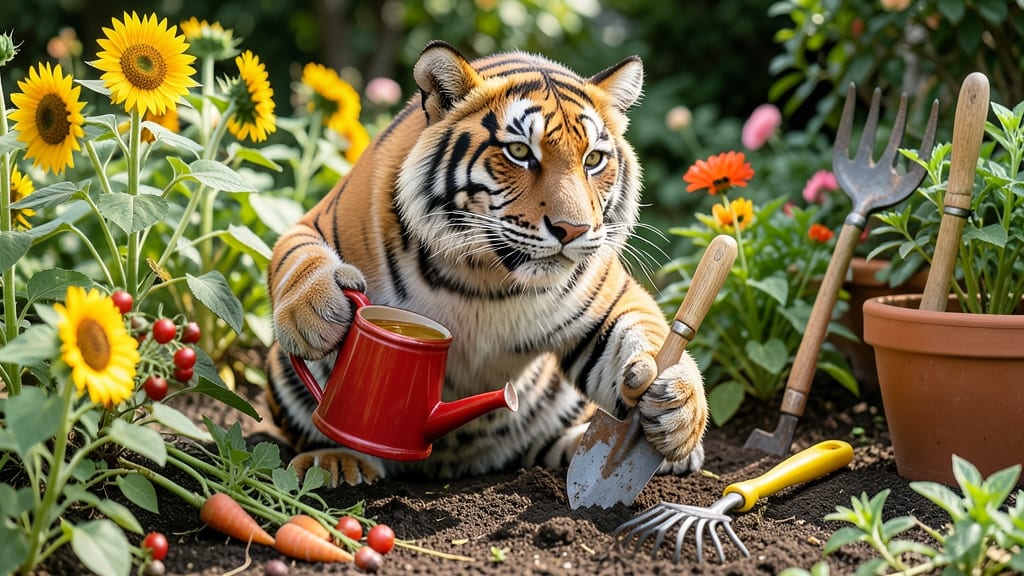
In Grow a Garden, the tiger serves as a lively gardening mentor who transforms learning into adventure, guiding children through hands-on tasks like planting seeds, diagnosing plant health, and strategizing against pests—all while weaving in lessons about patience, teamwork, and environmental care.
Grow a Garden turns the tiger into more than just a character—it’s a dynamic coach who makes gardening feel like a mission. 🌱 Through storytelling, kids learn real skills like identifying soil needs or recognizing pests, but the magic happens when the tiger turns those lessons into games. For example, the "Pest Patrol" challenge turns bug spotting into a detective adventure, while "Seedling Rescue" teaches gentle watering techniques. The book even includes printable tools (like a "Garden Detective Notebook") to extend the play beyond the pages, blending education with imaginative fun.
What makes this approach special is how the tiger adapts to different ages and skill levels. Younger kids might focus on sensory play (like touching different soil textures), while older ones tackle problem-solving (like designing a pest-repellent garden layout).
The tiger’s playful tone keeps frustration low while building confidence—so kids don’t just learn about gardening; they feel capable of doing it themselves.
💡 In This Article
- Tiger’s Role in Teaching Kids Gardening Basics
- Creative Activities Where Tiger Leads the Fun
Tiger’s role in teaching kids gardening basics
The tiger in Grow a Garden isn’t just a mascot—it’s a story-driven educator that breaks down complex gardening concepts into bite-sized, engaging lessons.
For instance, when introducing plant life cycles, the tiger might guide kids through a "Day in the Life of a Seed" activity, where they track a bean seed’s growth over 7-10 days using a magnifying glass to observe roots breaking through soil.
This hands-on approach teaches patience while making science tangible—kids see firsthand how seeds "wake up" and stretch toward light, just like the tiger explains using playful metaphors like "tiny plant superheroes." 🌱
Soil health becomes a sensory adventure under the tiger’s guidance. Kids learn to test soil moisture by squeezing handfuls (dry soil = "like a tiger’s paw," wet soil = "too soggy for roots!") and compare textures—sandy soil feels "grainy like tiger fur," while clay feels "sticky like mud."
The tiger even introduces the "5-Finger Test" (a simple pH check using household items) to determine if soil is too acidic or alkaline, framing it as a "detective mission" to find the perfect home for plants.
This tactile learning ensures kids grasp abstract ideas like drainage or nutrient balance through direct experience.
Watering techniques transform into precision challenges, where the tiger teaches kids to measure 1 inch of water per week (about 1 cup per square foot) using a clear plastic cup.
The book includes a "Tiger’s Watering Rules" chart with visual cues—like how drips should sound "steady, not splashy"—to prevent overwatering. This method builds fine motor skills while reinforcing cause-and-effect (e.g., "Too much water = sad, droopy leaves like a tired tiger!").
The tiger’s role here is to normalize experimentation: kids learn that some plants (like succulents) need "tiger-sized sips" while others (like lettuce) prefer "constant puddles."
Pest protection becomes a teamwork-based game, with the tiger framing bugs as "garden visitors" that need gentle solutions.
Kids might create homemade bug spray (mix 1 part water + 1 part vinegar + a drop of dish soap) and test it on aphids in a controlled "pest zone" of the garden. The tiger’s playful warnings—like "Don’t squish the ladybugs!
They’re the garden’s cleanup crew!"—teach kids to observe before acting, fostering empathy for ecosystems. This approach turns pest control into a collaborative puzzle, where kids brainstorm solutions together, just like a tiger leading a pride.
The tiger’s teaching style also addresses common misconceptions kids have about gardening. For example, when a child assumes all weeds are "bad," the tiger might say, "Weeds are like uninvited guests—they take our plants’ snacks! But some, like dandelions, are tasty for bees.
Let’s decide which to keep." This nuanced thinking helps kids develop critical thinking while reducing frustration. The tiger’s tone—equal parts encouraging and curious—ensures mistakes (like overwatering) become "learning paws" rather than failures. 🐾
What’s often overlooked is how the tiger adapts to different learning styles. For visual learners, the book includes illustrated "Garden Maps" where kids color-code plant needs (e.g., sun vs. shade). Auditory learners might act out the tiger’s "Plant Song" ("Roots go down, stems reach up, leaves drink the sun-up!").
And for kinesthetic kids, the tiger encourages physical role-play, like pretending to be a "sunbeam" stretching over plants or a "rain cloud" gently sprinkling water. This multisensory method ensures no child gets left behind in the learning process.