
Planting
Central Florida's gardening zone is primarily USDA Zones 9a and 9b, with some areas reaching Zone 10a, thanks to its warm subtropical climate. These zones determine which plants thrive year-round.
Understanding these zones helps you choose plants that survive Central Florida's mild winters and long growing seasons. 🌿 The USDA system bases zones on average minimum temperatures, so Zone 9a (20-25°F) and Zone 9b (25-30°F) reflect our typical cold snaps.
Areas near Lake Apopka or Orlando's urban core often reach Zone 10a (30-35°F), while higher elevations like Ocala may dip into Zone 8b. This variation means your backyard's microclimate could support tropical plants in one spot while needing frost protection just 50 feet away.
For gardeners, this means selecting cold-hardy citrus varieties for Zone 9a areas while opting for frost blankets when planting tropicals like hibiscus near Zone 10a borders. The key is observing your specific microclimate's frost patterns over several years to fine-tune your plant choices.
💡 In This Article
- How USDA Zones Define Central Florida’s Growing Seasons
- Navigating Central Florida’s Microclimates for Successful Gardening
How USDA zones define Central Florida’s growing seasons
The USDA Plant Hardiness Zone Map divides regions based on average annual minimum temperatures, measured over 30 years. Central Florida's classification as Zones 9a-10a stems from its subtropical climate where winter lows typically range from 20°F to 35°F.
Zone 9a (-20°F to 25°F) covers most of Orlando and Kissimmee, while Zone 9b (25°F to 30°F) dominates areas like Daytona Beach and Melbourne. The transition to Zone 10a (30°F to 35°F) occurs near coastal areas and urban heat islands like downtown Orlando.
What sets Central Florida apart is its consistent warmth—unlike North Florida's Zone 8b (10°F to 15°F), which experiences harsher winters, or South Florida's Zone 10b-11 (35°F to 40°F), where tropical plants thrive year-round.
The 25°F threshold is critical: plants like Meyer lemons (Zone 9) survive here, but royal poinciana (Zone 10) may need winter protection. 🌱 The USDA's temperature data shows Central Florida's 10-year average minimum hovers around 28°F, explaining why some areas lean toward Zone 9b while others creep into 10a.
This zone classification directly impacts plant selection. For example, dwarf citrus trees thrive in Zone 9a but may need mulch in Zone 9b's slightly warmer winters.
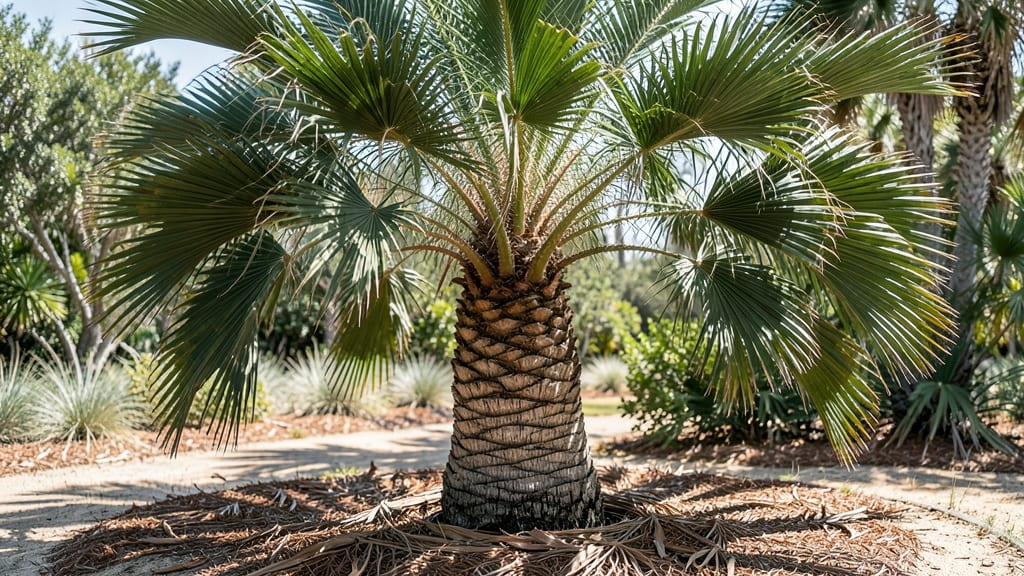
Meanwhile, palm trees like the Mexican fan palm (Zone 9b) can handle occasional dips to 25°F, while coconut palms (Zone 10a) require urban heat or microclimate protection. The 10°F difference between Zone 9a and 10a might seem small, but it determines whether a plant survives a 3-night frost or not.
Central Florida's subtropical influence means growing degree days (GDD) accumulate rapidly—typically 7,000-8,000 GDDs annually, compared to 5,000-6,000 in Zone 8**. This longer growing season allows for year-round vegetable production, like tomatoes and peppers, which North Florida can't match.
However, the lack of a true dormant season means some plants (e.g., sweet potatoes) grow continuously, requiring careful harvest timing to avoid over-maturity.
One often-overlooked factor is diurnal temperature swings. Central Florida's 15-20°F daily variations (cool nights, warm days) create ideal conditions for certain crops like okra and sweet corn, which thrive in this climate.
In contrast, South Florida's more uniform temperatures favor tropicals like banana trees and bougainvillea, which struggle in Central Florida's occasional cold snaps. 🌡️ Understanding these nuances helps gardeners maximize yields by aligning plant varieties with their specific zone's temperature patterns.
For practical application, use the USDA's interactive zone finder to pinpoint your exact zone, then cross-reference with the Florida Climate Service's frost probability maps. These tools reveal that while Orlando averages 1 frost per decade, areas like Ocala (Zone 8b) face 3-5 frosts annually.
This precision lets you tailor plantings to your microclimate's actual frost risk, not just the general zone designation.