
Size
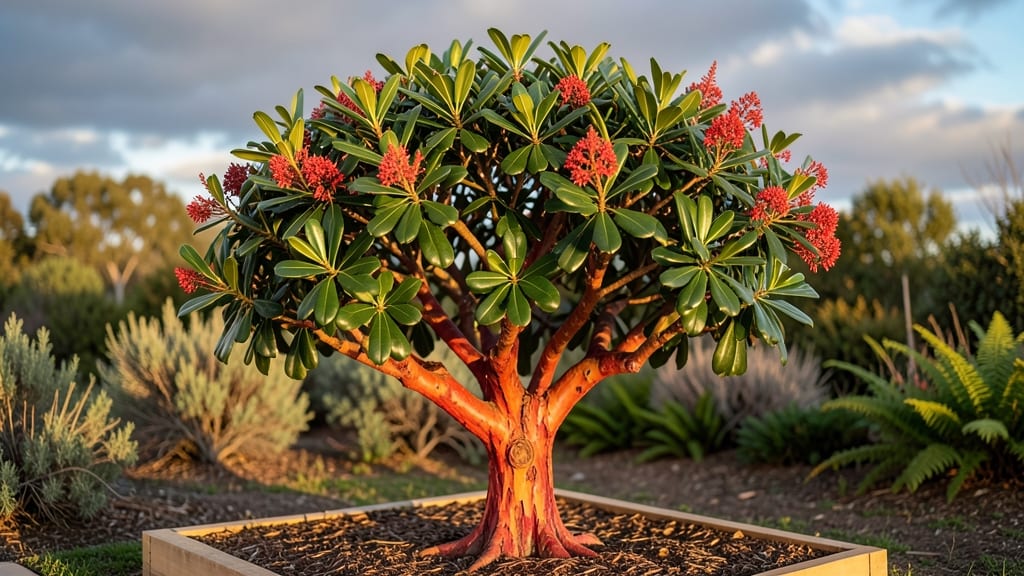
Growing the rarest plants in a garden requires specialized species like the Franklinia alatamaha—a nearly extinct U.S. native tree—or the Mimulus 'Aurora' hybrid monkeyflower, which has extremely limited propagation. The 'giant stinging tree' (Dendrocnide moroides) from Australia’s rainforests adds another layer of challenge, demanding expert care and sourcing from botanical gardens.
These ultra-rare botanicals are often on the brink of extinction in the wild, making them nearly impossible to cultivate without specialized knowledge. 🌱 The Franklinia alatamaha, for example, hasn’t been found growing naturally since the 1800s, while the Dendrocnide moroides contains venomous spines that deter all but the most dedicated gardeners.
Even when available, their survival depends on precise conditions—think humidity levels, soil pH, and temperature ranges that mimic their native habitats.
For most gardeners, acquiring these plants legally requires patience and persistence. Start by reaching out to accredited botanical gardens or nurseries specializing in endangered species, as they often have waiting lists. Some rare plants, like the Mimulus 'Aurora', may only be available through seed exchanges with university research programs.
Always verify suppliers through organizations like the CITES treaty to avoid supporting illegal wildlife trade.
💡 In This Article
- Why These Rare Garden Plants Are Nearly Impossible to Grow
- Where to Source Rare Garden Plants Legally and Ethically
Why these rare garden plants are nearly impossible to grow
The Franklinia alatamaha, often called the "lost Franklin tree," presents one of the most extreme challenges because it's functionally extinct in the wild. Scientists believe fewer than 20 mature specimens remain, all cultivated in botanical gardens.
This tree thrives only in the specific microclimate of Georgia and South Carolina's coastal plains, where it experiences humidity levels above 80% and temperatures between 65-75°F year-round.
Its seeds lose viability within weeks, making natural propagation nearly impossible—gardeners must rely on cuttings from preserved specimens, a process with only a 30% success rate.
The Dendrocnide moroides, or "giant stinging tree," adds another layer of difficulty with its venomous spines that contain neurotoxic compounds similar to wasp venom. These spines inject pain-inducing chemicals that can cause swelling and blistering for 24-48 hours after contact.
The plant's native habitat in Queensland's subtropical rainforests requires year-round rainfall above 100 inches annually and well-draining volcanic soil with a pH of 5.5-6.5. Even experienced growers struggle to replicate these conditions, with only 5% of attempts producing mature plants.
Genetic bottlenecks further complicate cultivation. The Mimulus 'Aurora' hybrid monkeyflower, for example, results from a cross between two rare wild species that no longer exist in nature. Its seeds require cold stratification at 35-40°F for 6-8 weeks to germinate, and even then, only 1 in 5 seeds will sprout.
The resulting plants often exhibit inconsistent traits because hybrid vigor diminishes over generations, making reliable propagation nearly impossible for home gardeners.
Conservation statuses add legal hurdles. All three species are protected under CITES Appendix II, requiring export permits and documentation of legal sourcing. The Franklinia is listed as critically endangered by the IUCN, while the Dendrocnide faces threats from habitat destruction in Australia.
These protections mean gardeners must work through accredited institutions rather than private sellers, often facing multi-year waitlists for access to cuttings or seeds.
Even when conditions are perfect, these plants often succumb to diseases common in controlled environments.
The Franklinia, for instance, is highly susceptible to powdery mildew if humidity drops below 75%, while the Dendrocnide can develop root rot if soil drainage isn't precise to within 0.1 inches of water per week.
These narrow margins for error make them unsuitable for casual gardeners and limit their availability to specialized conservatories with climate-controlled greenhouses.
What makes these species truly rare isn't just their scarcity—it's their ecological specialization. The Franklinia relies on specific pollinators that no longer exist in its native range, while the Dendrocnide depends on mycorrhizal fungi found only in Queensland's ancient rainforests.
Without these co-evolved relationships, even perfectly replicated conditions can't guarantee survival. 🌿