
Tools
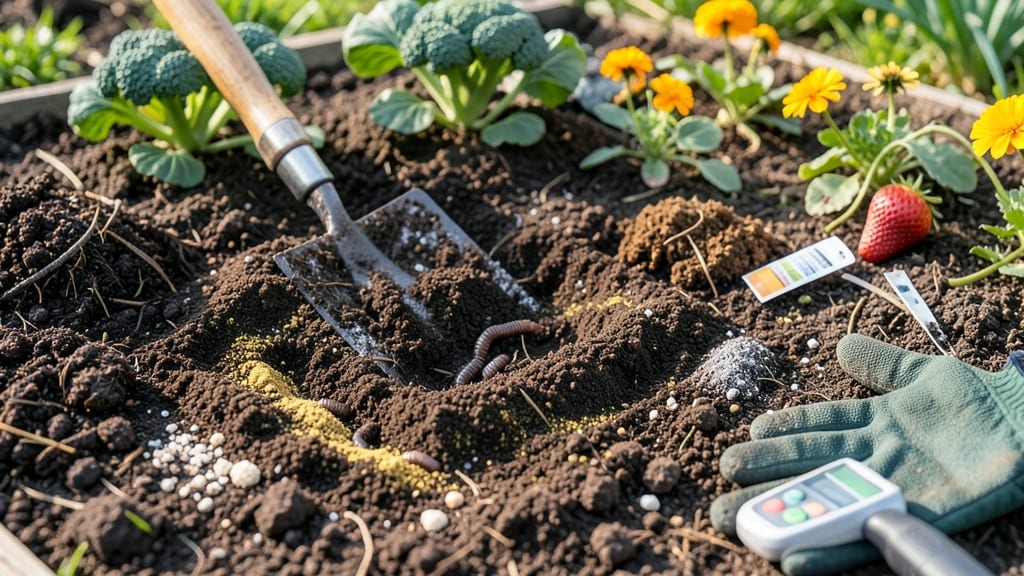
To improve your garden soil in spring, add compost, aged manure, and organic matter like leaf mold to enhance drainage, moisture retention, and nutrient availability for healthier plants while avoiding chemical overload.
Spring is the perfect time to give your garden soil a nutrient boost, and the right amendments can make all the difference. 🌱 Compost breaks down organic waste into rich, nutrient-dense material that feeds soil microbes, while aged manure provides a balanced mix of nitrogen, phosphorus, and potassium.
Leaf mold, made from decomposed leaves, improves soil structure by adding air pockets—critical for root growth in heavy clay or compacted soil. Unlike synthetic fertilizers, these organic options support long-term soil health without risking salt buildup or nutrient imbalances.
For best results, test your soil first to identify deficiencies—this helps you choose the right mix. For example, sandy soil benefits most from compost and leaf mold to improve water retention, while clay soil needs coarse amendments like coarse sand or perlite alongside organic matter to prevent compaction.
I always recommend applying a 1- to 2-inch layer of compost or manure over the soil surface and lightly mixing it in, especially before planting vegetables or flowers. This approach ensures nutrients are available when plants need them most.
💡 In This Article
- How Organic Matter Improves Soil Structure and Plant Health
- Best Soil Amendments for Different Garden Types
How organic matter improves soil structure and plant health
Organic amendments like compost and aged manure work by transforming your soil's physical structure at a microscopic level. Compost, for example, contains decomposed plant and animal matter that introduces humus—a dark, spongy substance packed with tiny pores.
These pores create air pockets that improve aeration, allowing roots to breathe while holding onto 20-30% more moisture than bare soil. The microbial activity in compost also breaks down organic material, releasing nutrients like nitrogen and phosphorus in forms plants can easily absorb.
This process creates a self-sustaining ecosystem where beneficial bacteria and fungi thrive, outcompeting harmful pathogens.
Aged manure, especially from herbivores like cows or horses, provides a balanced nutrient profile with 2-3% nitrogen, 1-2% phosphorus, and 1-2% potassium by weight.
The key difference from fresh manure is that aging (typically 6 months to a year) allows harmful ammonia to dissipate while preserving beneficial microbes. When mixed into soil, these nutrients become available over time, matching plant growth cycles.
For instance, leaf mold—created by decomposing leaves—adds a fine, crumbly texture that improves water infiltration in heavy clay soils by 30-40%, preventing runoff and reducing compaction.
The magic happens in the soil food web. Organic matter feeds microbes that produce enzymes breaking down complex molecules into plant-available forms, like converting insoluble phosphorus into soluble phosphate. This contrasts with synthetic fertilizers, which provide immediate but short-lived nutrients without improving soil structure.
Over time, organic amendments build soil organic matter (SOM), which can increase water-holding capacity by up to 50% in sandy soils and reduce erosion in clay soils by 60% due to improved aggregation. The result? Healthier roots, stronger plants, and less reliance on chemical inputs.
Consider this comparison: A soil sample with 5% organic matter holds 10,000 gallons of water per acre more than one with 1% organic matter. That extra moisture retention means plants survive droughts better and recover faster from stress.
For example, tomatoes grown in soil amended with compost produced 25% more fruit in a University of California study, thanks to improved nutrient availability and root development. The texture also matters—compost adds bulk, while leaf mold enhances moisture retention without compacting like synthetic fertilizers.
One common misconception is that all organic matter works the same way. For instance, fresh sawdust actually robs soil of nitrogen as microbes decompose it, creating a "nitrogen sink." That's why aged, well-decomposed materials are critical.
The ideal amendment depends on your soil's starting point: Sandy soils benefit most from compost (for structure) and leaf mold (for moisture), while clay soils need coarse amendments like perlite alongside organic matter to prevent compaction. Always aim for a mix that improves both physical structure and biological activity.
Here's what to watch for: Over-amending can create anaerobic pockets where roots suffocate, so aim for 1-2 inches of compost spread over the surface and lightly mixed into the top 6 inches of soil. The goal is to mimic nature's slow decomposition process, not overwhelm the system.
For example, a 10x10-foot garden bed might need 2-3 cubic feet of compost—about 2-3 wheelbarrow loads—applied in early spring before planting. This approach builds soil health gradually while avoiding the chemical imbalances common with synthetic fertilizers.