
Planting
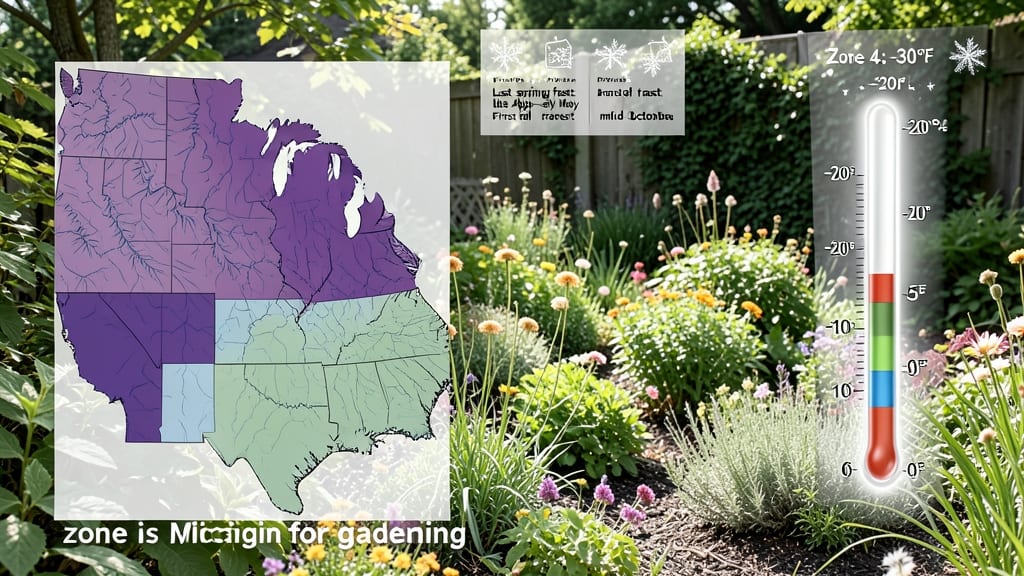
Michigan's gardening zones range from USDA Zone 4 through 6, with southern areas typically in Zone 6a and northern regions—including the Upper Peninsula—in Zone 4b, though local weather patterns can alter plant hardiness by one zone.
Michigan's gardening zones reflect its diverse climate, where latitude and elevation create distinct growing conditions. The Lower Peninsula generally falls into Zones 5b-6a, while the Upper Peninsula leans toward Zones 4a-5a. These zones help gardeners predict frost dates and select plants that thrive in their specific area.
For example, Detroit's urban heat island effect can push temperatures up by 2-5°F, allowing slightly warmer-zone plants to survive. Meanwhile, lake-effect snow near the Great Lakes can create microclimates where frost lingers longer, requiring adjustments to planting timelines.
Understanding these variations is key—what works in Zone 6a in southern Michigan might struggle in Zone 4b up north.
Many gardeners use frost-free dates (typically mid-May to early June) as a better guide than zones alone, especially for tender annuals. 🌱 For precise planning, check your exact location on the USDA Plant Hardiness Map and observe your garden's unique conditions for 2-3 years to refine your approach.
💡 In This Article
- USDA Zone Map Breakdown for Michigan’s Gardening Regions
- Adjusting for Michigan’s Microclimates and Frost Patterns
USDA Zone map breakdown for Michigan’s gardening regions
Michigan’s gardening zones are shaped primarily by latitude and elevation, creating distinct growing conditions across its two peninsulas.
The Lower Peninsula stretches from Zone 5b in the south (like Monroe County) to Zone 6a in central areas (including Lansing and Kalamazoo), while the northern reaches near Traverse City hover around Zone 5a.
This gradient reflects how temperatures drop roughly 5°F per 1,000 feet in elevation, though Michigan’s relatively flat terrain limits dramatic shifts.
The Upper Peninsula presents a colder landscape, with most areas falling into Zone 4a-4b, especially in the northern forests near Marquette or Iron Mountain. Here, winter lows can plunge to -25°F to -30°F, forcing gardeners to choose hardier perennials like coneflowers or Russian sage.
The USDA’s 13-zone system accounts for these extremes by averaging annual minimum temperatures—so a Zone 4b plant can survive -25°F to -30°F, while Zone 6a plants tolerate -10°F to -5°F.
What’s surprising is how quickly zones shift over short distances. For example, Grand Rapids (Zone 5b) sits just 100 miles north of Ann Arbor (Zone 6a), yet the average last spring frost arrives 2 weeks later in the north.
This is why gardeners in Zone 5b often plant cold-hardy crops like kale or peas 2-3 weeks earlier than those in Zone 4b—despite both areas sharing similar summer heat.
Elevation plays a subtle but critical role, even in Michigan’s flat terrain. Areas like the Huron Mountains in the UP can experience 3-5°F colder winters than nearby valleys, pushing them into Zone 4a.
Meanwhile, southern Michigan’s sand dunes (like those near Ludington) drain heat faster at night, creating microclimates where frost forms 2-3 days earlier than in adjacent farmland. These nuances explain why a single county might span two zones.
For precise planning, overlay the USDA map with your local frost-free dates. Southern Michigan’s frost-free season typically runs from mid-May to early October (180-200 days), while the UP’s season shrinks to 120-140 days.
This 60-day difference is why tomatoes thrive in Zone 6a but struggle in Zone 4b without season extension. 🌱
Pro tip: Use the USDA Interactive Map to zoom into your exact address—even neighboring towns can differ by a zone. For example, Detroit (Zone 6a) and Flint (Zone 5b) lie just 80 miles apart, yet Flint’s higher elevation and inland location make it 5°F colder on average.