
Picking
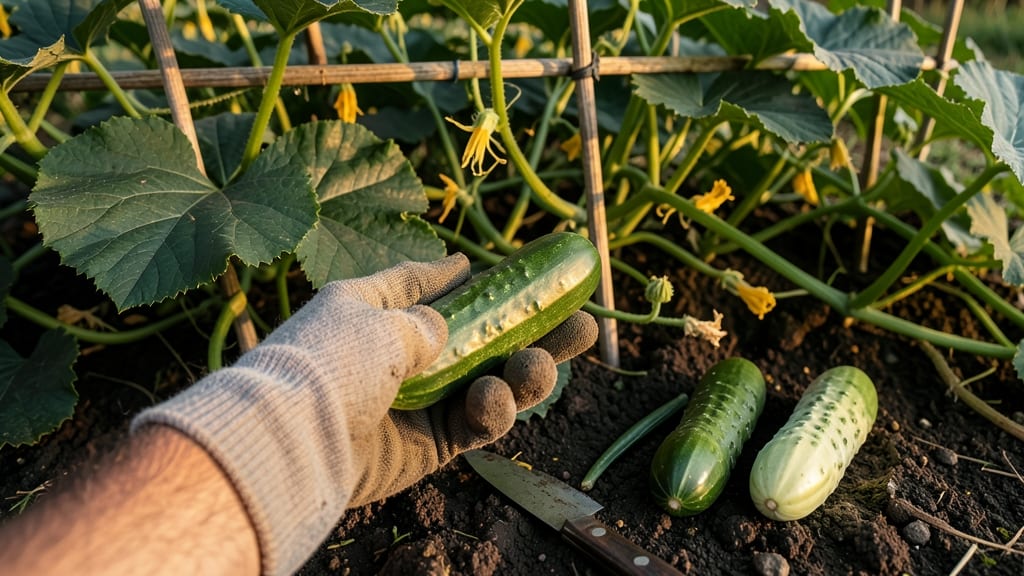
Harvesting cucumbers from your garden at the right time means the difference between crisp, seed-free slices and bitter, overripe disappointments.
Picture this: you’ve been waiting weeks for those first 6-inch cucumbers, only to bite into one that’s tough, seedy, and tastes like disappointment. The good news? A few simple tactile tests—size, skin firmness, and stem color—can tell you exactly when to pick for peak flavor every single time.
Most gardeners in Zone 6a start harvesting in July, but timing varies by variety and climate. Slicing cucumbers should be picked when they’re 6-8 inches long and still firm to the touch, while pickling types are best harvested smaller and crunchier.
Ignore the "wait for yellow" rule—those are overripe and past their prime.
Below, I’ll walk you through the 3 key signs of perfect ripeness, plus pro tips to keep your plants producing all summer long—no more guessing, just consistent harvests.


3 Physical tests to determine perfect cucumber ripeness
Harvesting cucumbers at the right moment transforms your garden into a crisp, flavorful treasure trove—but one wrong move turns them bitter and seedy. The secret lies in your fingertips. These 3 tactile tests will reveal when your cucumbers are at peak perfection, ensuring every bite is juicy and sweet.
Skip the guesswork and use these simple checks to pick cucumbers that taste like summer in every slice.
First, let’s talk size thresholds. Most slicing cucumbers reach ideal ripeness between 6 to 8 inches in length, while pickling varieties like Bush Pickle should be harvested at 2 to 4 inches. But size alone isn’t enough—you’ll also need to feel the cucumber’s readiness.
Grab a cucumber and give it a gentle squeeze; the skin should feel firm yet slightly yielding, like a well-inflated balloon. If it’s rock-hard, it’s too early, and if it feels mushy, it’s past its prime.
Next, focus on the stem end. A ripe cucumber’s stem will detach easily with a slight twist, leaving a small scar. If the stem resists or snaps off cleanly, the cucumber isn’t ready yet.
This test is especially critical for heirloom varieties, which can turn bitter if left on the vine too long. Pro tip: Harvest in the morning when cucumbers are cool and hydrated for the most accurate results.
Now, let’s examine the seed development. Slice a cucumber lengthwise and peek inside—ripe cucumbers have small, pale seeds surrounded by tender, crisp flesh. If the seeds are large, dark, and hard, the cucumber has overripe and developed a bitter flavor.
This test is your final checkpoint before declaring a cucumber harvest-ready. Remember, the sooner you pick, the more your plant will produce, so don’t wait too long!
Don’t overlook the color cues—while they’re not as reliable as tactile tests, they’re a quick visual double-check. Most cucumbers should be a deep, even green, though varieties like Lemon Cucumber or Armenian Cucumber will have their own signature hues.
Uneven coloring or yellowing spots signal overripeness, so act fast if you spot these signs. For bush varieties, which produce smaller fruits, rely even more on texture and stem tests since their size range is tighter.
Here’s a pro move: Use a harvesting schedule based on these tests. Check your cucumbers every 2 to 3 days during peak growing season (typically July to September in most climates). This frequency keeps
How cucumber variety affects harvest timing (and when to stop picking)
Not all cucumbers are created equal—and their harvest windows differ dramatically based on whether you're growing slicing or pickling varieties.
Slicing cucumbers like 'Straight Eight' reach peak flavor at 6-8 inches with smooth, glossy skin, while pickling varieties such as 'Boston Pickling' should be harvested at 2-3 inches for crisp, tender texture. Ignoring these differences leads to bitter, seedy disappointment or mushy, overripe cucumbers.
Vine growth patterns also play a crucial role. Vining varieties like 'Marketmore' produce continuously, requiring frequent harvesting every 2-3 days to prevent over-maturity. In contrast, bush varieties such as 'Bush Champion' have a shorter harvest window (about 4-6 weeks) but demand the same attention to timing.
Stopping too late means hard, watery cucumbers with large seeds—completely ruining their intended use.
Over-maturity isn’t just about size—it’s about texture and flavor. A cucumber that’s too firm may still be immature, while one that’s too soft has passed its prime. Run your thumbnail along the skin: if it leaves a dent, it’s past its peak.
Also, check the stem end—a yellow or brown base signals readiness, while a green stem means it’s still growing. For pickling varieties, wait until the skin is slightly waxy but not shiny.
Regional climate also impacts timing. In hotter zones (9-11), cucumbers mature 2-3 weeks faster than in cooler climates (3-7). If your summer temperatures exceed 90°F, harvest earlier to avoid bolting (premature flowering).
Conversely, in shorter growing seasons, prioritize early-maturing varieties like 'Sweet Success' (ready in 50 days) over slower types.
Knowing when to stop picking is just as critical. For slicing varieties, cease harvesting when vines yellow or produce fewer flowers. For pickling types, stop when cucumbers fail to reach minimum size within 1-2 weeks.
Leaving cucumbers on the vine too long drains plant energy, reducing next year’s yield (if growing perennially). Always harvest in the morning when starches are highest and flavors are freshest.
Pro tip: Use a small harvest basket to check cucumbers daily. This visual cue system helps you spot color changes and size progression effortlessly. With practice, you’ll intuitively recognize the perfect moment to pick—guaranteeing crisp, flavorful cucumbers every time. 🌱