Picking
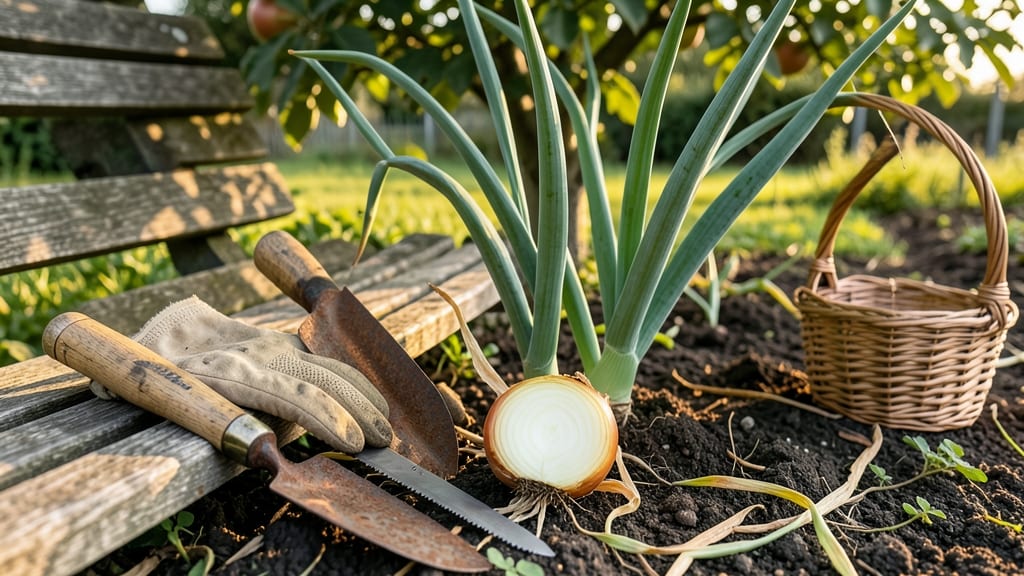
Knowing when to harvest onions from the garden ensures sweet, tender bulbs that yellow and fall over at the perfect moment—no more bitter surprises at dinner time.
Picture this: you’ve spent months tending to your 🧅, and now the moment of truth arrives. Pull one too soon, and you’ll end up with tiny, pungent nubs. Wait too long, and you risk hollow centers or tough skins.
The difference between a perfect harvest and a disappointment often comes down to knowing exactly when those bulbs are ready.
Most gardeners in USDA Zone 6a can expect harvest time between late summer and early fall, roughly 90 to 120 days after planting. But the real clues lie in the plant itself—leaf color, bulb size, and even how easily they pull from the soil.
Below, I’ll walk you through the three key signs to watch for, so you never miss the window again.
You’ll also discover how to adjust for regional variations, what to do if you harvest too early or too late, and how to store your onions for maximum freshness. Let’s get those bulbs out of the ground at the perfect moment!


3 Key signs your onions are ready for harvest (with visual cues)
Knowing when to harvest onions can feel like a guessing game—until you spot these three unmistakable visual cues. The difference between sweet, tender bulbs and bitter, shriveled flops often comes down to timing.
I’ve learned that waiting for the right moment transforms homegrown onions from disappointing to downright delicious. Let’s break down what to look for in your garden.
First, pay attention to the top growth. When the green leaves turn straw-colored and start flopping over, that’s your first signal. This natural dying-back happens because the plant redirects energy from the leaves to the bulb below.
If you see this change, your onions are likely nearing peak ripeness. But don’t rush—wait for the other two signs to confirm.
Next, examine the bulb size and firmness. At harvest time, your onions should feel firm but not rock-hard when gently squeezed. A ready bulb will also be 1 to 2 inches in diameter—about the size of a golf ball.
If it’s smaller, it needs more time; if it’s larger, it might be past its prime. This is especially true for storage onions, which need that balance for long-term keeping.
-
1. Yellowing & Flopping Tops
Look for straw-colored leaves that fall over naturally. This signals the plant is redirecting energy to the bulb. -
2. Bulb Size & Firmness
Aim for 1-2 inch diameter bulbs that feel firm but not hard. Press gently to test. -
3. Papery Skin & Shrinking Neck
The neck tightens and the skin turns dry and papery. This means the bulb is fully mature. -
4. Easy Release from Soil
Gently tug on the green tops. If the bulb slips out easily, it’s harvest-ready.
Don’t overlook the neck of the onion, where the bulb meets the green tops. When it shrinks and the skin becomes papery, that’s your final green light.
This change happens as the bulb matures and moisture pulls inward. If you ignore this sign, your onions may split open or develop hollow centers—both signs of over-maturity.
Timing also varies by onion variety. For example, short-day onions (like Texas Early White) mature faster in hot climates, while long-day onions (like Yellow Sweet Spanish) need cooler weather.
Check your seed packet for days to maturity, but always prioritize these visual cues over calendar dates. They’re nature’s way of telling you it’s time.
One common mistake I see is harvesting based on bulb size alone. A large bulb doesn’t always mean it’s ready—it could be overripe. Instead, combine all three signs: yellow tops, firm bulb, and papery skin.
This trio ensures you’re harvesting at the sweet spot for flavor and storage potential. Pro tip: Harvest on a dry morning to let the skins cure properly before storing.
If you’re growing green onions or scallions, the rules are different. These are harvested when the green shoots reach 6-8 inches tall, regardless of bulb development. But for storage onions, these visual cues are your best friend.
Mastering them means fewer bitter surprises and more homegrown success. Now grab your gardening gloves—your onions are waiting!
🌱
Harvesting onions by type: green vs. storage onions (timing guide)
Not all onions are created equal when it comes to harvest timing. Green onions and scallions can be harvested multiple times, while storage onions need precise timing to develop properly. Understanding these differences prevents bitter, pungent bulbs or stunted growth.
For green onions and scallions, you can start harvesting as soon as they reach 6-8 inches tall. Simply snip the outer leaves, leaving the roots intact to regrow. This method works for 3-4 harvests per season if done correctly.
| Onion Type | Harvest Time | Key Visual Cues | Days to Maturity |
|---|---|---|---|
| Green Onions | Multiple harvests | 6-8" tall, hollow stems | 30-60 days |
| Scallions | Multiple harvests | White bulb forms, 10-12" tall | 60-80 days |
| Storage Onions | Single harvest | Tops yellow, fall over, 1-2" bulb | 90-120 days |
Storage onions require patience and precise timing. Wait until the foliage yellows and falls over, signaling the bulb has reached full maturity. At this stage, the bulb should be 1-2 inches in diameter with papery skin forming.
Over-mature onions develop hollow centers and intense bitterness, while underdeveloped bulbs remain small and pungent. For short-day onions, harvest in late summer; for long-day onions, wait until early fall when tops naturally die back.
To avoid mistakes, monitor your onions weekly. Gently pull a test onion to check bulb size and skin texture. If the bulb feels firm and the skin is dry, it’s ready. Store properly by curing in a dry, shaded area for 2-3 weeks before storing.
For green onions, focus on leaf regrowth rather than bulb development. Harvest outer leaves first, leaving the inner leaves to continue growing. This method maximizes yield and extends your harvest season.
🌱