Picking
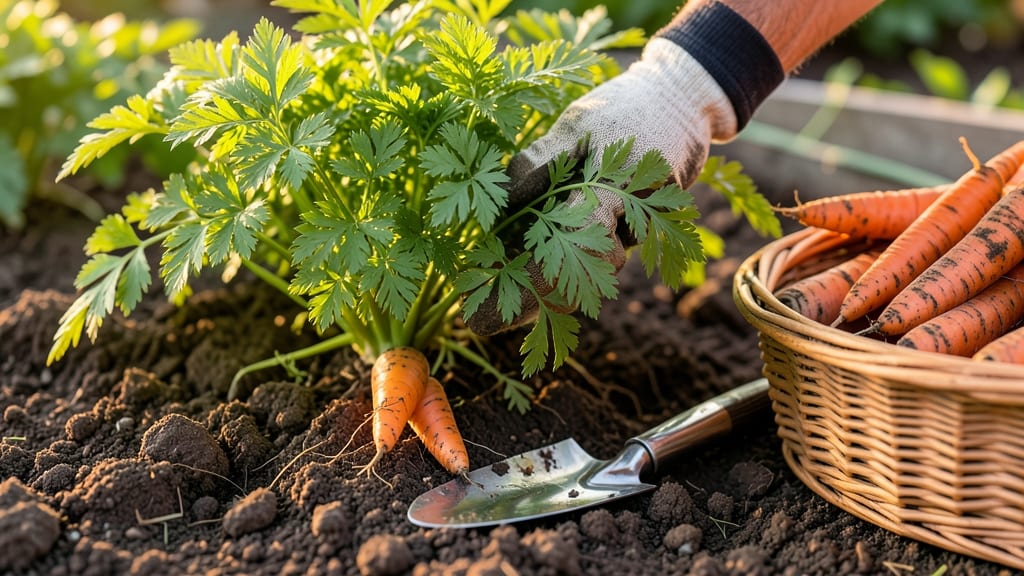
You’ll know when to pick carrots in your garden by their root size, soil resistance, and leaf color—but timing them wrong means tough, bitter roots instead of sweet, crisp perfection.
Picture this: you pull a carrot from the soil, and it snaps cleanly with just a little resistance. That’s the golden moment—when the flavor is at its peak and the texture is just right.
Miss it, and you’re left with woody roots that taste more like disappointment than dinner. The secret? A simple soil test that takes seconds to do.
Most gardeners wait for 60-80 days after planting, but the real cues are visual. Look for vibrant green tops, roots that resist gentle pressure, and a deep, consistent color. Different varieties mature faster or slower, and cooler weather can delay ripening—so don’t rely on a calendar alone.
In this guide, I’ll walk you through the soil resistance test, how to spot overripe or underripe carrots, and the best times to harvest based on your climate. By the end, you’ll never guess again—just pull, taste, and enjoy.


How to test carrot soil resistance for perfect sweetness
Carrots reach their peak sweetness when harvested at the right moment—before they become tough or woody. The soil resistance test is my go-to method to determine if your carrots are ready. This simple tactile check helps you avoid the frustration of pulling roots that are either too small or overripe.
By mastering this technique, you'll consistently harvest carrots with that ideal crisp texture and natural sweetness we all love.
Before you dig, understand that soil hardness directly correlates with carrot maturity. Loose soil means young roots, while firm resistance indicates fully developed roots ready for harvest. Different carrot varieties also have unique growth patterns—early-season types mature faster than late-season varieties.
Knowing these differences helps you adjust your timing for perfect results every harvest season.
The finger-pull test is the simplest way to gauge readiness. Here's how it works: gently press your thumb into the soil near the carrot's foliage. If the soil feels slightly firm but gives way easily, your carrots are likely ready.
This resistance indicates the roots have developed enough to be harvestable without being overmature. For early-season varieties, you might find them ready in as few as 50 days, while late-season types may need up to 80 days.
Step-by-Step Soil Resistance Test
- 1
- 2
- 3
- 4
- 5
Select a carrot with healthy green tops and 3-4 inch foliage for testing. Avoid any plants showing signs of stress or disease.
Gently brush away topsoil (1-2 inches) around the carrot's base to expose the root's upper portion. Keep the foliage intact to avoid disturbing the plant.
Press your thumb firmly (about 1 inch deep) near the carrot's shoulder. If the soil resists slightly but the root pulls free easily, it's ready. If it slides out effortlessly, it's underripe.
For standard varieties, aim for 1-1.5 inch diameter. Baby carrots should be 0.5-1 inch thick when harvested. Measure by gently exposing the root tip.
Early-season types (e.g., Paris Market) may test ready in 50-60 days. Late-season varieties (e.g., Danvers) often need 70-80 days. Cool weather slows growth—harvest 10-14 days earlier in cold climates.
Soil resistance isn't the only factor—visual cues also play a crucial role. Look for deep color development (vibrant orange, purple, or yellow) and vibrant green tops. If the foliage starts yellowing or the roots develop a hard, woody texture, you've waited too long.
For container-grown carrots, the test works the same, but check roots more frequently since space is limited.
Timing matters most during peak harvest seasons. In spring-planted crops, aim for harvest between June and July, while fall-planted carrots should be ready by October or November. If you're growing short-day varieties, they'll mature faster in cooler weather.
Always adjust your testing schedule based on your local frost dates—carrots left in the ground too long after frost will become tough and pithy.
For heirloom or specialty varieties, like the purple Dragon or yellow Atomic Twist, the soil resistance test still applies, but you may need to harvest slightly earlier. These types often have thinner skins that can bruise easily, so gentle handling is key.
Always test a few carrots before committing to a full harvest—this gives you confidence that the entire batch is ready.
If your soil feels too loose during testing, your carrots need more time. In this case, water deeply and wait 5-7 more days before retesting. Overly firm soil suggests the roots may be overmature, but you can still harvest them for storage or cooking.
For sandy soils, which drain quickly, you'll need to test more frequently since roots develop faster.
Pro tip: Keep a harvest journal to track when your carrots test ready each season. Note the days to maturity, soil conditions, and weather patterns. Over time, you'll develop an instinct for when your specific varieties are perfect for picking.
This record-keeping also helps you plan future plantings for continuous harvests throughout the growing season.
Remember, the goal is crisp, sweet carrots with minimal effort. With practice, the soil resistance test becomes second nature, and you'll never again pull a carrot that's either too small or past its prime. Happy harvesting—your taste buds will thank you! 🥕
Carrot maturity timeline: days to harvest by variety
Not all carrots mature at the same time—some varieties like Danvers take 70-80 days to reach peak sweetness, while Nantes can be ready in just 50-60 days. Understanding these differences helps you plan your garden and avoid the disappointment of woody, overripe roots.
Climate also plays a role: cooler spring and fall seasons slow growth, while summer heat can speed it up.
For example, my Chantenay carrots—perfect for rocky soil—always mature faster in my Zone 6a garden during spring plantings than in summer. The key is tracking days from seed while watching for visual cues like leaf size and root resistance.
Let’s break down the most popular varieties and their ideal harvest windows.
If you’re growing Nantes for baby carrots, you can start harvesting as early as 50 days, but wait until 60 days for full flavor. For Danvers, which store better, aim for 75-80 days to balance sweetness and storage life.
In warmer climates, carrots often mature faster—my Nantes reached harvest size in just 45 days during a hot June!
Pro tip: Use a garden journal to track planting dates and adjust for your local climate. For example, in Zone 7b, I plant Danvers in early spring and late summer to avoid the 90-degree heat that stunts growth.
Always check soil moisture—dry spells can delay maturity by 10-15 days.
Remember, the soil resistance test trumps days-to-harvest charts. Even if a variety says "ready in 60 days," if the roots feel soft when pulled, they’re not done. Combine the timeline with tactile cues for foolproof results every time.
Now that you know the ideal windows, your next challenge is spotting overripe or underripe carrots—we’ll cover those telltale signs in the next section. Until then, happy digging!