
Picking
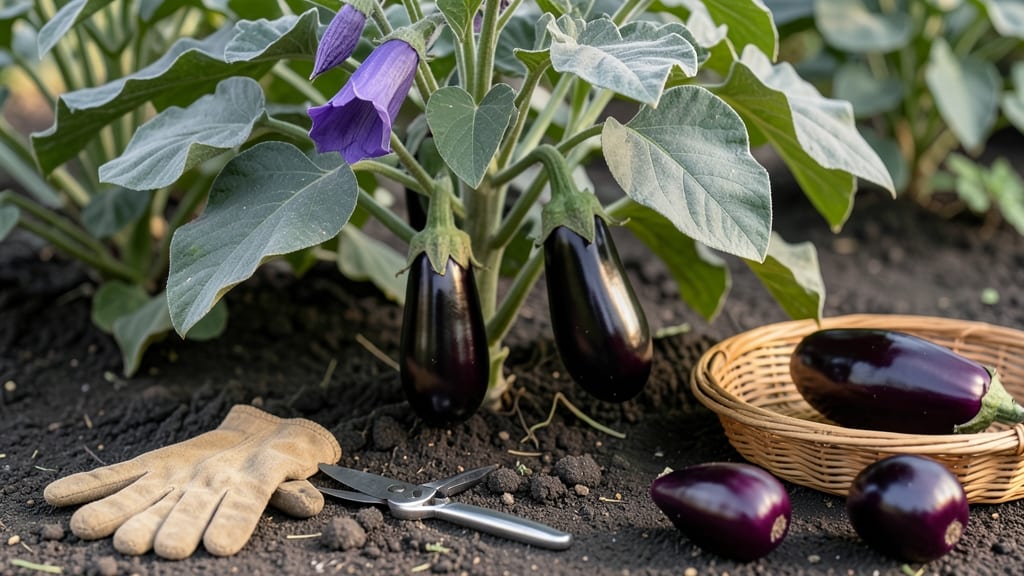
Picking eggplant from your garden at the right moment means the difference between a tender, glossy fruit and one that’s tough or bitter.
Harvesting too early leaves you with small, seedy, and underdeveloped 🍆—while waiting too long means your hard work turns mealy or even rots on the vine. The key? Knowing the three simple tactile tests that tell you exactly when to reach for your pruners.
You’ll learn how to check firmness, size, and color like a pro—plus the best time of day to harvest for peak flavor. No more guessing, no more wasted effort, just perfectly ripe eggplants every time.
Whether you’re a first-time grower or a seasoned gardener, these tricks will help you avoid common mistakes and keep your plants producing all season long.
3 Tactile tests to determine eggplant ripeness before harvesting
Eggplants are tricky—pick them too early, and you’ll end up with bitter, seedy fruit. Wait too long, and they turn mealy or rot on the vine. The secret lies in your hands and eyes, not just a calendar.
These 3 tactile tests will help you harvest at peak ripeness every time, ensuring tender, flavorful eggplants for your kitchen.
First, understand that eggplants don’t ripen like tomatoes—they develop flavor and texture while still firm on the vine. Overripe eggplants lose their glossy skin and become spongy inside.
The key is consistent firmness, deep color, and seed maturity. Let’s break down how to check each with your fingers and eyes.
Why tactile tests matter: Unlike color alone (which can vary by variety), these hands-on checks account for size, firmness, and internal seed development. For example, a glossy purple eggplant might still be underripe if it’s too small or soft. Your touch reveals what your eyes can’t.
Pro tip: Harvest in the morning when temperatures are cool. Eggplants are more firm and less prone to bruising after a night’s rest. Use a sharp knife or pruners to cut the stem, leaving a ½-inch stub to prevent disease entry points.
Watch for variety-specific cues. Long, slender varieties (like ‘Ichiban’) may reach maturity at 8–10 inches, while globular types (like ‘Black Beauty’) stop growing around 6 inches. Always check your seed packet for expected mature size—this varies wildly!
Common mistakes to avoid: Picking based on size alone (some varieties stay small but are ready), or waiting until the eggplant feels “soft” (this means it’s overripe). Another red flag? Cracks or wrinkles on the skin—these signal the fruit is past its prime.
For continuous harvests, pick eggplants every 2–3 days once they start ripening. This encourages the plant to produce more fruit. If you miss a harvest window, store eggplants at room temperature for up to a week, or refrigerate (though this can make the skin dull and texture softer).
Remember: Eggplants don’t ripen after picking. Unlike tomatoes, they won’t sweeten or soften further. Your tactile tests are your only guide—so trust your fingers! With practice, you’ll master the art of harvesting eggplants at their peak.
🍆✂️
Best time of day and seasonal factors for eggplant harvesting
Timing your eggplant harvest isn't just about ripeness—it's also about temperature, humidity, and even the time of day. Morning harvests yield the firmest fruit because cooler night temperatures help eggplants firm up.
I've found that picking between 7-9 AM gives me the best texture, while evening harvests often leave fruit more prone to bruising from warm daytime heat.
Seasonal factors play a huge role too. In hot climates (like USDA Zones 8-10), eggplants mature faster due to longer growing seasons, while cooler regions (Zones 5-7) may need extended care to prevent early frost from ruining your crop.
The key is understanding how your local climate affects ripening rates—especially when dealing with late-season varieties that need special attention.
| Factor | Ideal Conditions | Avoid |
|---|---|---|
| Time of Day | 7-9 AM (coolest part) | Afternoon heat (softens fruit) |
| Temperature | 65-85°F (18-29°C) | Above 90°F (32°C) (speeds ripening) |
| Humidity | 40-60% (moderate) | High humidity (encourages rot) |
| Late Season | Harvest before first frost | Waiting for "perfect" ripeness |
| Storage | Room temp (up to 1 week) | Refrigeration (dulls skin) |
Temperature extremes can drastically affect eggplant quality. When daytime temperatures exceed 90°F (32°C), eggplants mature faster but often develop bitter flavors and tougher skins. I've learned to prioritize harvesting during heatwaves rather than waiting for "perfect" ripeness.
Conversely, cooler nights (below 55°F/13°C) can slow ripening—so check your plants more frequently in fall.
Humidity also matters—too much moisture encourages disease pressure and rot, while dry conditions can cause cracking. I've found that mulching around plants helps maintain consistent soil moisture without creating humid microclimates. For container-grown eggplants, I water deeply in the morning and avoid wetting leaves to prevent fungal issues.
Late-season eggplants often need special attention. As summer winds down, days shorten and temperatures drop, slowing ripening. I've had success with row covers to extend the season by 2-3 weeks in cooler climates.
For varieties like 'Rosa Bianca', I harvest when they reach 70% of mature size rather than waiting for full ripeness to avoid frost damage.
Create a seasonal checklist tailored to your climate: ☑️ Early season: Monitor for first ripe fruit (60-70 days after transplant) ☑️ Peak season: Harvest every 2-3 days to encourage production ☑️ Late season: Prioritize harvesting over waiting for perfect ripeness ☑️ Frost watch: Harvest all remaining fruit before first frost
Remember that eggplants don't ripen after harvest—unlike tomatoes, they won't improve in flavor once picked. The best strategy is consistent monitoring combined with smart timing based on your local climate patterns. With practice, you'll develop an instinct for when your eggplants are ready to pick, regardless of the season.
🌿✂️