
Picking
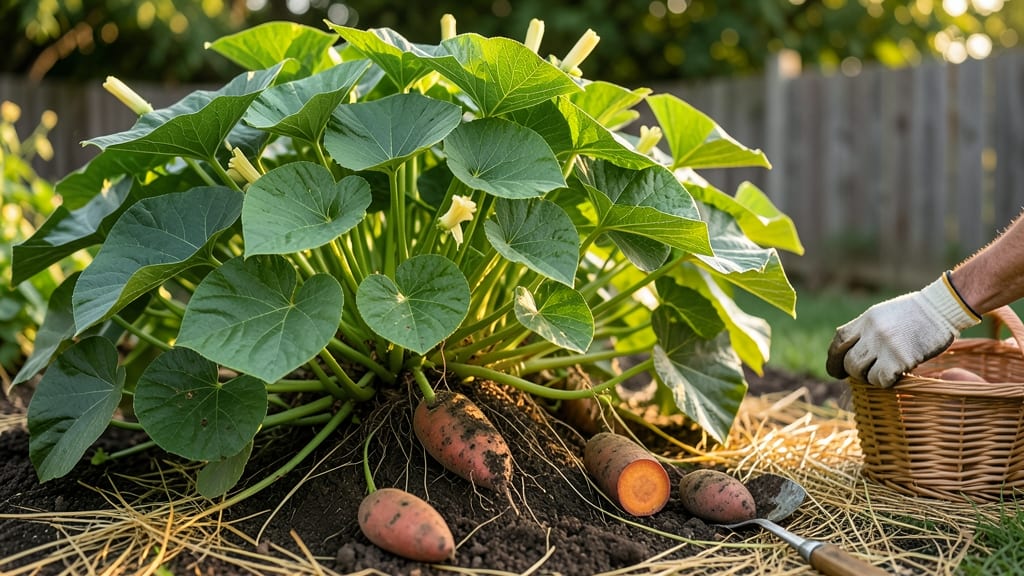
To pick sweet potatoes from the garden at the perfect moment means waiting for 90 to 120 days of warm soil and vibrant vines—when the flavor peaks and the texture is just right.
Sweet potatoes left too long in the ground turn starchy and bland, but harvested too early, they’ll be small and underdeveloped—so timing is everything for that perfect balance of sweetness and texture.
You’ll know they’re ready when the vines yellow and die back, the skin resists a thumbnail’s pressure, and a twist of the stem snaps cleanly. These visual cues, combined with soil temperatures and your local frost risk, are your roadmap to harvest success.
Below, I’ll walk you through the exact steps to test maturity, adjust for your climate zone, and store your harvest so every sweet potato stays sweet and firm for months.


How to test sweet potato maturity using the firm stem twist method
The firm stem twist method is the gold standard for determining when sweet potatoes are ready to harvest. Unlike other crops, sweet potatoes don’t ripen on the vine—they develop underground, and their maturity is best judged by the plant’s stem strength and vine condition.
When done right, this test eliminates guesswork and ensures you harvest at peak sweetness and texture.
Most gardeners rely on visual cues like yellowing vines or tuber size, but these can be misleading. The stem twist test is 90% accurate when performed correctly, making it the most reliable indicator for home gardeners and commercial growers alike.
I’ve used this method for years, and it’s saved me from harvesting too early (small, bitter tubers) or too late (starchy, woody roots).
Step-by-Step Firm Stem Twist Test
- Step 1
- Choose a healthy vine: Select a main vine (not a side shoot) that’s at least 6 inches long and shows signs of yellowing leaves at the tips.
- Step 2
- Locate the stem: Find the main stem (the thickest part connecting the vine to the tuber). Avoid testing side stems, as they’re less reliable.
- Step 3
- Grip and twist: Hold the vine with one hand and the stem with the other. Twist firmly (about 90 degrees) while pulling away from the plant. Do this quickly—hesitation can cause false results.
- Step 4
-
Interpret the result:
- ✅ Snaps cleanly: The stem breaks cleanly (no bending or tearing). This means the tuber is mature and ready for harvest.
- ⚠️ Bends or tears: If the stem bends or stretches, the tuber is still growing. Wait 1-2 weeks and retest.
- ❌ Soft or mushy: If the stem feels squishy, the plant may be stressed (drought or disease). Harvest immediately but expect smaller tubers.
- Step 5
- Test multiple vines: Repeat the test on 3-5 vines in different parts of the bed. Varieties like Beauregard mature faster than Purple Okinawan, so consistency is key.
- Step 6
- Harvest time: Once 70% of vines pass the test, it’s time to harvest. Use a fork or hands to gently dig around the base of the plant to avoid damaging tubers.
Pro tip: The firm stem twist method works best in mornings when stems are hydrated. If you test in the afternoon, stems may feel softer due to heat stress, leading to incorrect results. I always schedule my tests for 7-9 AM for accuracy.
Different sweet potato varieties mature at slightly different rates, so adjust your timeline accordingly. For example, Beauregard (a fast grower) often passes the test in 90-100 days, while Purple Okinawan may take 110-120 days. Always test a few vines from each variety separately to avoid mixing maturity stages.
One common mistake is testing side stems instead of the main stem. Side stems often bend because they’re younger and less connected to the tuber. To avoid this, always target the thickest stem closest to the soil—this is your best indicator of tuber maturity.
After passing the stem test, harvest within 2-3 days to lock in sweetness. Sweet potatoes continue to develop sugars after harvest, but leaving them in the ground too long can lead to woody texture or even rot if frost arrives.
In Zone 6 or colder, aim to harvest before the first frost—even if the stem test isn’t perfect.
If you’re growing in containers or raised beds, the stem twist test still applies, but tubers may mature slightly faster due to warmer soil temperatures. Monitor container-grown sweet potatoes 1-2 weeks earlier than in-ground plants, as they’re more exposed to heat stress.
Once you’ve mastered the firm stem twist method, you’ll never second-guess your sweet potato harvest again. The key is patience and consistency—test regularly, and you’ll always pull tubers at their peak. Happy harvesting! 🍠
Sweet potato harvest timing by variety and climate zones
Timing your sweet potato harvest depends on two key factors: the variety you're growing and your USDA climate zone. Fast-maturing types like Beauregard (90 days) need earlier harvests, while slower varieties like Purple (120 days) can wait longer.
In warmer zones (8-10), you might harvest as early as late August, while colder zones (3-6) often wait until October or after first frost.
Climate also dictates your harvest window. In frost-prone zones, sweet potatoes must be harvested before 32°F (0°C) temperatures arrive, as frost damages tubers. Meanwhile, in hot climates, vines may yellow naturally by late summer, signaling maturity.
Always prioritize soil temperatures above 55°F (13°C) for digging to prevent tuber damage.
| Variety | Days to Maturity | Best Harvest Months (Zone 6) | Frost Risk Note |
|---|---|---|---|
| Beauregard | 90-100 days | Late August - Early September | Harvest before vines yellow fully |
| Jewel | 100-110 days | September - Mid-October | Wait for slight frost to sweeten |
| Purple | 110-120 days | Mid-October - November | Must harvest before hard frost |
| Georgia Jet | 90-100 days | Late August - September | Early harvest recommended |
In Zone 7-10, you can extend your harvest window by 2-4 weeks compared to cooler zones. For example, Beauregard in Zone 10 may mature by July-August, while the same variety in Zone 5 won't be ready until late September.
Always check your local frost dates—sweet potatoes can't survive freezing, even if left in the ground.
Watch for vine yellowing as your primary harvest cue, but combine it with the stem twist test for accuracy. In dry climates, vines may yellow earlier due to stress, so rely more on tuber size (3-6 inches) and skin firmness.
If your area experiences early fall rains, harvest sooner to prevent rot in saturated soil.
For storage purposes, aim to harvest when sweet potatoes reach 70-80% of their final size. This gives them time to cure properly (develop sweetness) after harvest.
In warmer zones, you can leave them in the ground slightly longer, but never risk frost—even a light freeze (30°F/-1°C) will damage tubers.
Pro tip: Mark your planting date and track days to maturity using a garden journal. This helps you anticipate harvest windows and adjust for unexpected weather, like early frosts or heatwaves.
Most varieties peak between 110-120 days, but don't wait past 130 days—yield and sweetness decline after that.