Planting
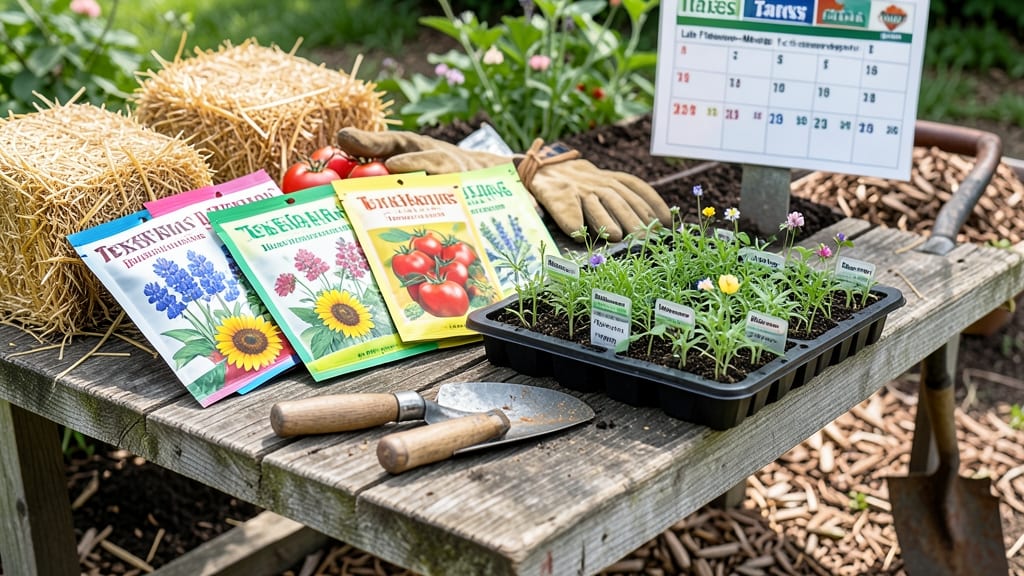
Planting a garden in Texas means timing it right to beat the heat and avoid frost, since your last spring frost can arrive as early as February in South Texas or as late as March in the Panhandle.
Texas gardeners face a unique challenge: scorching summers and unpredictable frost dates. But with the right timing, you can grow a thriving garden year-round—if you know the secrets of Texas heat zones.
Cool-season crops like lettuce and broccoli need to hit the soil 6-8 weeks before your last frost date, while warm-season favorites such as tomatoes and peppers thrive when nighttime temps stay above 55°F.
Get it wrong, and you’ll either bake your seedlings or lose them to a late freeze.
In this guide, I’ll break down the exact planting windows for your region, share a heat-zone map to avoid common mistakes, and show you how to stretch your growing season with simple tricks.
Texas heat-zone map: planting times by region (avoid frost & heat stress)
Texas gardeners know timing is everything—especially when frost dates and scorching summers can make or break your harvest. The state’s four heat zones (A1-A4) create dramatically different planting windows, from North Texas’s chilly winters to South Texas’s year-round growing potential.
Understanding these zones helps you avoid frost damage and heat stress while maximizing your garden’s productivity.
Whether you’re in Dallas (A2), Houston (A3), or El Paso (A1), each region has unique last frost dates and ideal planting windows for cool-season vs. warm-season crops. Below, I’ve broken down the key details—plus a summary table to help you plan like a pro.
Urban areas often experience microclimates with slightly later frosts, so always check local weather trends!
Pro Tip: Use a frost-free date calculator (like the National Weather Service maps) to fine-tune your schedule. For example, Amarillo (A1) can plant cool-season crops as early as September, while Brownsville (A4) might start in January. The difference? 100+ frost-free days!
| Heat Zone | Avg. Last Frost | Cool-Season Planting | Warm-Season Planting | Key Crops |
|---|---|---|---|---|
| A1 (Northwest: Amarillo, Lubbock) | March 1–15 | Sept 1–Oct 15 | April 15–May 15 | Broccoli, Spinach, Okra, Peppers |
| A2 (North/Central: Dallas, Waco) | Feb 15–March 1 | Aug 15–Sept 30 | March 15–April 30 | Kale, Tomatoes, Squash, Green Beans |
| A3 (East/Central: Houston, Austin) | Jan 15–Feb 15 | July 15–Aug 30 | Feb 15–March 30 | Lettuce, Cucumbers, Eggplant, Corn |
| A4 (South: Brownsville, Corpus Christi) | Dec 15–Jan 15 | June 15–July 30 | Jan 1–Feb 15 | Carrots, Peas, Melons, Basil |
Notice how A1 zones (like Lubbock) have earlier last frosts than A4 zones (like Brownsville)? This means you can grow cool-season crops like spinach or broccoli in fall for a winter harvest, while warm-season crops like tomatoes or peppers thrive in spring.
Urban areas like Dallas (A2) often see 2–4 weeks later frosts than rural counterparts due to heat islands.
Heat Stress Warning: In A3 and A4 zones, summer planting (June–August) can bolt lettuce or wilt tomatoes if temps exceed 95°F. Use shade cloth or drip irrigation to protect plants. I’ve seen okra and sweet potatoes thrive in these zones during peak heat, but leafy greens struggle without afternoon shade.
For succession planting, aim to stagger warm-season crops every 2–3 weeks after your last frost date.
For example, in Austin (A3), plant green beans on March 15, April 1, and April 15 for continuous harvests. Cool-season crops like kale can handle light frosts, so sow them 6–8 weeks before your average first frost (e.g., October 1 in A2 zones).
Don’t forget soil temperature! Warm-season crops need soil at 60°F+, while cool-season crops prefer 40–50°F. Use a soil thermometer to check before planting. In A1 zones, soil may not warm up until late April, delaying tomato and pepper planting.
Meanwhile, A4 zones can plant year-round with minimal frost risk.
Urban vs. Rural Tip: Cities like Houston or San Antonio have warmer microclimates due to concrete and asphalt, which can push last frost dates 1–2 weeks later than rural areas. Check your local cooperative extension office for hyper-local data. For
Best vegetables to plant in Texas by season (cool vs. warm season crops)
Texas's extreme climate demands smart crop selection. Cool-season vegetables like broccoli and spinach thrive in North Texas winters when temps dip below 75°F, while warm-season powerhouses such as okra and sweet potatoes dominate East Texas summers when heat exceeds 90°F for weeks.
The key? Planting at the right time to avoid bolting or frost damage.
For North Texas gardeners (Zones 7b-8a), cool-season crops should hit the soil 6-8 weeks before your last frost date—typically late February to early March.
Meanwhile, South Texas gardeners (Zones 8b-9a) can grow cool-season crops year-round with shade cloth, but they must time warm-season plantings for after Easter to avoid early heat stress.
Here’s my curated list of top-performing vegetables, organized by season and heat tolerance, with planting depth tips to maximize success in Texas soil.
🌱 Cool-Season Vegetables (Plant Fall-Winter)
- Broccoli | North Texas: Sept-Oct; South Texas: Sept-Nov | Depth: ½" | Heat Tolerance: Low (bolts at 80°F)
- Spinach | North Texas: Sept-Nov; South Texas: Sept-Dec | Depth: ¼" | Heat Tolerance: Very Low (wilts at 75°F)
- Carrots | North Texas: Sept-Oct; South Texas: Sept-Nov | Depth: ½" | Heat Tolerance: Medium (best below 70°F)
- Kale | North Texas: Sept-Mar; South Texas: Sept-Apr | Depth: ¼" | Heat Tolerance: High (sweetens in cold)
☀️ Warm-Season Vegetables (Plant Spring-Summer)
- Okra | North Texas: Apr-May; South Texas: Mar-Apr | Depth: 1" | Heat Tolerance: Very High (thrives at 95°F)
- Sweet Potatoes | North Texas: May-Jun; South Texas: Apr-May | Depth: 2" | Heat Tolerance: Extremely High (needs 90°F+)
- Tomatoes | North Texas: Mar-Apr; South Texas: Feb-Mar | Depth: ½" | Heat Tolerance: Medium (needs 70°F+ soil)
- Peppers | North Texas: Apr-May; South Texas: Mar-Apr | Depth: ½" | Heat Tolerance: High (best above 80°F)
Pro tip: Use mulch in summer to keep soil temps below 85°F for heat-sensitive crops like tomatoes. In North Texas, succession plant cool-season crops every 2-3 weeks to extend harvests through spring. For South Texas, prioritize shade cloth for cool-season greens to prevent bolting.
My favorite Texas-adapted varieties include 'Texas Blue' okra (drought-tolerant) and 'Heatmaster' tomatoes (resistant to sunscald). Always check seed packets for days to maturity—longer seasons mean later harvests in cooler zones like the Panhandle.
Remember: Soil temperature matters more than air temperature. Use a soil thermometer to confirm 60°F+ for warm-season crops and 50°F+ for cool-season starts. With these timelines, you’ll avoid the two biggest Texas gardening mistakes: planting too early (frost risk) or too late (heat stress).