Tools
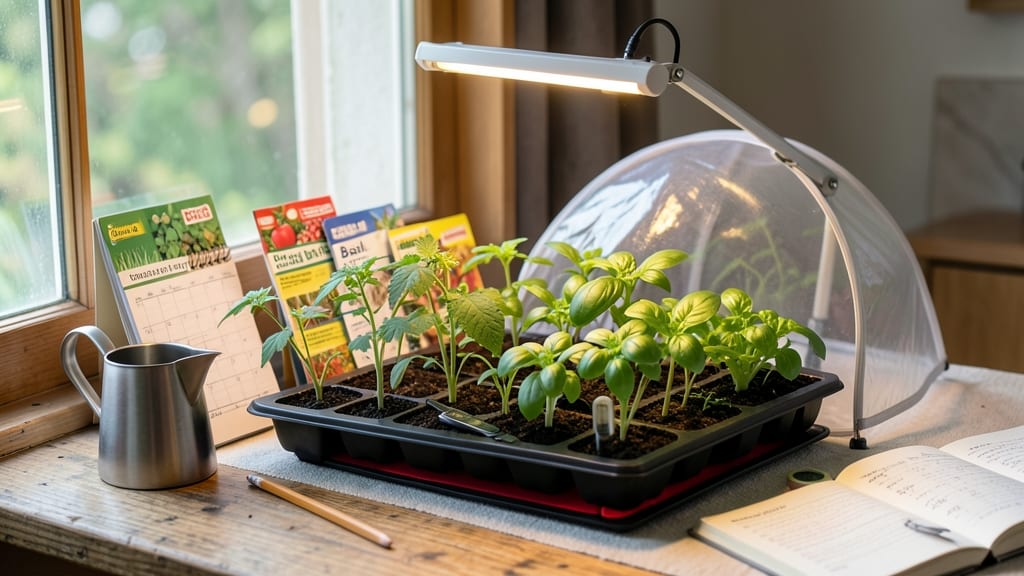
Starting garden seeds indoors at the right time means the difference between a thriving harvest and wasted effort — and it all comes down to frost-date math.
Picture this: you’ve got tiny seedlings ready to transplant, but the ground is still frozen. Or worse, you missed the window and now your plants are too big for their pots. Timing is everything, and getting it wrong can leave you pulling out your hair by May.
The good news? With a few simple calculations, you can nail your seed-starting schedule every time.
Here’s the key: most plants need 4 to 8 weeks indoors before they’re ready for the garden, but that window shifts depending on your last frost date and what you’re growing.
In USDA Zone 6, where many gardeners start seeds in February or March, a tomato might need 8 weeks indoors, while a fast-growing lettuce only needs 3 to 4 weeks. Get the math right, and you’ll avoid leggy, overcrowded seedlings.
Below, I’ll walk you through how to calculate your perfect seed-starting timeline, adjust for early or late seasons, and troubleshoot common mistakes—so you can transplant confidently and enjoy a garden that actually produces.
How to calculate indoor seed starting dates using frost dates
Timing is everything in gardening—start seeds too early, and they’ll outgrow their containers; too late, and you’ll miss the growing season. Mastering frost-date math ensures your seedlings are ready to thrive when it’s safe to plant outdoors.
The key is balancing your local last frost date with each plant’s maturity timeline.
Every gardener needs to know their average last frost date, which varies by USDA zone. For example, in Zone 6, the last frost typically falls around April 15, while in Zone 8, it’s closer to March 1.
Check your local agricultural extension office or use online tools like the Old Farmer’s Almanac for precise dates.
Once you have your frost date, the next step is understanding each plant’s days to maturity. This is the time from seed to harvest, but for transplanting, focus on the days to transplant—usually 4-8 weeks before maturity.
For instance, a tomato might take 80 days to mature, but you’ll transplant it at 6-8 weeks.
Here’s the math: Subtract the days to transplant from your last frost date to find your indoor seed-starting window. For a Zone 6 gardener with 60-day tomatoes, start seeds by February 15 (April 15 - 60 days).
Adjust for early or late varieties—some crops like peppers need 8-10 weeks indoors.
Step-by-Step Guide to Calculating Indoor Seed Starting Dates
- Step 1: Find your average last frost date for your USDA zone (e.g., April 15 for Zone 6).
- Step 2: Check the days to maturity on your seed packet. Note the days to transplant (usually 4-8 weeks before maturity).
- Step 3: Subtract the days to transplant from your last frost date to get your indoor start date. Example: April 15 - 60 days = February 15.
- Step 4: Adjust for slow starters (like peppers) or fast growers (like radishes). Some may need 8-10 weeks indoors.
- Step 5: Add 2-4 weeks for hardening off (acclimating seedlings to outdoor conditions) before transplanting.
- Step 6: Use a seed-starting journal to track dates and adjust for early or late seasons.
Not all plants follow the same rules. Cool-season crops like lettuce and spinach can handle light frosts and may start 6-8 weeks before your last frost date. Meanwhile, warm-season crops like tomatoes and cucumbers need soil warmth and should wait until 2-4 weeks after your last frost.
For fall planting, reverse the process. Start seeds 10-12 weeks before your first frost date (e.g., August 1 for Zone 6). Use shade cloth or row covers to extend the season for heat-loving plants like basil or peppers.
Pro tip: Use a seed-starting calculator or app to automate these calculations. Many include USDA zone maps and plant-specific databases for quick adjustments. I rely on the Johnny’s Selected Seeds calculator for precision.
Remember, light and temperature affect growth rates. Seedlings under grow lights may mature faster than those in a sunny window. Keep your seedling heat mat at 70-75°F for optimal germination and growth.
If you’re in a warmer zone (7-10), you might start seeds earlier or even direct-sow outdoors in late winter. Always monitor weather forecasts for unexpected late frosts or early heat waves.
Best indoor seed starting times for popular vegetables and herbs
Timing your indoor seed starts correctly means the difference between a bountiful harvest and wasted seedlings. Every plant has its own maturity timeline, and your last frost date determines when to begin.
For example, in USDA Zone 5, starting tomatoes in early March ensures they’re ready by late May, while basil can wait until April for a summer harvest. Adjust these timelines by 2 weeks earlier for warmer zones (7-10) or 2 weeks later for colder zones (3-4).
Below is a crop-specific guide with exact starting windows for popular vegetables, herbs, and flowers. Use your last frost date (find yours [here](https://www.almanac.com/gardening/frost)) and count backward based on each plant’s indoor growth time.
Pro tip: Leafy greens like lettuce and spinach grow faster (3-4 weeks indoors), while peppers and tomatoes need 8-10 weeks to mature.
| Plant | Indoor Start Time (Before Last Frost) | Notes |
|---|---|---|
| Tomatoes (Early Varieties) | 8-10 weeks | Use grow lights; transplant after soil warms to 60°F+ |
| Peppers (All Varieties) | 10-12 weeks | Slow growers; start early in cold zones |
| Leafy Greens (Lettuce, Spinach) | 3-4 weeks | Fast growers; can direct-sow if space allows |
| Herbs (Basil, Cilantro) | 4-6 weeks | Basil hates cold; wait until after last frost |
| Flowers (Marigolds, Petunias) | 6-8 weeks | Petunias need long days; use grow lights |
| Broccoli/Cauliflower | 6-8 weeks | Cool-season crops; transplant early |
For USDA Zones 3-4, where frost lingers later, start tomatoes and peppers indoors by late February to avoid overcrowding.
In Zones 7-10, you can push starting times to late March or even April, thanks to longer growing seasons. Herbs like basil and cilantro are heat-sensitive, so wait until after your last frost to start them—no need to rush!
For leafy greens, you can even direct-sow them outdoors 2-3 weeks before your last frost if your winters are mild.
Don’t forget to harden off seedlings 1-2 weeks before transplanting. This means gradually exposing them to outdoor conditions (sun, wind, and cooler temps) to prevent shock. Start with 2-3 hours daily in a sheltered spot, then increase over a week.
Skipping this step often leads to wilting or stunted growth after transplanting—so take the extra time! For cold-hardy crops like kale or peas, you can transplant even earlier, as they tolerate light frosts.
Pro tip: Use a seed-starting calendar or app to track your timelines. I recommend marking your last frost date on a physical calendar and counting backward from there.
For example, if your last frost is May 15, start tomatoes on March 15 (10 weeks prior) and lettuce on April 15 (4 weeks prior). Adjust for early or late varieties—some tomatoes mature in 60 days, while others take 90 days, so check your seed packets!
Finally, keep in mind that light is critical for strong seedlings. If your windows aren’t sunny enough, invest in a grow light to prevent leggy, weak plants. Aim for 12-16 hours of light daily, especially for tomatoes, peppers, and herbs.
With the right timing and care, your indoor starts will be ready to thrive outdoors when the time comes. Happy planting! 🌱