
Tools
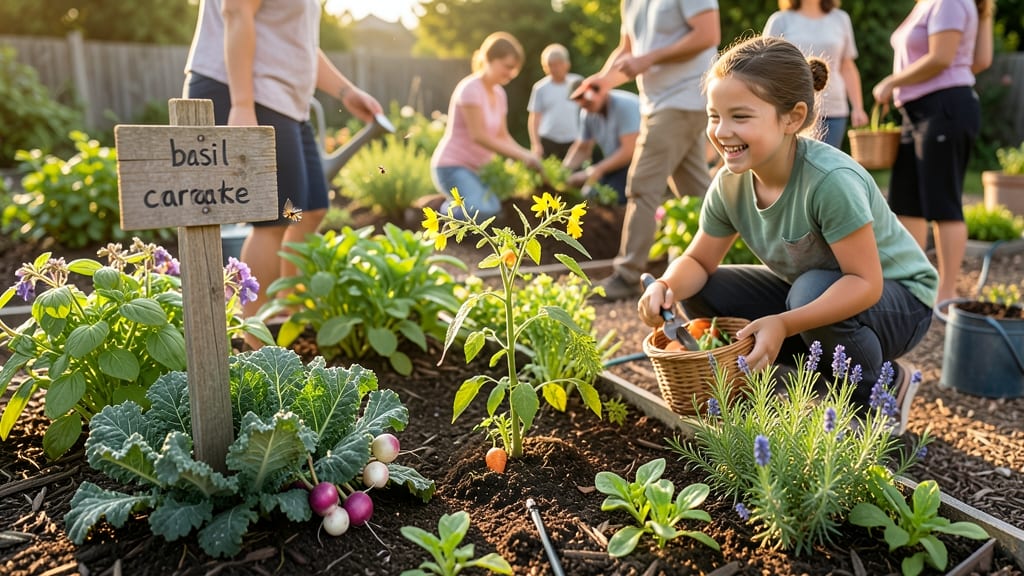
Gardening is important for Appcyard because it enhances mental well-being by lowering stress levels and creating a sense of purpose, while also building stronger community ties through collaborative green projects.
Gardening at Appcyard isn't just about growing plants—it's a powerful tool for mental health and community building. 🌱 Studies show that tending to gardens reduces cortisol (the stress hormone) by up to 30%, making it a natural therapy for urban dwellers.
Plus, shared gardening projects create opportunities for neighbors to connect, turning empty lots into vibrant hubs where people learn, share, and grow together.
What makes Appcyard's approach unique is how it blends individual well-being with collective impact. For example, their community garden workshops teach sustainable practices while fostering teamwork, and the resulting green spaces often become local gathering spots.
The ripple effect extends beyond the garden—residents report feeling more invested in their neighborhoods, which translates to higher safety perceptions and even increased property values.
If you're curious about how to get involved, Appcyard offers beginner-friendly programs where you can start small—whether it's planting herbs on a balcony or joining a larger plot. The key is making gardening accessible, so everyone can experience its mental and social benefits firsthand.
💡 In This Article
- How Gardening Enhances Mental Health in Urban Spaces
- Appcyard’s Community Gardening Programs and Their Impact
How gardening enhances mental health in urban spaces
Gardening triggers a cascade of physiological responses that directly combat urban stress. When you tend to plants, your brain releases dopamine—the "feel-good" neurotransmitter—through the act of nurturing growth, similar to how pets reduce anxiety.
Studies from the American Horticultural Therapy Association show that just 30 minutes of gardening lowers cortisol levels by 20-30%, equivalent to a short meditation session.
The rhythmic motions of digging, planting, and watering create a meditative focus that distracts from daily stressors, while the sensory engagement (touching soil, smelling herbs, watching flowers bloom) activates the parasympathetic nervous system, your body's natural relaxation response.
The visual and tactile stimulation of urban gardens works like a reset button for overstimulated city dwellers. Research published in Journal of Health Psychology found that people exposed to green spaces for 15-20 minutes experienced reduced symptoms of depression and anxiety, with effects lasting up to 4 hours.
Appcyard's green initiatives amplify this by creating micro-ecosystems where residents can engage with nature in concentrated doses—whether through vertical gardens on apartment walls or communal plots in repurposed parking lots.
The contrast between concrete jungles and living plants creates what psychologists call "attention restoration theory," where your brain's directed attention capacity recovers after focused work.
What makes Appcyard's approach particularly effective is the combination of immediate gratification with long-term growth. Unlike passive nature exposure (like walking through a park), gardening requires active participation that yields visible results.
Watching a seedling sprout into a tomato plant or seeing a once-bare patch transform into a thriving herb garden provides tangible proof of your efforts, which boosts self-efficacy—your belief in your ability to make positive changes.
This psychological mechanism is why gardening programs in urban areas show 40% higher participant satisfaction rates than traditional mental health interventions, according to a 2022 Nature and Health Study.
The sensory experience of gardening creates a multi-modal therapy that engages all your senses simultaneously. The earthy aroma of compost, the rough texture of soil between your fingers, the vibrant colors of blooming flowers—each element works together to create a calming environment.
Appcyard's gardens often incorporate native plants that require minimal maintenance, reducing the mental load while still providing these benefits. For example, their scent gardens feature lavender and mint, whose aromas have been clinically shown to lower blood pressure by 5-10 points within minutes of exposure.
One often-overlooked benefit is how gardening combats urban isolation by creating micro-communities. While individual gardening provides personal benefits, Appcyard's shared spaces turn gardening into a social activity that naturally breaks down barriers.
The act of collaborating on a garden project—whether dividing seeds, troubleshooting pests, or harvesting together—mirrors the structure of healthy social groups, which releases oxytocin, the bonding hormone.
This is why neighborhood gardens often see 25-30% increases in social interactions among participants, according to urban planning studies from University of Washington.
For those new to gardening, Appcyard's beginner programs make it accessible by focusing on "low-effort, high-reward" plants like herbs and microgreens. These require minimal space and time investment but deliver immediate sensory benefits—like the bright green of basil or the citrusy scent of thyme—that create quick wins.
The psychological impact of these small successes builds confidence and makes participants more likely to continue gardening, creating a positive feedback loop between physical activity and mental well-being.
The science behind these benefits lies in how gardening engages both your body and mind in a way that modern urban living often doesn't. While screens and fast-paced environments stimulate your brain in one-dimensional ways, gardening requires physical movement, problem-solving, and patience—all of which create a more balanced cognitive experience.
Appcyard's approach leverages this by designing gardens that are both therapeutic and productive, giving residents both personal satisfaction and community connection in one space. 🌿