
Fertilization
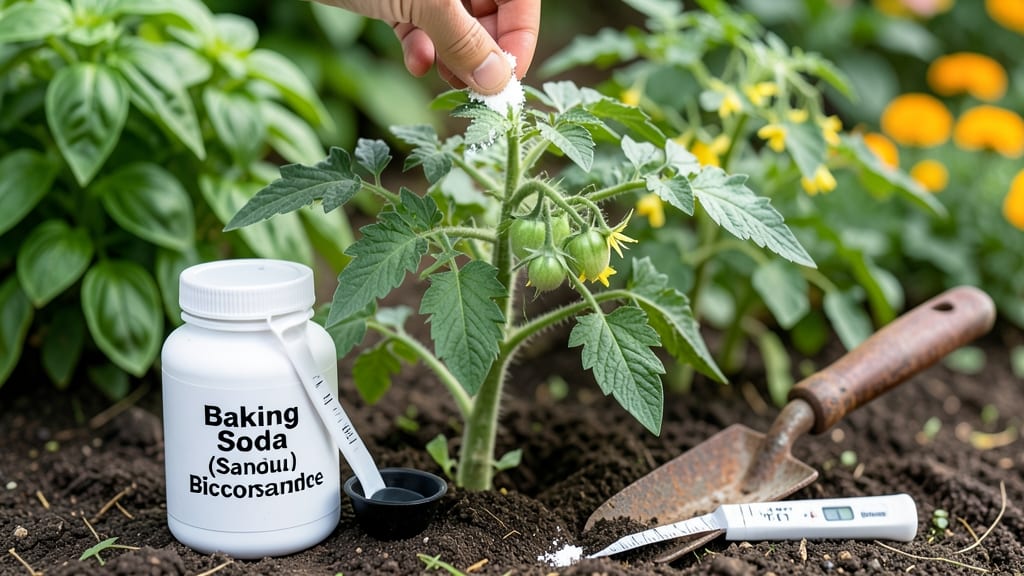
Baking soda in garden soil can raise pH levels to neutralize acidity, but it must be applied carefully—too much can harm plants by disrupting nutrient absorption or altering soil chemistry. Test soil first and use sparingly for targeted pH adjustments.
Baking soda (sodium bicarbonate) works by reacting with soil acidity to create a more alkaline environment, which helps certain plants thrive. 🌱 However, this chemical shift can be a double-edged sword—while it may benefit alkaline-tolerant crops like asparagus or lavender, it can lock out essential nutrients like iron and manganese for acid-loving plants such as blueberries or azaleas.
The key is precision: a ½ teaspoon per gallon of water is a safe starting point, but always test soil pH before and after application to avoid overcorrecting.
Many gardeners make the mistake of treating baking soda like a universal soil amendment, but its effects vary dramatically depending on your soil type. Sandy soils may require more frequent applications, while clay soils can hold onto sodium buildup longer, potentially causing long-term damage.
I recommend mixing the solution into the top 2 inches of soil rather than broadcasting it—this ensures even distribution while minimizing runoff risks.
💡 In This Article
- How Baking Soda Affects Soil pH and Plant Health
- Safe Baking Soda Application Rates for Different Plants
How baking soda affects soil pH and plant health
Baking soda (sodium bicarbonate) works through a chemical reaction called neutralization. When dissolved in water, it dissociates into sodium (Na⁺) and bicarbonate (HCO₃⁻) ions. These ions react with hydrogen ions (H⁺) in acidic soil, forming carbonic acid (H₂CO₃), which breaks down into water and carbon dioxide—effectively reducing acidity.
For every 1 teaspoon of baking soda added to a gallon of water, you can expect the soil pH to rise by approximately 0.5 to 1.0 points, depending on your soil's buffering capacity.
This shift is especially useful in soils with pH levels below 6.0, where many nutrients become locked out.
The sodium ions introduced by baking soda can accumulate over time, especially in clay-heavy soils where water drainage is slower.
Excess sodium disrupts soil structure by breaking apart clay particles, reducing porosity and air pockets—this is why sandy soils handle baking soda better than dense, compacted clay. 🌱 The real danger lies in what happens when pH swings too far: plants like blueberries (ideal pH 4.5-5.5) may develop chlorosis (yellowing leaves) as iron and manganese become unavailable, even though the soil appears fertile.
This is called "nutrient lockout," where high pH prevents root uptake of essential micronutrients.
Root damage is another critical risk. Sodium buildup can create an osmotic imbalance, forcing roots to work harder to absorb water and nutrients. Over time, this stress manifests as stunted growth or wilting, even when soil moisture appears adequate.
What's worse, baking soda doesn't provide long-term pH stability—its effects typically last 1-3 months before soil microbes and rainfall gradually restore acidity. This makes it a short-term fix rather than a permanent solution for severely acidic soils.
Consider this comparison: A 1 teaspoon of baking soda per gallon of water applied to 10 square feet of garden bed might raise pH by 0.3-0.5 points in sandy loam, but the same amount in clay soil could push pH up by 1.0-1.5 points—a far more aggressive adjustment.
The variability comes from soil organic matter content, which acts like a buffer, absorbing or releasing hydrogen ions to stabilize pH. Organic soils (like peat) resist pH changes more than mineral soils, requiring careful calibration.
For visual clues, watch for these signs of overapplication: Leaf edges turning brown and crispy (sodium burn), new growth appearing pale or stunted, or soil developing a white crust when dry.
These symptoms often appear 2-4 weeks after treatment, giving you a window to correct the imbalance before permanent damage occurs. The key is monitoring soil pH with a home test kit before and after application—never guess based on plant appearance alone.
What most gardeners overlook is the secondary effect on soil microbes. Many beneficial bacteria and fungi thrive in slightly acidic conditions (pH 6.0-6.5). Shifting pH too high can reduce microbial diversity by 30-50%, weakening the soil's natural nutrient-cycling abilities.
This microbial decline often goes unnoticed until plants show poor growth despite adequate fertilization. 🔥