
Fertilization
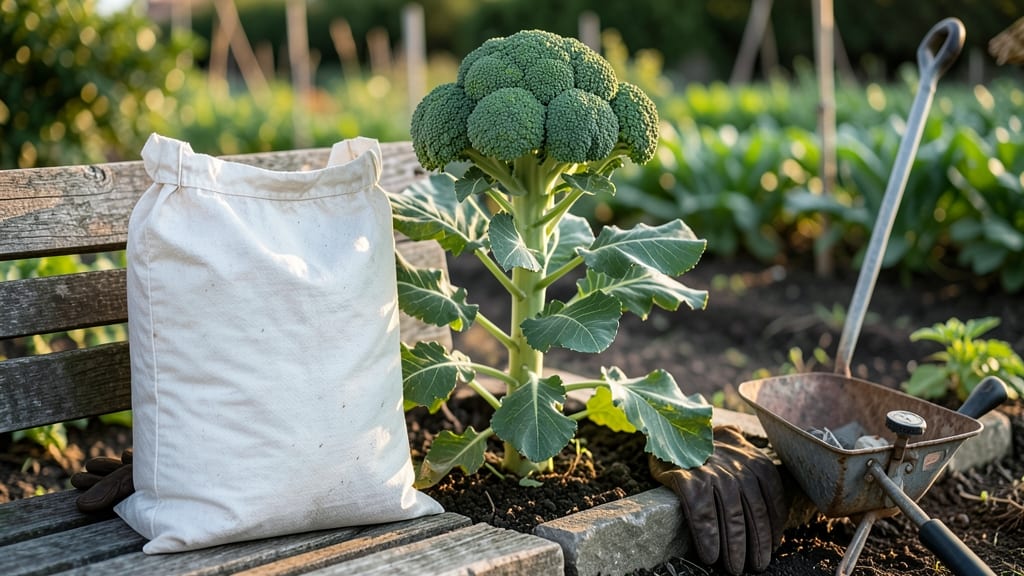
Calcium for gardens is essential for preventing blossom end rot in tomatoes and peppers, building stronger cell walls, and enhancing fruit quality by correcting soil deficiencies with amendments like crushed eggshells, lime, or gypsum. Use it when soil pH is properly balanced for optimal uptake.
Calcium acts like a plant's internal scaffolding, helping cells maintain their structure during rapid growth phases.
When your garden soil lacks this mineral, you'll often see classic symptoms like the dark, sunken spots at the blossom end of tomatoes or peppers—this is blossom end rot in action. 🌱 The good news is that calcium amendments work quickly when applied correctly, especially during periods of active fruiting when plants demand more nutrients.
I've found that combining calcium with regular watering helps prevent leaching, ensuring your plants get the continuous supply they need.
Most gardeners overlook the importance of soil pH when adding calcium, yet this is where many applications fail. A pH between 6.0 and 7.0 ensures your plants can actually absorb the calcium you're providing. Too acidic or alkaline, and your efforts might as well be money down the drain.
For best results, I recommend testing your soil before applying any amendments—it's the difference between a thriving garden and one that still struggles with weak stems and poor fruit development.
💡 In This Article
- How Calcium Prevents Blossom End Rot in Vegetables
- Best Calcium Sources and Application Methods for Gardens
How calcium prevents blossom end rot in vegetables
Calcium plays a crucial role in maintaining plant cell wall integrity, particularly during periods of rapid growth. When tomatoes, peppers, or squash develop blossom end rot, it's often a sign of calcium deficiency during fruit expansion.
The mineral helps stabilize cell membranes and acts as a "glue" that strengthens the pectin structure in plant cell walls. Without sufficient calcium, these cells become weak and prone to collapse, leading to the characteristic dark, sunken lesions at the blossom end of fruits.
The science behind this involves calcium's ability to form cross-links with pectin molecules in the cell walls.
Think of it like reinforcing the beams in a building's foundation—without proper calcium bonding, the structure can't support the weight of growing fruit. 🌱 During active fruiting, plants require 0.5-1.0% calcium in their tissue to maintain this structural integrity.
When soil calcium levels drop below 0.2%, you'll start seeing those telltale symptoms of blossom end rot. The issue often appears when plants experience uneven watering or fluctuating soil moisture, which disrupts calcium uptake even when adequate calcium exists in the soil.
What most gardeners don't realize is that calcium deficiency disrupts the entire nutrient transport system. The mineral works in tandem with other elements like magnesium and potassium to regulate cell membrane permeability. When calcium levels drop, these membranes become leaky, preventing proper nutrient distribution throughout the plant.
This is why you'll often see blossom end rot symptoms alongside other deficiency signs like yellowing leaves or stunted growth. The key is maintaining consistent calcium availability—especially during those critical 2-4 week periods after fruit set when calcium demand peaks.
Interestingly, calcium's role extends beyond just preventing blossom end rot. It also enhances fruit quality by improving texture and reducing bitterness in tomatoes and peppers. Plants with adequate calcium develop firmer cell walls, resulting in fruits that hold their shape longer during storage.
For example, a tomato with proper calcium content will have 20-30% stronger cell wall structure compared to one deficient in calcium, making it less prone to bruising during harvest and handling.
To visualize this, imagine a balloon being inflated—without proper structural support, it will eventually burst. Similarly, a tomato fruit expands rapidly after pollination, but without sufficient calcium, its cell walls can't keep pace with this growth.
The blossom end (the part farthest from the vine) is particularly vulnerable because it's the last part to receive calcium during transport through the plant's vascular system. This is why blossom end rot almost always appears at that specific location.
The good news is that calcium deficiencies respond quickly to treatment when applied correctly. Unlike nitrogen or phosphorus deficiencies, calcium doesn't get "locked up" in the soil under normal conditions. This makes it one of the more straightforward nutrients to correct in your garden.
However, the timing of application is everything—adding calcium too late in the growing season may not reach developing fruits before symptoms appear. 💫