
Plants
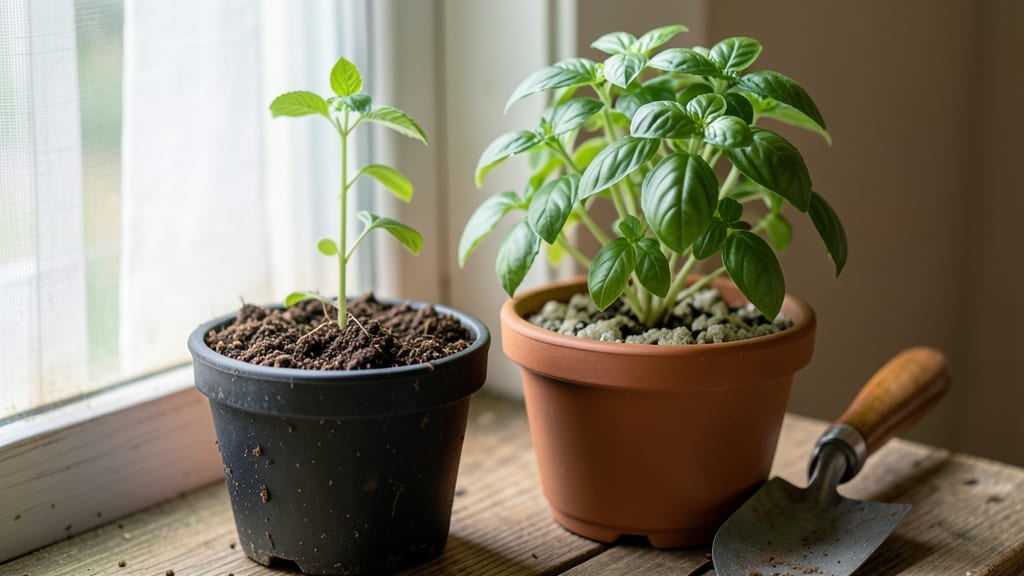
You can use garden soil for potting plants only after amending it with compost and perlite to prevent compaction, improve drainage, and reduce pest risks—but even then, it's best for hardy plants like herbs or succulents rather than vegetables or delicate perennials.
Garden soil's heavy clay or loam composition suffocates roots by blocking oxygen and trapping moisture, which encourages fungal growth. 🌱 While adding organic matter like compost helps, the texture still struggles to replicate the airy structure of proper potting mixes.
I've found that even with amendments, garden soil works best for drought-tolerant plants that thrive in well-draining conditions—think rosemary or sedum—rather than moisture-sensitive varieties like lettuce or basil.
For container gardening, the key is balance: mix no more than 50% garden soil with 30% compost and 20% perlite to create a looser medium. This combination improves aeration while maintaining some of the soil's natural nutrients.
However, avoid using it for plants requiring consistent moisture or those prone to root rot, as the amended mix may still retain too much water compared to commercial potting blends.
💡 In This Article
- Why Garden Soil Fails as Potting Mix
- How to Safely Amend Garden Soil for Containers
Why garden soil fails as potting mix
The core issue with garden soil in containers is its compaction. When tilled or walked on, garden soil particles pack tightly together, reducing pore space by up to 60% compared to loose potting mixes.
This density suffocates roots by blocking oxygen flow—roots need 10-20% air space in the soil matrix to thrive, but garden soil often provides only 5-10%. The result? Stunted growth and yellowing leaves as roots struggle to breathe.
Nutrient imbalance is another silent killer. Garden soil contains high levels of clay or organic matter that break down slowly, releasing nutrients unevenly. In containers, where plants grow rapidly, this creates feast-or-famine conditions—too much phosphorus early on can burn roots, while later nitrogen deficiencies stunt growth.
The pH also varies wildly (often 6.0-7.5), making it unpredictable for sensitive plants like blueberries (which need 4.5-5.5).
Moisture management becomes a nightmare. Clay-heavy garden soil holds water like a sponge, creating anaerobic zones where roots drown. Even loam-based soils retain 20-30% more water than ideal potting mixes, promoting fungal diseases like Phytophthora (which causes root rot).
I’ve seen basil plants collapse within 5 days in unamended garden soil because the roots couldn’t escape waterlogged conditions—something that wouldn’t happen in a well-draining potting blend.
Pest and disease risks skyrocket too. Garden soil often harbors weed seeds, larvae, and pathogens that thrive in the dense, moist environment of containers. Unlike outdoor beds where pests have natural predators, potted plants become sitting ducks.
For example, nematodes (microscopic worms) can devastate tomato roots in just 3 weeks if the soil isn’t sterilized first. Even "healthy" garden soil might contain 10,000+ weed seeds per pound, which sprout unpredictably in containers.
Texture matters most. Garden soil’s particles (silt, sand, clay) lack the coarse, open structure of potting mixes. Commercial blends use peat moss, coconut coir, or perlite to create 30-50% larger air pockets, while garden soil’s particles interlock like puzzle pieces.
This difference explains why a 1-gallon container filled with garden soil might hold only 1.5 cups of air, compared to 3 cups in a proper potting mix—cutting oxygen supply by half.