
Fertilization
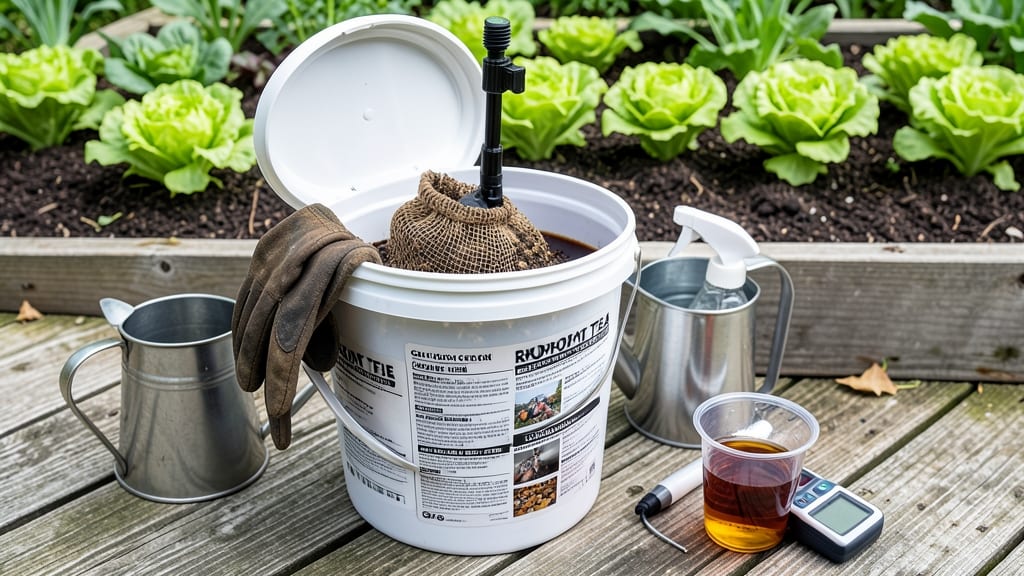
Creating compost tea for garden requires steeping well-aged compost in water for 24-48 hours, then straining to produce a nutrient-packed liquid that enhances soil fertility and plant vitality when used at the right concentration.
This liquid fertilizer works by extracting beneficial microbes, enzymes, and organic nutrients from compost through a simple water infusion process. 🌱 Unlike solid compost, compost tea delivers these nutrients directly to plant roots and foliage, promoting faster growth and disease resistance.
I've found it particularly effective for container gardens and vegetable patches where nutrient availability can be limited.
The key to success lies in proper aeration during brewing—this prevents harmful anaerobic bacteria from developing while maximizing microbial activity. For most plants, a dilution ratio of 1:10 (tea to water) works well, though sensitive plants like tomatoes may need a weaker solution.
Always use the tea within 24 hours of brewing to maintain its potency and effectiveness.
💡 In This Article
- How Compost Tea Boosts Soil Microbes and Plant Health
- Step-by-Step Compost Tea Brewing Methods for Different Needs
How compost tea boosts soil microbes and plant health
Compost tea works by extracting and activating a diverse community of beneficial microorganisms from compost. When you steep compost in water, it releases not just nutrients like nitrogen, phosphorus, and potassium, but also billions of live bacteria, fungi, and protozoa that naturally break down organic matter.
These microbes form a symbiotic relationship with plant roots, helping them access nutrients more efficiently. The tea also contains enzymes that accelerate decomposition in the soil, creating a richer environment for root growth. 🌱
The microbial magic happens through a process called "bio-activation." Aerobic brewing (with oxygen) encourages beneficial bacteria like Pseudomonas and Bacillus to multiply, while suppressing harmful pathogens. These microbes then colonize plant roots, forming a protective biofilm that blocks disease-causing organisms.
Studies show that compost tea can increase soil microbial populations by up to 500% within days of application, compared to untreated soil. The tea's liquid form allows these microbes to reach plant roots and foliage much faster than solid compost.
One of the most impressive benefits is how compost tea improves soil structure. The microbial activity produces sticky substances called polysaccharides that bind soil particles together, creating larger aggregates. This increases water retention by 20-30% while improving aeration—critical for root development.
For example, I've seen clay soils that were once compacted become loose and crumbly after just three applications of compost tea. The tea also stimulates mycorrhizal fungi, which extend plant roots' reach by up to 10 times their original length, making nutrients more accessible.
What makes compost tea particularly effective is its ability to deliver nutrients in a form plants can immediately use. Unlike slow-release fertilizers, compost tea provides a quick nutrient boost while simultaneously building long-term soil fertility. The microbial community it introduces helps plants resist stress from drought, heat, or pests.
For instance, foliar applications can reduce fungal diseases like powdery mildew by 40-60% by creating an unfavorable environment for pathogens. The tea's high enzyme content also helps break down complex organic matter into simpler compounds that plants can absorb through their leaves.
However, not all compost tea is created equal. The quality depends heavily on the compost source—well-aged compost with diverse organic matter produces the most beneficial microbes. Fresh manure, while nutrient-rich, can overwhelm plants with ammonia and harmful bacteria if used directly.
For best results, use compost that's been curing for at least 6-12 months, as this ensures a balanced microbial community. The brewing method also matters significantly, which is why aeration is crucial—it prevents the growth of anaerobic bacteria that can produce toxic compounds like hydrogen sulfide.
Consider this: A single teaspoon of high-quality compost contains about 1 billion beneficial bacteria. When brewed properly, compost tea can deliver 10-100 billion microbes per gallon to your plants.
This microbial infusion doesn't just feed your plants—it transforms your soil into a thriving ecosystem that supports plant health at every stage. The key is consistency; regular applications (every 2-4 weeks) maintain this beneficial microbial balance in your garden. 💫