
Tools
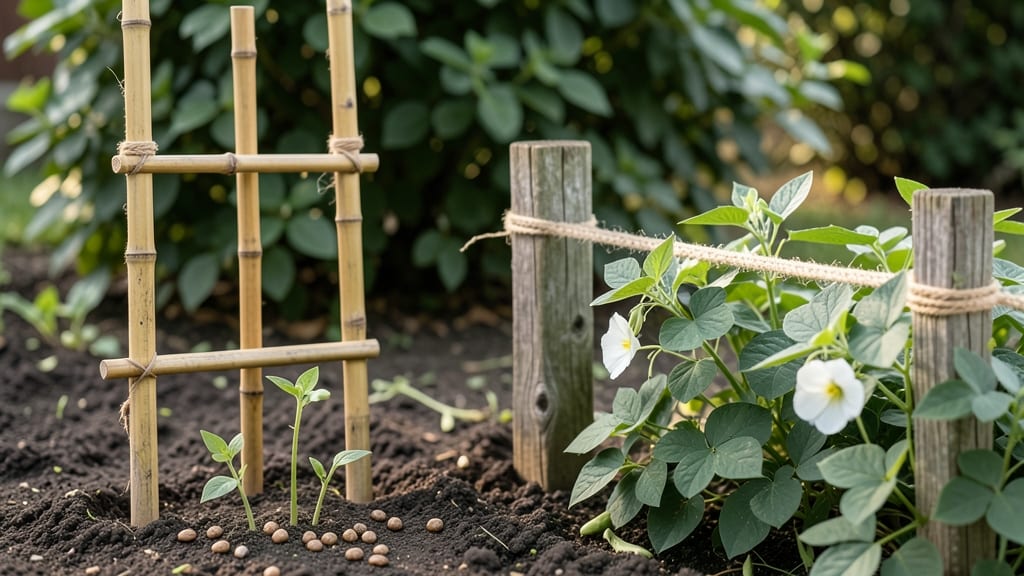
Garden beans do not always need a trellis, but climbing varieties like pole beans benefit from vertical support to maximize yield and reduce disease risk. Bush beans thrive without trellises but require more ground space.
Whether you need a trellis for your garden beans depends entirely on the variety you're growing. Pole beans naturally climb and produce more pods when given vertical support, which also keeps them off the damp soil and reduces common fungal diseases. 🌱 On the other hand, bush beans grow in compact bushes and don't require any support at all—they're perfect for small gardens or container growing.
The key difference lies in their growth habits: vining varieties need upward space, while bush types spread outward.
If you're working with limited garden space, bush beans are the clear winner—they produce well without taking up vertical real estate. However, if you want higher yields and cleaner plants that stay off the ground, investing in a simple trellis system for pole beans pays off big time.
Many gardeners find that a basic 5-foot-tall bamboo trellis or even repurposed chicken wire works perfectly for home gardens.
💡 In This Article
- Types of Garden Beans and Their Trellising Needs
- DIY Trellis Solutions for Pole Beans
Types of garden beans and their trellising needs
Garden beans fall into two primary categories based on their growth habits: bush beans and pole beans. Bush beans grow in compact, 1-2 foot tall bushes that produce pods all along their stems, while pole beans develop long, vining stems that can reach 6-12 feet tall if given proper support.
The key difference lies in their natural growth patterns—bush beans are self-supporting and don't require trellises, whereas pole beans need vertical structures to thrive. 🌱
Pole beans produce more pods per plant than bush beans, but only when given adequate vertical space. Without support, their vines sprawl across the ground, which can reduce yield by up to 30% due to limited sunlight exposure and increased competition for nutrients.
The vines also become more susceptible to soil-borne diseases like white mold when in contact with damp earth. Bush beans, meanwhile, develop a sturdy, bushy structure that naturally resists sprawling, making them ideal for small gardens or containers.
Hybrid varieties exist that blend characteristics of both types, such as semi-bush beans which grow 3-4 feet tall but don't require full trellising. These intermediate types offer a compromise for gardeners who want higher yields than bush beans but don't want to commit to full-scale trellis systems.
The choice between varieties often comes down to your available space and how much maintenance you're willing to invest in support structures.
Another critical factor is the planting density. Bush beans can be planted in rows just 3-4 inches apart and 18-24 inches between rows, while pole beans need 4-6 inches between plants and 3-4 feet between rows to allow for proper vine spread.
This spacing difference directly impacts whether you'll need trellising—pole beans simply can't grow effectively without it, while bush beans flourish in tighter configurations.
Consider your garden's layout when choosing varieties. If you have vertical space like fences, arbors, or even a sturdy pergola, pole beans can transform a small area into a high-yielding bean production zone.
For ground-level planting, bush beans offer the simplest solution with minimal maintenance. The right choice depends on your specific growing conditions and how you want to utilize your garden space. ✨