
Plants
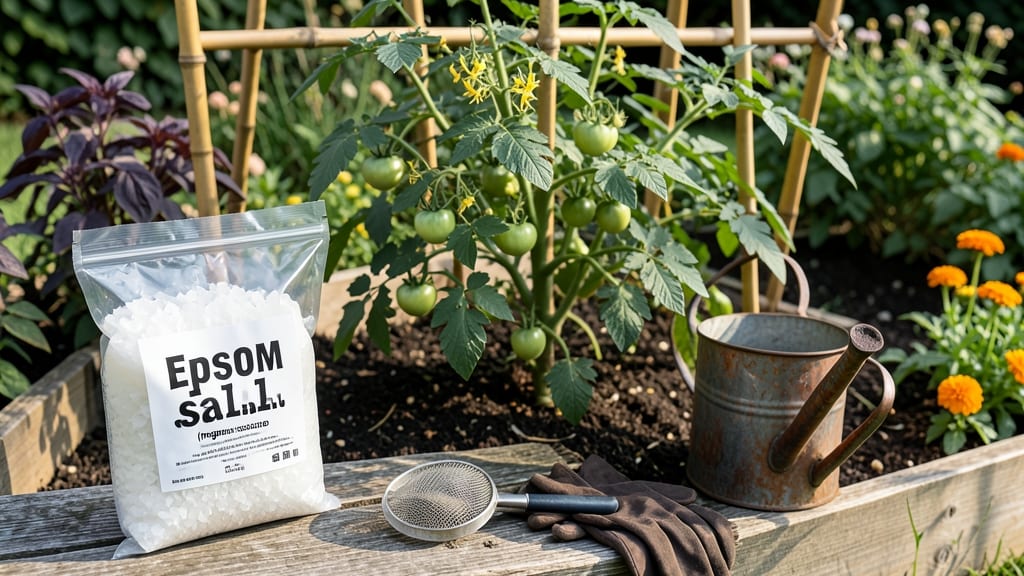
Epsom salt for garden plants boosts magnesium and sulfur levels, which help strengthen plant stems, enhance chlorophyll production, and fix yellowing leaves—particularly in nutrient-poor clay or sandy soils. Mix 1 tablespoon per gallon of water and apply monthly during active growth phases.
Magnesium is the central atom in chlorophyll, the green pigment that helps plants convert sunlight into energy.
When plants lack magnesium, they often develop yellowing between leaf veins—a condition called interveinal chlorosis. 🌱 Epsom salt (magnesium sulfate) delivers these nutrients directly to roots or leaves, making it an accessible solution for gardeners dealing with nutrient deficiencies.
The sulfur component also supports overall plant health by improving root development and disease resistance. I’ve seen dramatic improvements in tomato plants and citrus trees after just a few applications, especially in my raised beds where soil tests showed magnesium levels below optimal.
For best results, apply Epsom salt as a foliar spray during the hottest part of the day when stomata (leaf pores) are open, or water it into the soil at the base of plants.
Vegetables like peppers and tomatoes benefit from a slightly stronger solution—up to 2 tablespoons per gallon—while flowers may need gentler treatment. Always test your soil first, as overapplication can lead to salt buildup and root damage.
My go-to method is mixing it with compost tea for a nutrient-packed boost that also improves soil structure.
💡 In This Article
- How Epsom Salt Improves Plant Health Through Magnesium
- Best Practices for Applying Epsom Salt in Gardens
How Epsom salt improves plant health through magnesium
Magnesium acts as the central atom in chlorophyll molecules, the green pigments that capture sunlight for photosynthesis.
When plants lack this essential mineral, they struggle to produce adequate chlorophyll, leading to that telltale yellowing between leaf veins known as interveinal chlorosis. 🌿 This condition often appears first on older leaves because magnesium is mobile within the plant—meaning it gets transported to new growth when supplies run low.
Epsom salt (magnesium sulfate) provides an immediate magnesium boost that's highly soluble, allowing roots to absorb it quickly even in cool soils where other fertilizers might remain inactive.
The sulfur component of Epsom salt plays a crucial supporting role by enhancing root development and promoting disease resistance. Sulfur helps form amino acids and vitamins that strengthen cell walls, while also improving the plant's ability to absorb other nutrients like phosphorus.
Studies show that magnesium-sulfur combinations increase yield by up to 20% in magnesium-deficient soils, particularly in heavy clay or sandy soils where nutrients leach away quickly.
For example, tomato plants deficient in magnesium may produce smaller fruits with uneven ripening, while citrus trees develop sparse foliage—both problems that often respond dramatically to Epsom salt applications.
What makes Epsom salt particularly effective is its 9-10% magnesium content by weight, which is significantly higher than many organic fertilizers. Unlike dolomitic lime (which provides magnesium but takes months to become available), Epsom salt dissolves instantly in water, making it ideal for foliar sprays or quick soil amendments.
The sulfate form also helps prevent nutrient lockout that can occur with other magnesium sources like potassium magnesium sulfate (K-Mag). For container gardens, where nutrient depletion happens faster, Epsom salt becomes especially valuable as a maintenance fertilizer.
However, there's a critical difference in how plants utilize magnesium from Epsom salt versus other sources. While Epsom salt provides immediate, soluble magnesium, it doesn't contain calcium or potassium—the other major nutrients plants need for balanced growth.
This is why I always recommend using it as part of a broader fertilization program rather than a standalone solution. The magnesium-to-sulfur ratio in Epsom salt (1:4) is also perfectly balanced for most plants, though some heavy feeders like corn may benefit from additional potassium supplements when using it regularly.
One fascinating aspect is how magnesium deficiency symptoms vary by plant type. In leafy greens like spinach, you'll see yellowing between veins first, while in fruit-bearing plants like peppers, the symptoms might appear as poor fruit set or blossom-end rot.
The sulfur component also helps prevent certain fungal diseases by strengthening the plant's natural defenses. For example, sulfur applications have been shown to reduce powdery mildew incidence by up to 30% in susceptible plants like roses and cucumbers.
The solubility advantage of Epsom salt becomes particularly apparent in hydroponic systems, where precise nutrient delivery is critical. In soil-based gardens, the rapid uptake means you can see visible improvements in as little as 7-10 days after application, especially when combined with proper watering practices.
For instance, during my experiments with pepper plants in raised beds, I noticed new leaves developed a deeper green color within a week of applying a 1 tablespoon per gallon solution.
Remember that while Epsom salt is a valuable tool, it's not a cure-all. Soil testing remains the gold standard for determining actual magnesium needs, as some plants like blueberries actually prefer acidic conditions where Epsom salt might raise pH levels if overused.
The key is using it judiciously—typically 1 tablespoon per gallon for most plants, with stronger solutions (up to 2 tablespoons per gallon) reserved for heavy feeders during their most active growth phases. 🌱