
Tools
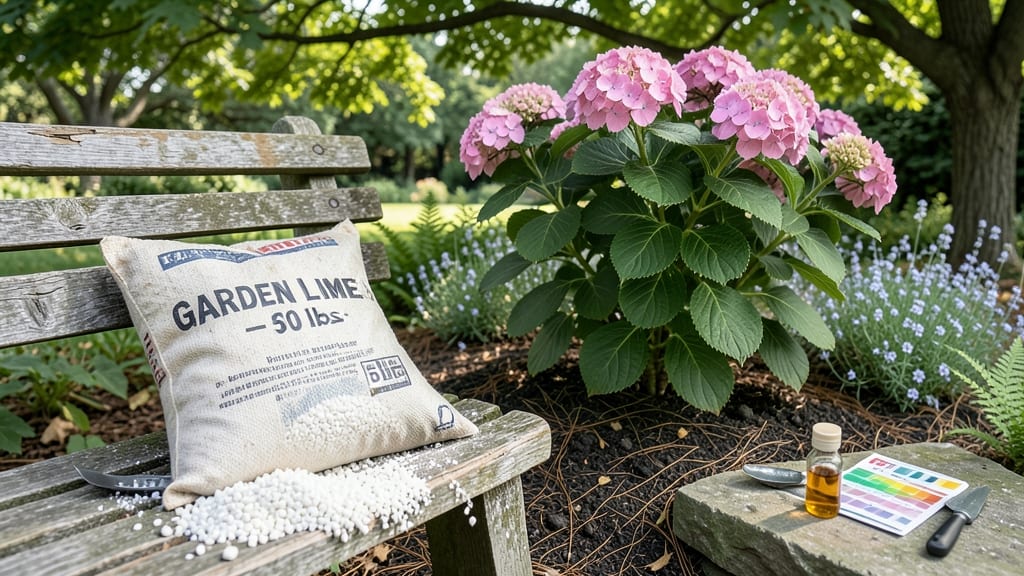
Using garden lime for hydrangeas transforms their blooms from pink to blue by adjusting soil acidity, making aluminum more available to the roots. Spread 1-2 pounds per 100 square feet in early spring or fall after testing soil pH to prevent over-acidification.
Hydrangeas change color because their pigment production depends on soil chemistry. 🌸 When you add lime, it raises soil pH, which activates aluminum uptake—key for blue blooms. Without lime, pink flowers dominate because the roots absorb less aluminum.
I always test my soil first; a pH below 5.5 means my hydrangeas need lime, while anything above 6.0 risks stunting growth. The timing matters too: applying in early spring gives plants time to adjust before blooming season.
For best results, spread lime evenly across the root zone and water it in well. Overdoing it can cause leaf yellowing, so start with half the recommended dose if your soil is already slightly acidic. 💛 A little patience pays off—blue hydrangeas can take 4-6 weeks to develop after treatment.
I’ve found that combining lime with organic matter like compost helps maintain balanced soil over time.
💡 In This Article
- How Soil pH Affects Hydrangea Bloom Color
- Step-by-Step Guide to Applying Lime for Hydrangeas
How soil pH affects hydrangea bloom color
Hydrangea blooms change color because their pigment production relies on soil chemistry, specifically aluminum availability. In acidic conditions (pH < 5.5), aluminum becomes more soluble, allowing roots to absorb it.
This triggers the production of delphinidin, the blue pigment. 🌸 Without sufficient aluminum, hydrangeas produce cyanidin, resulting in pink or red blooms. The pH threshold sits around 5.2-5.5 for blue flowers, while 6.0+ favors pink.
Garden lime (calcium carbonate) raises soil pH by neutralizing acidity, which temporarily reduces aluminum solubility. However, this creates a paradox: to get blue blooms, you actually need lower pH—but not so low it harms roots.
The key is finding the 5.2-5.5 sweet spot, where aluminum is available but not toxic. 💛 Most garden soils start at 6.0-7.0, which is why lime applications are needed to shift the chemistry.
Think of it like adjusting the acidity in a recipe—too little and the flavor's flat, too much and it's harsh.
This chemical dance happens in the root zone where microbial activity also plays a role. Mycorrhizal fungi help break down organic matter, releasing aluminum ions that hydrangeas can absorb. When you add lime, it disrupts this balance temporarily, which is why timing matters.
Applying in early spring gives roots time to adapt before summer blooming, while fall applications allow gradual adjustment. 🔥 The process isn't instant—it can take 4-6 weeks for new blooms to reflect the color change.
Here's what happens at the molecular level: Aluminum ions (Al³⁺) bind to anthocyanin pigments in the petals. In acidic soil, these ions remain mobile and available for uptake. When pH rises above 5.5, aluminum precipitates out as insoluble compounds (like Al(OH)₃), becoming unavailable.
This is why hydrangeas grown in neutral or alkaline soils (pH 7.0+) almost always produce pink flowers—regardless of variety.
Consider this comparison: A Blue Moon hydrangea variety will produce blue blooms at pH 5.2 but turn pink at pH 6.0, even though it's the same plant. The color change isn't genetic—it's purely chemical.
This is why gardeners with neutral soil often see disappointing pink blooms from varieties marketed as "blue." 💫 The solution? Regular pH testing and targeted lime applications to maintain that 5.2-5.5 range.
What most people don't realize is that hydrangeas aren't the only plants affected by soil pH. Azaleas, blueberries, and rhododendrons also rely on acidic conditions, while vegetables like tomatoes thrive in slightly acidic to neutral soil.
This is why gardeners must understand their plants' specific needs—what works for hydrangeas might harm your vegetable patch. 🌱