
Tools
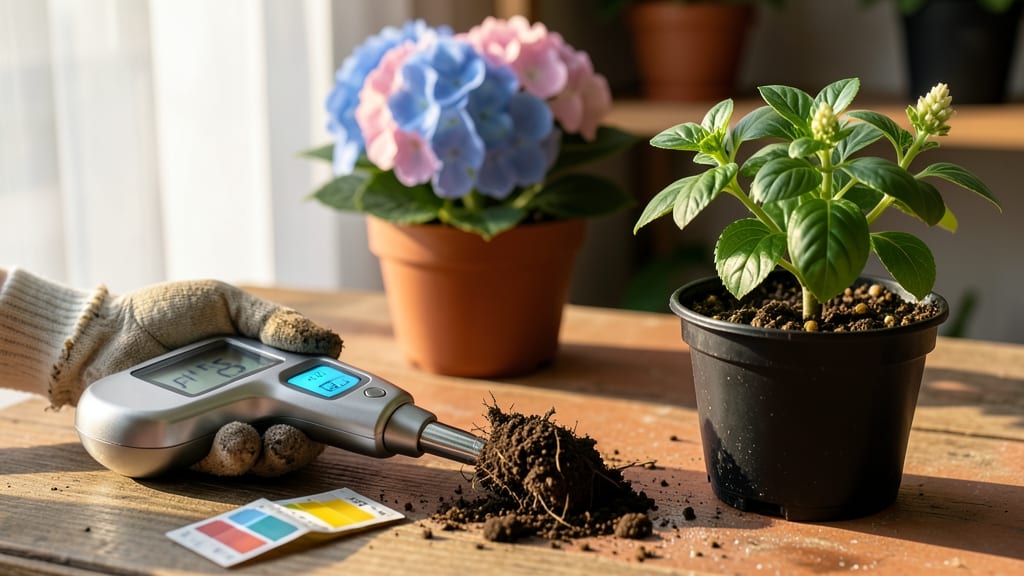
A garden pH meter helps you test soil acidity or alkalinity by calibrating the probe, inserting it into moist soil, waiting for a stable reading, and comparing it to your plants' ideal range—usually 6.0 to 7.0 for most vegetables and flowers. Always rinse the probe between tests to keep readings accurate.
Soil pH isn't just a number—it directly controls which nutrients your plants can absorb. 🌱 For example, blueberries crave acidic soil (4.5–5.5) to access aluminum and iron, while tomatoes thrive in slightly acidic to neutral soil (6.0–7.0).
A pH meter gives you the data to adjust your soil with lime (to raise pH) or sulfur (to lower it) before planting, saving you from wasted effort or stunted growth. Think of it as a diagnostic tool for your garden's health.
Here's the kicker: most meters come with calibration solutions, but you can also use distilled water as a baseline. Pro tip: Test multiple spots in your garden—soil pH can vary by just a few feet, especially if you've amended one area differently.
And if your meter ever gives inconsistent readings, it might be time for a deep clean or replacement—dirty probes are the #1 cause of inaccurate results. 💫
💡 In This Article
- How Soil pH Affects Plant Nutrition and Growth
- Step-by-Step Guide to Calibrating and Reading a Soil pH Meter
How soil pH affects plant nutrition and growth
Soil pH determines how soluble essential nutrients become for your plants. At pH 6.0–7.0, most vegetables and flowers can access nitrogen, phosphorus, and potassium efficiently—these are the building blocks for leafy growth, root development, and flowering.
But step outside that range, and problems arise. For instance, at pH 5.0 (acidic), aluminum and manganese become toxic, while calcium and magnesium lock up, causing yellowing leaves even if you're fertilizing regularly.
Different plants have unique pH preferences based on their natural habitats. Blueberries and azaleas thrive in acidic soil (4.5–5.5) because they're adapted to forest floors rich in decomposed organic matter. Meanwhile, asparagus and carrots prefer neutral to slightly alkaline soil (7.0–8.0), where nutrients like calcium remain available.
The pH also affects microbial activity—beneficial bacteria and fungi that break down organic matter flourish in their preferred pH ranges, directly impacting nutrient cycling in your soil.
Here's where pH meters become your secret weapon: they reveal hidden imbalances before symptoms appear. For example, tomatoes in pH 5.0 soil might show stunted growth because phosphorus becomes locked up, even if you're adding compost.
A quick test lets you adjust with pelletized lime (to raise pH) or elemental sulfur (to lower it) before planting. The goal isn't perfection—it's matching your plants' natural preferences to unlock their full potential.
What most gardeners overlook is how pH interacts with other soil factors. For instance, high organic matter naturally buffers pH changes, while sandy soils drain nutrients faster at extreme pH levels. That's why testing multiple spots in your garden—especially if you've amended one area—reveals critical variations.
A pH 6.5 reading in your vegetable bed might hide a pH 8.0 pocket near your roses, explaining why one thrives while the other struggles.
Think of soil pH like the volume knob on a stereo: too high or too low, and the music (your plants) gets distorted. The meter gives you the exact setting needed to turn up the right nutrients while muting the harmful ones.
For example, iron chlorosis (yellow leaves with green veins) often signals pH >7.0 blocking iron uptake, while magnesium deficiency (interveinal yellowing) can occur in pH <5.5 soils. Addressing these early saves you from misdiagnosing nutrient problems as pest issues or disease.
Pro tip: Keep a soil journal! Record pH readings alongside plant performance. Over time, you'll notice patterns—like how your raspberries always need a sulfur boost in spring or your lavender wilts when pH drops below 6.5.
This data turns your garden from guesswork into precision agriculture, even on a small scale. 🌱