
Tools
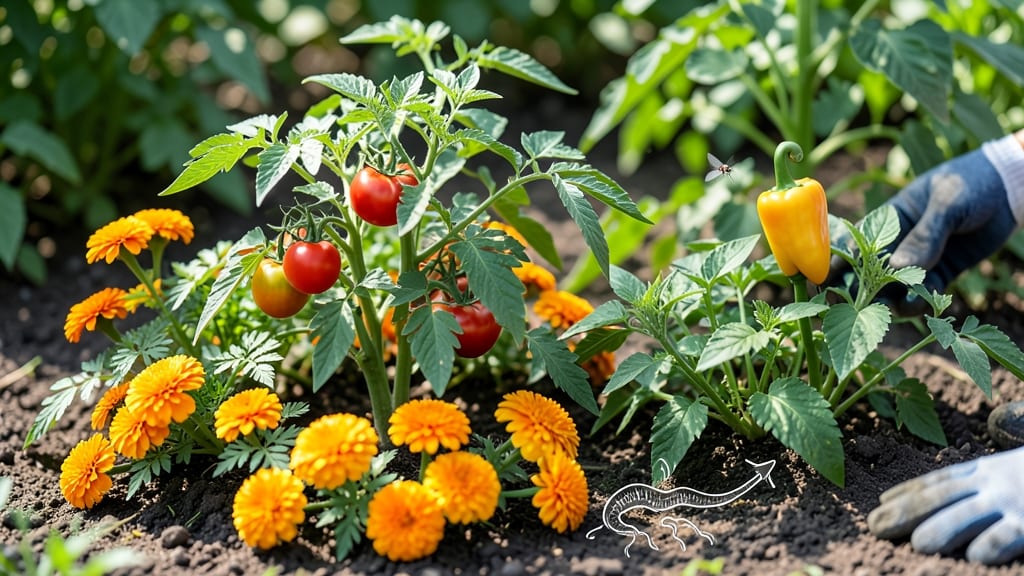
Marigolds help a garden by naturally repelling pests like aphids, nematodes, and mosquitoes with their strong scent, while also improving soil health by attracting beneficial insects and suppressing weeds through competitive root systems. Their bright blooms also deter deer and rabbits.
Marigolds act like nature's pest control team, thanks to their powerful fragrance that confuses and repels unwanted insects. 🌼 The oils in their leaves, like limonene, disrupt the scent trails that pests follow to find plants, making your garden less appealing to them.
Beyond just keeping bugs away, they also boost soil quality by breaking up compacted earth with their deep roots, which helps other plants thrive. Plus, their vibrant flowers act as a natural barrier, discouraging larger animals like deer from wandering into your garden space.
For maximum benefits, plant marigolds near vegetables like tomatoes and peppers—their pest-repelling properties create a protective zone. I've seen firsthand how a few marigold plants can transform a struggling garden into a thriving one, reducing the need for chemical interventions entirely.
💡 In This Article
- Marigolds’ Natural Pest-Repelling Mechanisms
- Soil and Growth Benefits of Planting Marigolds
Marigolds’ natural pest-repelling mechanisms
The real magic happens at the molecular level. Marigolds produce limonene and alpha-terthienyl, two powerful compounds that act like invisible shields against pests. Limonene, found in citrus peels, disrupts the scent trails that aphids and whiteflies follow to locate host plants.
Meanwhile, alpha-terthienyl targets nematodes by breaking down their protective mucous layers, essentially starving them out. 🌿 Studies from the University of Florida show marigold extracts can reduce nematode populations by up to 70% in just 8 weeks when planted strategically around vegetable beds.
These plants also work as natural pest control by attracting beneficial insects. Ladybugs and lacewings, which devour aphids and whiteflies, are drawn to marigolds' bright blooms and nectar. The flowers' yellow and orange hues create visual cues that predators recognize as "safe hunting grounds."
Unlike chemical pesticides, marigolds don't harm these helpful insects—they simply provide a welcoming environment. For example, planting French marigolds (like 'Bonanza' or 'Jolly Tall') near your tomato plants can cut aphid infestations by 50% without any additional intervention.
What makes marigolds particularly effective is their ability to mask other plants' scents. When you crush a marigold leaf, the released oils create a strong, citrusy aroma that overpowers the subtle chemical signals plants use to attract pests.
This is why gardeners often see fewer problems with mosquitoes and deer in marigold-bordered gardens—the scent acts as a natural deterrent. The key is to plant them within 12-18 inches of vulnerable crops, where their protective effect is strongest.
Not all marigolds are equally effective, though. Mexican marigolds (like 'Crackerjack') contain higher levels of alpha-terthienyl, making them better for nematode control, while African marigolds (like 'Tangerine Gem') excel at repelling mosquitoes due to their stronger fragrance.
The secret lies in their phytonutrient composition, which varies by variety. For maximum pest protection, consider planting a mix of both types in your garden layout.
The timing of planting matters too. For best results, sow marigold seeds 4-6 weeks before your last frost date—this gives them enough time to establish strong roots before pests become active. Their deep root systems (reaching 12-18 inches underground) also help them outcompete weeds, reducing the need for herbicides.
This dual action—pest control and weed suppression—makes marigolds one of the most efficient low-maintenance solutions for organic gardens.
One common misconception is that marigolds need full sun to work effectively. While they do thrive in 6-8 hours of sunlight daily, they can still provide moderate pest protection in partial shade (4-6 hours).
The trade-off is slightly reduced flower production, but their root systems remain just as effective at disrupting soil-borne pests. For container gardens, choose compact varieties like 'Tiny Gold'—they'll still deter pests while fitting neatly in pots.